The Silent Majority: The Last Straw... Abdul
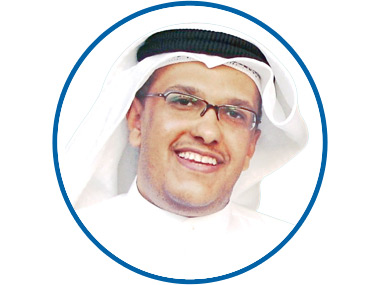
Those same emotions continue to drive us toward the same conclusion. Driven by desperation and a sense of powerlessness, we cling to any straw, even if it is Ilhan Omar. Yesterday, we discovered a new “straw” to hold onto: Abdul El-Sayed, the Democratic candidate for the U.S. Senate from Michigan, who is of Egyptian Arab descent.
El-Sayed, who was unknown to Arabs just weeks ago, made statements that sparked outrage and anger among the Egyptian and Arab public. He said, “Had it not been for a historical coincidence that allowed my parents to immigrate to the United States, I would now be a taxi driver in Egypt, like my cousins there. The only difference between us is that I am American.” He added that his American citizenship is the sole reason for his success as a physician and politician, compared to his cousins.
Because we do not know the “middle ground,” sentiments toward El-Sayed flipped from one extreme to the other. To be fair, he did well to speak out before the situation worsened. Had he managed to reach the Senate and become immersed in partisan political calculations, then made such a statement, or one that harmed Arab causes, he would have deeply pained his sympathizers.
The case of El-Sayed and others must be understood within its natural and logical context. Not every Arab or Muslim in a political position in America, Europe, or anywhere else in the world is necessarily biased toward Arab and Islamic causes, especially since they attained their positions based on party votes and an electoral platform specific to their party. Moreover, the majority of his voters come from diverse ethnicities and backgrounds; thus, he is not concerned with winning the favor of the Arab public.
Furthermore, we must accept that the children and grandchildren of immigrants grow up in a different educational environment and integrate into a lifestyle into which they quickly assimilate. They may occasionally flatter their parents and adhere to certain customs, like other immigrant groups such as Chinese and Italian communities, but they still view themselves as natives of the country where they were born and raised.
One might ask: Why don’t they act like politicians of Latin American descent, for example? The answer lies in the work of civil organizations that know how to balance the demands of the grandparents’ country with those of the grandchildren’s country, and how to mobilize thousands of voters of the same national origin. Do we have Arab organizations that operate with similar efficiency? Particularly compared to AIPAC, the Jewish organization that has successfully recruited dozens of U.S. lawmakers to advance the cause of the Zionist entity, even though they are not Jewish themselves!
Desperate Arabs rejoiced when Ilhan Omar, a U.S. Representative of Somali origin, was elected. Then they were shocked to find that she specializes in criticizing Arab regimes, regardless of their differences. They suffered a final blow in 2021 when she equated the actions of the United States and the Zionist entity with those of Palestinian resistance movements against civilians.
In conclusion, I still recall the euphoria in the late 1990s when Carlos Menem reached the presidency of Argentina (1989–1999), on the grounds that he hailed from a Syrian family that had emigrated from the countryside of Damascus to Argentina. The first thing he did after two years in office was visit Israel, becoming the first Argentine president to make such a visit! Have we learned from these successive lessons?
