Global Inflation Wave Monitors Developments in the Strait of Hormuz
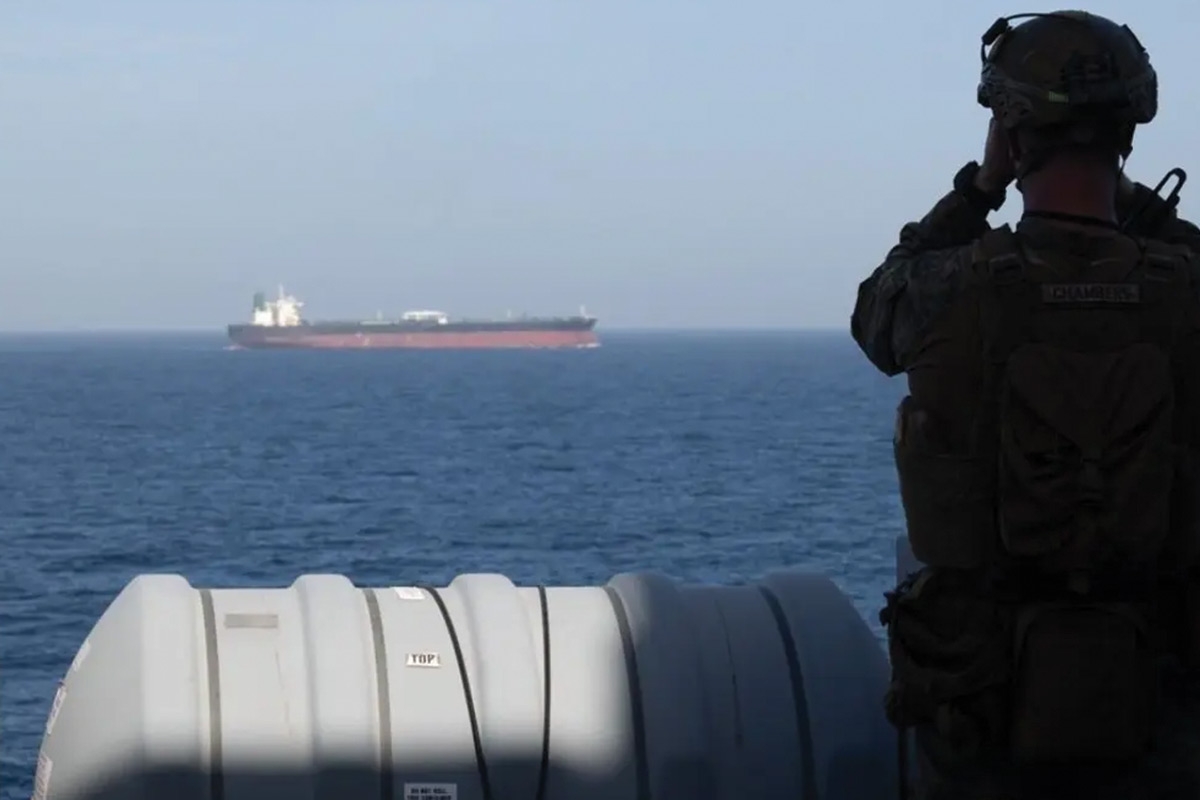
The Strait of Hormuz represents one of the most critical strategic nodes in the global economy, not only due to its geographic location but also because a substantial portion of global oil and gas trade passes through it
Translated by Qiyas from الجريدة — Original source
The Strait of Hormuz represents one of the most critical strategic nodes in the global economy, not only due to its geographic location but also because a substantial portion of global oil and gas trade passes through it. Consequently, any agreement that leads to the full and stable reopening of the strait would not merely constitute a political or security development in the Gulf region; it could evolve into a global economic event capable of influencing energy prices, shipping costs, food prices, and inflation.
Currently, markets are closely monitoring negotiations regarding the strait’s reopening, even as oil prices have risen once again.
The strait’s significance stems from its role as a primary conduit for energy exports from Gulf states to global markets. Accordingly, the continued disruption of navigation affects not only producing nations but also drives up the costs of oil, gas, transportation, insurance, and shipping, rendering markets more vulnerable to speculation and fears of supply shortages.
When oil prices rise, the crisis’s impact does not stop at the gas pump. Oil directly or indirectly influences the costs of transportation, industry, petrochemicals, fertilizers, and the production of numerous goods and services. Therefore, the Hormuz crisis can transform from an energy crisis into a global inflationary crisis.
If a genuine agreement is reached that guarantees freedom of navigation and the return of oil and gas tankers to normal transit, markets may initially experience a sharp decline in what is known as the “risk premium.”
The risk premium represents the additional amount markets pay due to fears of supply shortages. With the removal of this risk, investors and buyers may no longer need to pay this extra price.
For this reason, we may witness a rapid drop in oil prices even before all supplies return to normal levels.
We have already seen how sensitive oil prices are to news regarding Hormuz. In early August, hopes for the strait’s reopening led to strong declines in oil prices, before prices rebounded as negotiations stalled.
Observers note that if an agreement is stable, navigation will resume fully. Therefore, a plausible scenario can be divided into several phases:
* In the first few weeks following an agreement, Brent crude could fall from its current level near $90 to the $70–$80 range, driven by a reduction in the risk premium and a restoration of market confidence.
* Over a period of one to three months, prices might move toward $65–$75 if global supplies and inventories begin to improve.
* Between three and six months, prices could stabilize in an approximate range of $65–$80, depending on global demand growth, OPEC+ policies, and production levels in the United States and other producers.
* After six to twelve months, oil could settle in the $70–$80 range, provided no new geopolitical crises emerge.
Thus, the central scenario used in this analysis projects Brent crude reaching approximately $70–$75 per barrel once navigation stabilizes and markets return to a more normal state.
Some experts emphasize that this scenario is analytical rather than a definitive price forecast, as oil prices are influenced by dozens of other factors, including global demand, OPEC+ production, economic growth, inventories, sanctions, and geopolitical crises.
Some experts argue that if oil prices fall from $90 to $70 per barrel, the cost of raw materials will decline significantly. However, consumer gasoline prices do not depend solely on crude oil; they are also influenced by refining, transportation, and storage costs, as well as taxes, fees, distribution margins, and local pricing policies. Consequently, fuel prices could drop within weeks of the agreement’s implementation if it is signed between Iran and the United States, though the decline may not mirror the percentage drop in crude oil prices.
Food prices are perhaps the most complex aspect of this scenario, as rising energy costs increase operational expenses for farms, factories, trucks, and ships, while also affecting the production and transportation of fertilizers.
When oil prices fall, these costs begin to recede, but the impact on food prices takes longer to fully materialize. Accordingly, global markets may experience a gradual easing of food price pressures over the next three to twelve months, rather than an immediate drop in retail product prices.
Given the impact of reopening the Strait of Hormuz on curbing global inflationary factors, this development represents the most critical test, closely linked to lower oil prices. Such a move would stabilize prices for gas, shipping, and insurance, potentially delivering a positive shock to global inflation.
However, this does not necessarily mean that prices that have already surged will fall sharply; rather, their rate of increase may slow considerably. Thus, while reopening the Strait of Hormuz can help the world emerge from the current inflationary wave, it does not guarantee that all goods and services will return to pre-crisis price levels.
Kuwait may benefit from the restoration of normal navigation, as it would enable more consistent oil exports and reduce transportation and insurance costs and risks. Conversely, lower global prices would mean reduced revenue per barrel.
Some observers note that if Kuwait simultaneously increases its production and exports, the price decline could be partially offset by higher sales volumes, making the relationship between price and quantity more significant than focusing on price alone. Therefore, Kuwait’s oil future will depend not only on the question of what the oil price will be, but also on a more critical question: how many barrels can Kuwait efficiently produce and export, and what is the cost of producing and transporting each barrel?
The next phase may be more important than merely reopening the strait: How can Kuwait capitalize on the resumption of exports? How does it balance oil prices, production volumes, transportation costs, energy investments, and the strategic goal of achieving higher production levels?
In conclusion, reopening the Strait of Hormuz will not make the world cheaper overnight, but it can remove one of the major sources of pressure on energy prices and global inflation.
