First hotel on the Moon opens bookings for the wealthy in 2032
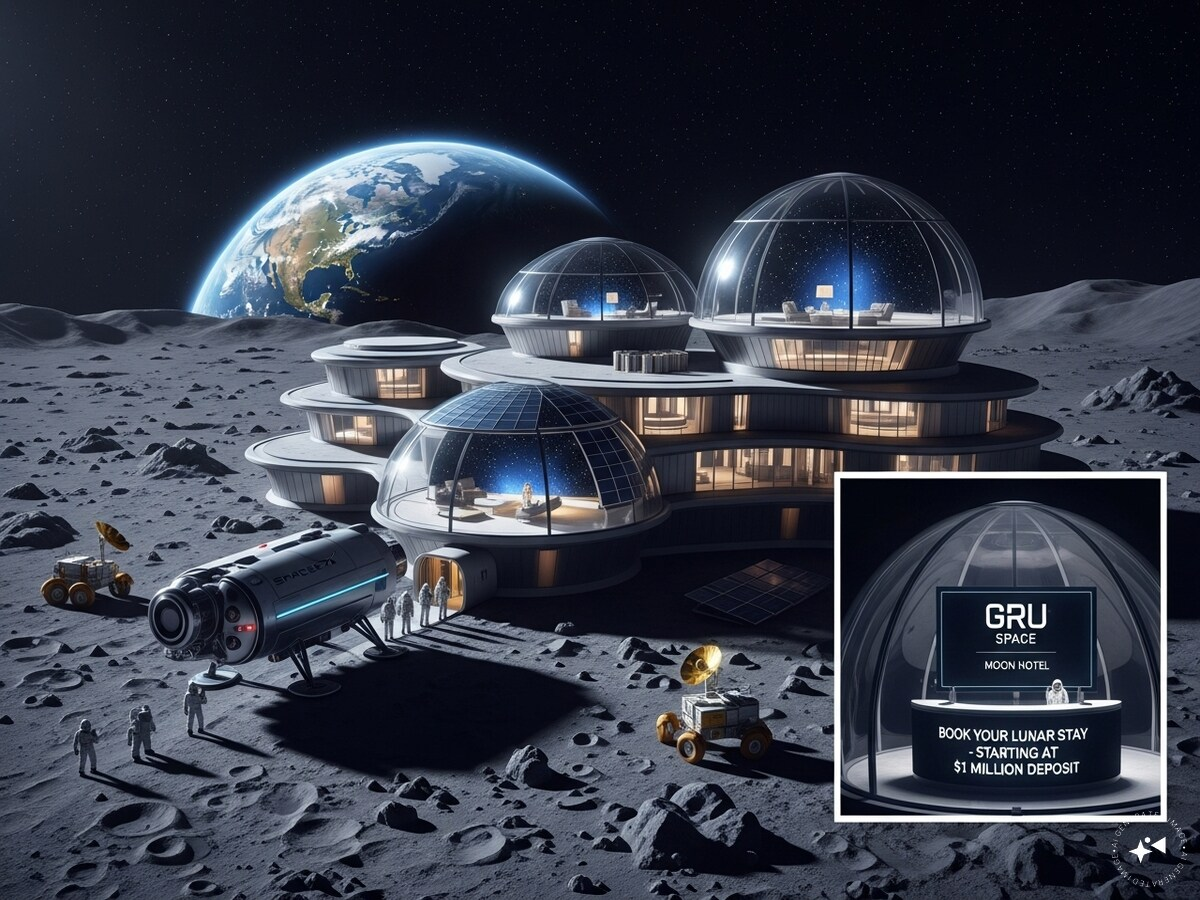
Booking opens for first tourist hotel on the moon in 2032 with a $1 million deposit
The emerging U.S. space company GRU Space, based in California, has announced the opening of preliminary bookings for the first permanent tourist hotel on the moon, paving the way for its official opening targeted for 2032.
The company explained that this ambitious project targets the wealthy and exceptional adventure seekers, with temporary booking deposits starting at $250,000 and reaching up to $1 million to secure a seat on the inaugural flights. Preliminary estimates suggest that the total cost of accommodation and travel could reach $10 million per guest.
According to published plans, the hotel’s capacity will be extremely limited in its initial phases, accommodating only four guests per tour. These guests will enjoy a unique experience featuring hotel rooms with direct, continuous panoramic views of Earth from an unprecedented perspective.
Despite the significant excitement generated by this announcement, experts and space industry observers are approaching the project with extreme caution, viewing it as still being in the theoretical concept stage.
The company developing the project faces immense engineering and logistical challenges, foremost among them the astronomical cost of shipping construction materials to the moon, ensuring complete protection for guests from dangerous cosmic radiation, and guaranteeing the sustainability and efficiency of oxygen and water recycling systems in an atmosphere-free environment.
This project marks a new chapter in the escalating commercial space tourism race, which no longer is limited to short orbital flights but has extended to include temporary tourist settlement on nearby celestial bodies.
As other major companies enter the competition to develop orbital stations and hotels, the coming years will serve as the true test of whether current human technologies can transform this space dream into a tangible and safe reality for humans by the next decade.
