Ministry of Oil: Strong foundations for the exploration and production sector
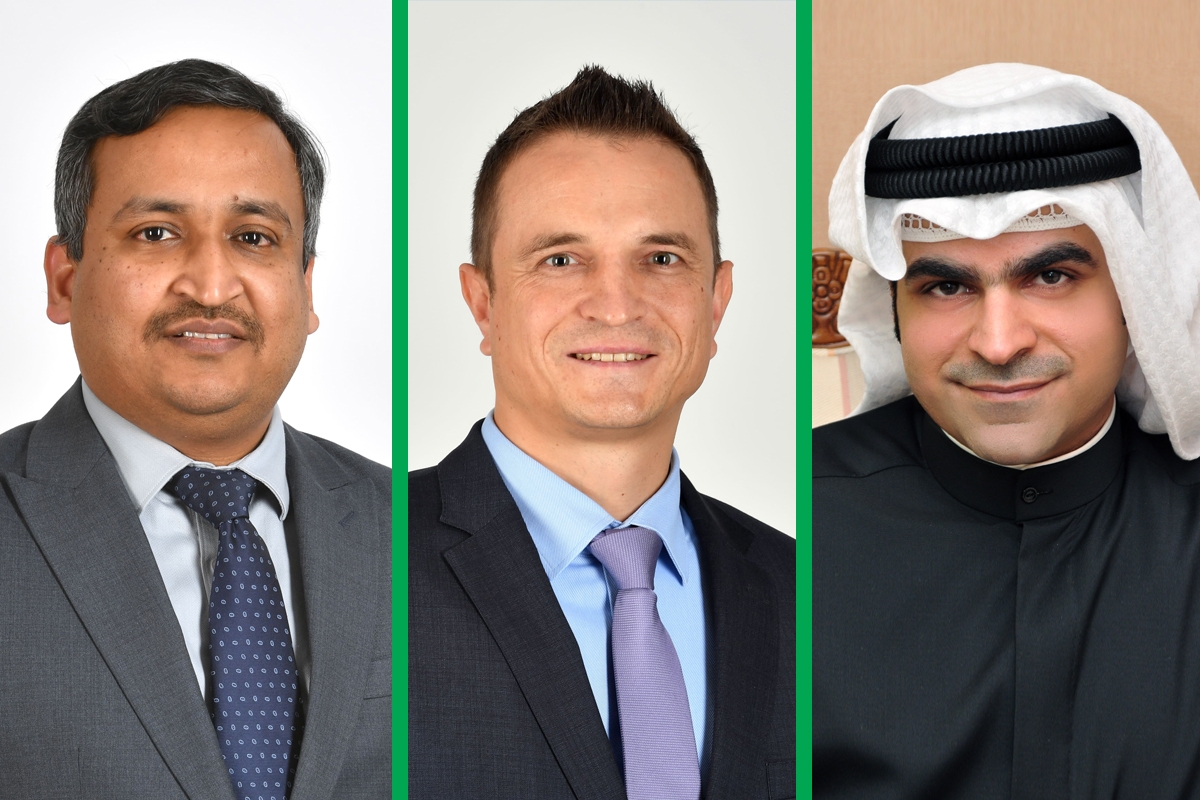
Operational Energy Company held its analysts and investors conference to discuss the results for the first half of 2026, highlighting key financial and operational outcomes, the strong fundamentals of the onshore drilling sector, and the company’s outlook for the coming phase. This phase focuses on strengthening core drilling operations in Kuwait, expanding into higher-value oil field services, and exploring selective regional growth opportunities while maintaining a strong financial position.
Operational Energy underscored the robust fundamentals of the onshore drilling sector both locally and regionally. Kuwait boasts one of the highest reserve life indices globally, at approximately 276 years, and production costs that are among the most competitive worldwide, at around $8.5 per barrel. Additionally, the country maintains low carbon emission intensity, estimated at roughly 8.5 kilograms per barrel. Meanwhile, national oil companies in Gulf Cooperation Council (GCC) countries continue to demonstrate high resilience and a firm commitment to significant, long-term investments aimed at boosting production capacity, amid rising demand for drilling rigs by 2030.
The company emphasized the critical importance of Gulf markets to global energy security, driven by production ambitions that are far more sustainable than typical commodity price cycles. A prime example is Kuwait’s national plan to raise crude oil production capacity to 4.0 million barrels per day by 2035.
In this context, Operational Energy reaffirmed its full readiness to support the next phase of growth as the leading local partner in integrated exploration and production services in Kuwait. The company owns and operates the region’s most modern drilling fleet, with an average rig age of just 3.07 years, compared to an average of approximately 15.9 years in Kuwait and even higher averages across the GCC and the broader Middle East and North Africa (MENA) region.
For his part, Board Vice President Eng. Rawaf Ibrahim Borsoli stated, “In less than four years, Operational Energy has expanded its fleet from four rigs to more than twenty fully operational rigs, building one of the region’s most modern drilling fleets. We have achieved strong revenue growth, improved margins, doubled net profit, and reduced debt levels. This performance reflects the company’s success in establishing a solid business foundation anchored by a modern fleet, a record-high contracted backlog, a strong financial position, and a long-term strategic partnership with national oil companies. As we enter the next phase of growth, the company will continue to execute its strategy with the same financial and operational discipline that has underpinned its success since its inception, thereby supporting the creation of sustainable value for shareholders.”
Borsoli added, “The contracted backlog of KD 349 million remains the company’s strongest indicator of strength, representing more than double its level a year ago. It provides clear visibility into future revenues, as these contracts are denominated in Kuwaiti dinars and span several years. Despite regional challenges, the company’s operations have continued without interruption, reflecting the resilience of its business model and its ability to support the achievement of Kuwait’s energy sector targets.”
For his part, Ivan Chikonov, the company’s Managing Director of Services and Business Development, said: “The company’s upcoming growth strategy is built on three key pillars. First, strengthening its leadership in the Kuwaiti market and supporting Kuwait Oil Company’s plans to raise crude oil production capacity to 4.0 million barrels per day by 2035. Second, expanding and diversifying oilfield services by leveraging the company’s pre-qualifications in areas such as electric submersible pumps, wireline and coiled tubing, inspection services, and once-through steam generators, thereby enabling the independent delivery of these services. Finally, continuing selective expansion in Gulf Cooperation Council markets, alongside evaluating merger and acquisition opportunities, to capitalize on the expected growth in drilling services demand by 2030, while maintaining a disciplined capital allocation approach and low debt levels.”
For his part, Zainuddin Jabuawala, the company’s Managing Director of Finance, confirmed that “strong revenue growth has translated into higher profits and cash flows, while the initial public offering has strengthened the company’s financial position and enhanced its ability to deliver sustainable long-term value to shareholders. Overall, the company has maintained a strong, low-risk financial position that enables it to fund future growth plans while adhering to a conservative financial approach.”
