Activation of the Mecca Agreement through exercises and permanent mechanisms
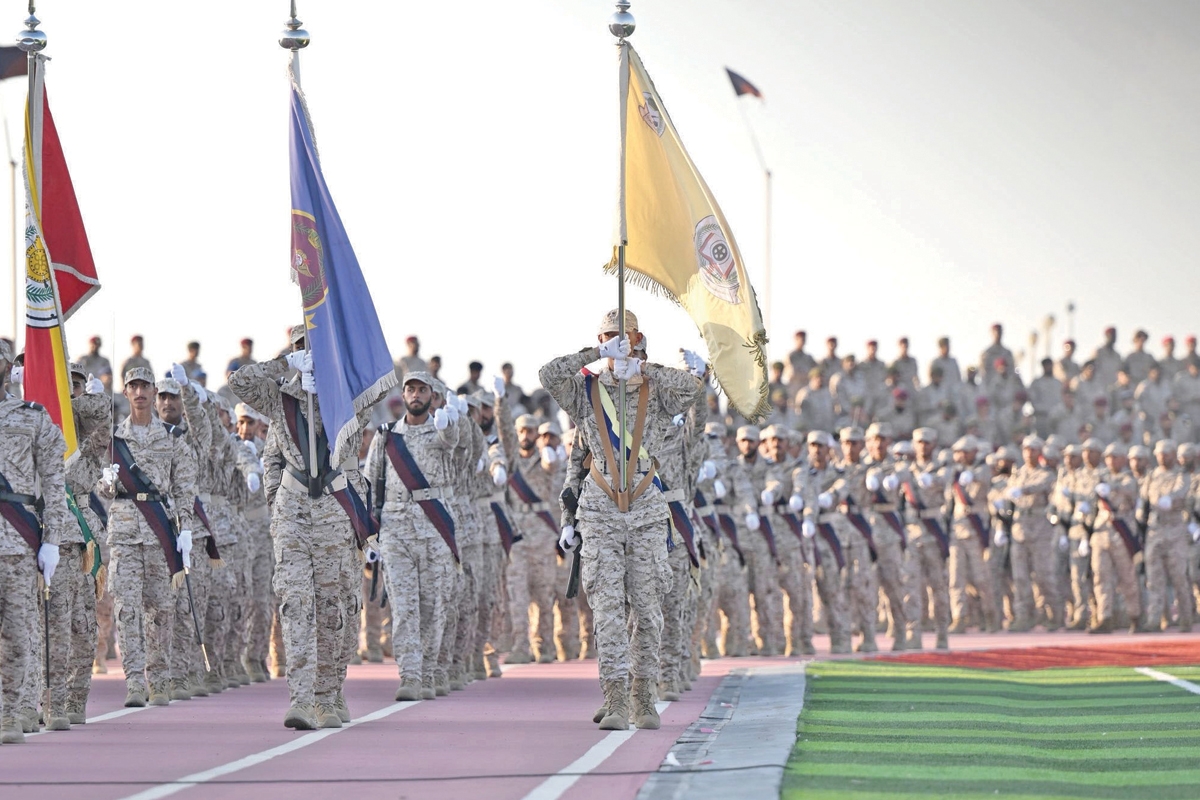
One week after the announcement and signing of the “Mecca Agreement” during a trilateral summit bringing together Saudi Crown Prince Mohammed bin Salman, Turkish President Recep Tayyip Erdogan, and Pakistani Prime Minister Shehbaz Sharif, Riyadh, Ankara, and Islamabad have moved the Mutual Defense Agreement to the implementation phase. The Turkish Ministry of Defense announced yesterday that the three countries have established permanent political and military mechanisms, as well as joint exercises and industrial cooperation encompassing development, production, and technology transfer.
Turkish Ministry of Defense spokesperson Admiral Zeki Akdogan revealed that the new mechanisms will bring together the defense and foreign ministers and army commanders of the three countries. He explained that military cooperation would be built gradually, starting with exercises at the command center and field levels, before advancing to training for land, naval, and air forces, air defense systems, and unmanned systems.
Admiral Akdogan stated that the agreement, which stipulates that any armed attack on one of the three countries is considered an attack on all of them, aims to institutionalize and sustain Turkey, Saudi Arabia, and Pakistan’s relations in defense and security, while enhancing their capacity to address potential crises.
This announcement marks the first official detailing of the practical implementation path of the agreement, following the ambiguity surrounding response mechanisms and the scope of actual military commitments in the statement issued upon the signing of the agreement in Mecca on August 7.
The Turkish ministry placed defense industries at the core of the new path, clarifying that cooperation would not be limited to purchasing military products and systems, but would target joint development and production, technological cooperation, and providing sustainable support in maintenance and logistics.
According to Akdogan, the agreement’s mechanism may consider the future accession of other countries, provided there is sufficient consensus among the parties. However, he emphasized that the ultimate goal is to build an institutional framework that operates effectively in peacetime, is prepared for crises, and is capable of providing tangible military support when necessary.
In a parallel development, a high-level official Iraqi delegation began a visit to Saudi Arabia yesterday to discuss several security files and common issues. The Iraqi News Agency reported that the delegation includes the director of the office of the Commander-in-Chief of the Armed Forces, Abdul Amir al-Shamari; the head of the intelligence agency, Hamid al-Shatri; the air defense commander, Mhand al-Asadi; and the head of the counter-terrorism agency, Zaid Hashi. The agency noted that discussions with the Saudi side cover several security files, including attacks suffered by the Kingdom from Iraqi territory, the file of drones belonging to extremist factions aligned with Iran, and ways to enhance security coordination and cooperation.
Domestically, Custodian of the Two Holy Mosques King Salman bin Abdulaziz issued a number of royal orders yesterday, the most prominent of which was the reformation of the Council of Ministers, chaired by Crown Prince Mohammed bin Salman and composed of its current members.
