Lebanon Approves Amnesty, Awaits Shift in Balance of Power
The Lebanese Parliament succeeded today in approving the general amnesty law, the passage of which is largely tied to the balance of internal political forces and regional dynamics. In 1991, an amnesty law was passed aft
Translated by Qiyas from الجريدة — Original source
The Lebanese Parliament succeeded today in approving the general amnesty law, the passage of which is largely tied to the balance of internal political forces and regional dynamics. In 1991, an amnesty law was passed after the civil war, benefiting militia leaders and officials, unlike those on the losing side, such as President Amin Gemayel and Michel Aoun, who were exiled, and Samir Jaa’ja’, who was imprisoned. In 2005, another amnesty law was enacted following the assassination of Prime Minister Rafic Hariri, leading to Michel Aoun’s return and Samir Jaa’ja’s’ release.
Today, two groups will benefit from the amnesty: imprisoned Islamists and those deported to Israel. This signals a shift in the balance of power both regionally and in Lebanon, first through the negotiation track with Israel and US pressure to repeal laws criminalizing Lebanese contacts with Israel, and second, due to the fall of the Assad regime, which has benefited imprisoned Islamists, with the exception of Sheikh Ahmad al-Asir, who received partial amnesty but must remain in prison for two more years.
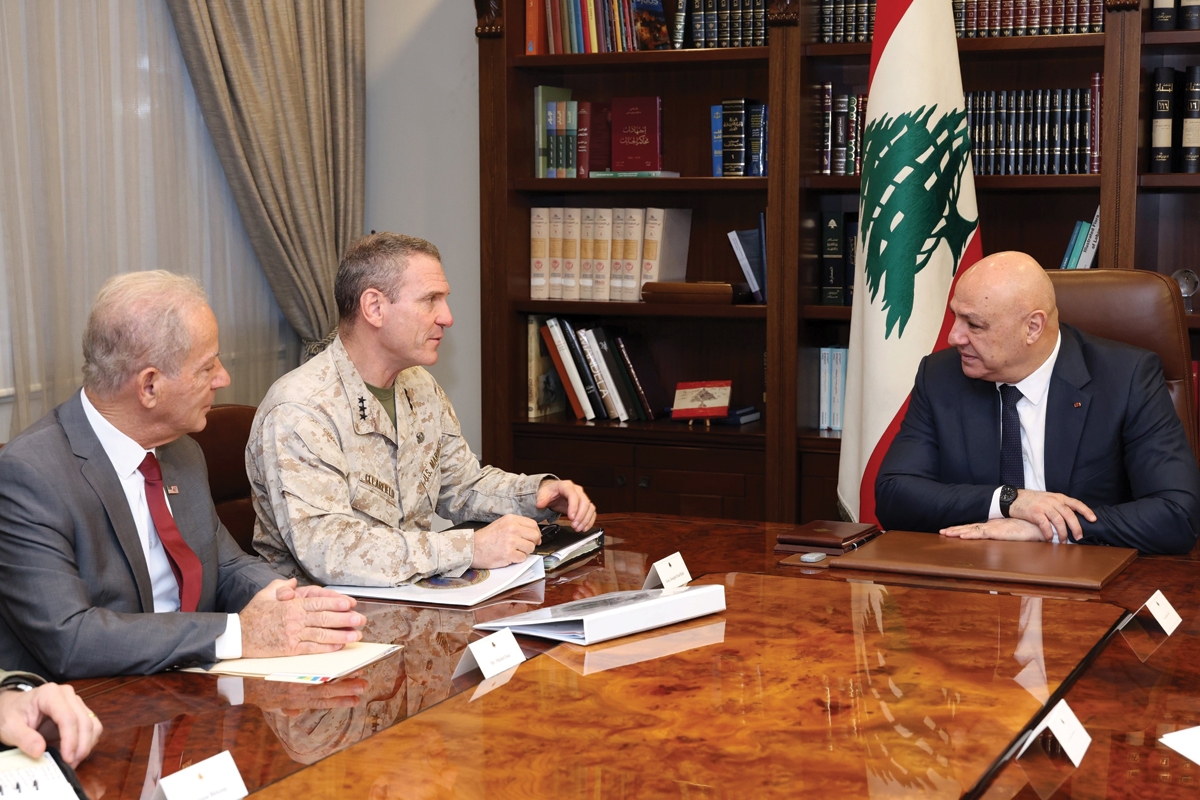
Amid the approval of the amnesty law, US General Joseph Klairfield, head of the “Mechanism” committee, arrived in Beirut. He met with presidents and officials to discuss the next round of negotiations in the Italian capital, Rome, as the Americans work to persuade Lebanon to participate.
The US objective is to ensure the completion of negotiations. Even if positions remain divergent, the Americans insist on holding the session to discuss points of potential agreement, such as reviewing Lebanon’s actions in pilot areas, presenting new areas, and continuing discussions on the prisoners’ file and other items.
This has prompted the Americans to issue a statement through a senior State Department official emphasizing the necessity of completing the negotiations, a goal also pursued by US Ambassador to Beirut Michael Issa. Current efforts are focused on establishing a framework for the new negotiation round and identifying the points to be addressed.
At both the Lebanese and international diplomatic levels, there is a growing sense that the negotiations will not yield any practical or operational implementation on the ground, particularly as Israel is preoccupied with its domestic elections and the United States will be focused on the midterm elections.
This raises renewed Lebanese fears that Israel may seize this period to continue its military operations, specifically by launching an assault on the “Ali al-Tahir” hill, seizing control of it, and declaring a military achievement.
For the Israelis, they are tightening the noose around “Ali al-Tahir,” believing that increased pressure will compel Hezbollah to negotiate over the fate of its fighters held in the military facility. However, other assessments suggest Hezbollah may resort to carrying out a counter-operation to defend the site and prevent its fall.
