Lebanon Abolishes Death Penalty as 'Pardon' Sparks Government Crisis
Internal political files overshadowed all others. The clamor surrounding the parliamentary session on the approval of the general amnesty law drowned out other issues, particularly as the session was tense and explosive between Prime Minister Nawaf Salam on one side and Defense Minister Michel Mimsa on the other, following the push to pass the amnesty law. While the Prime Minister supports the amnesty law and seeks its passage, the Defense Minister, representing the Lebanese Army, opposes its approval. At the start of the session, the Defense Minister requested the floor to present the Army’s viewpoint, but the Prime Minister objected and barred him from doing so, arguing that the government is represented by its head. This led the Defense Minister to leave parliament, while several parliamentary blocs expressed solidarity with him. The session was postponed, as some blocs insisted on the Defense Minister’s presence and his speech to ensure a quorum for participation. This dispute appears to be part of a larger conflict inseparable from the file of arms restriction and the Army’s movement, especially since the Prime Minister has expressed frustration on multiple occasions over the Army’s slow action to extend its authority and control towns in the south and disarm Hezbollah.
In a parallel development, the Lebanese parliament approved yesterday the abolition of the death penalty, whose implementation had been suspended for more than two decades, making Lebanon the first country in the Middle East to officially end this punishment.
Alongside these ongoing debates, Israeli military escalation in the south continues, while the negotiation track remains stalled due to a lack of progress. Meanwhile, the United States is striving to persuade both sides to return to negotiations. President Joseph Aoun has stated that there is no alternative to these talks, as the alternative is war, which no one desires.
While Lebanon demands a complete halt to Israeli military operations and an agreement on new experimental zones from which Israeli forces would withdraw to facilitate negotiations, Israel rejects these proposals.
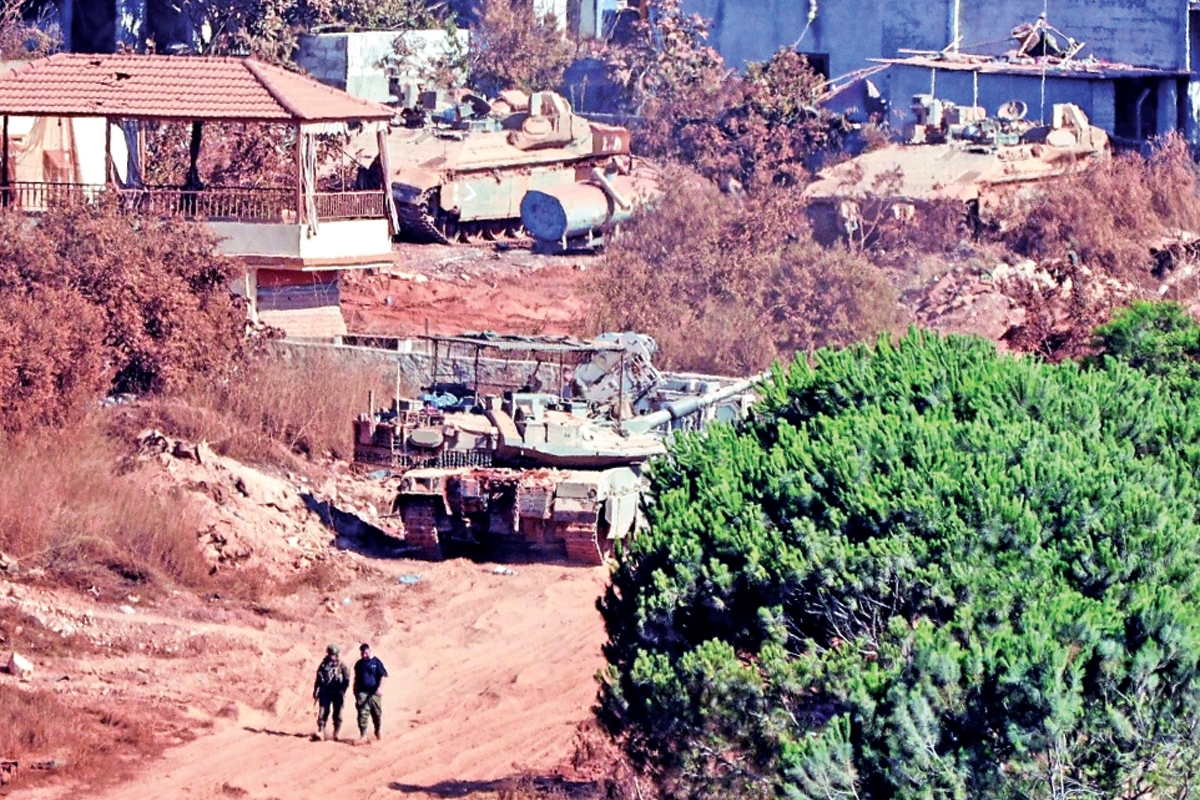
Israel clearly responds to all Lebanese demands for withdrawal by expanding and crossing the “Blue Line” in Mansouri, heading toward Beit Sayad, or in Hittin and Aita al-Shaab, or even by returning to western Zgharta and continuing military activity in eastern Zgharta. All of this indicates an Israeli effort to expand the Blue Line, alongside the complete destruction of these towns and areas, appearing as a fiery prelude to an impending confrontation. Hezbollah is preparing for and awaiting this confrontation, particularly if Israel insists on launching the “Ali al-Tahir” operation, which could ignite the front across multiple axes.
According to sources monitoring the situation, Lebanon is likely to witness further escalation based on all field data and Israeli movements. Questions are being raised regarding what Hezbollah will do in response to Israeli movements at the Ali al-Tahir hill, and whether the group will carry out a counter-offensive against Israeli forces. Fighters besieged at Ali al-Tahir may resort to launching this operation against the advancing Israeli forces. Meanwhile, the US Ambassador to Beirut is intensifying his efforts to salvage the negotiations and explore practical frameworks for implementing experimental zones. He recently visited the Prosecutor General to discuss issuing judicial signals that would allow the Army to search for weapons in private properties.
In the same context, US General Joseph Kellfield is visiting Lebanon and holding meetings with officials, particularly within the Army, to establish a practical framework for implementing the experimental zones.
