Al-Zaidi Red-Eyes Iran’s Agents and Secures Kuwait’s and Saudi Arabia’s Borders
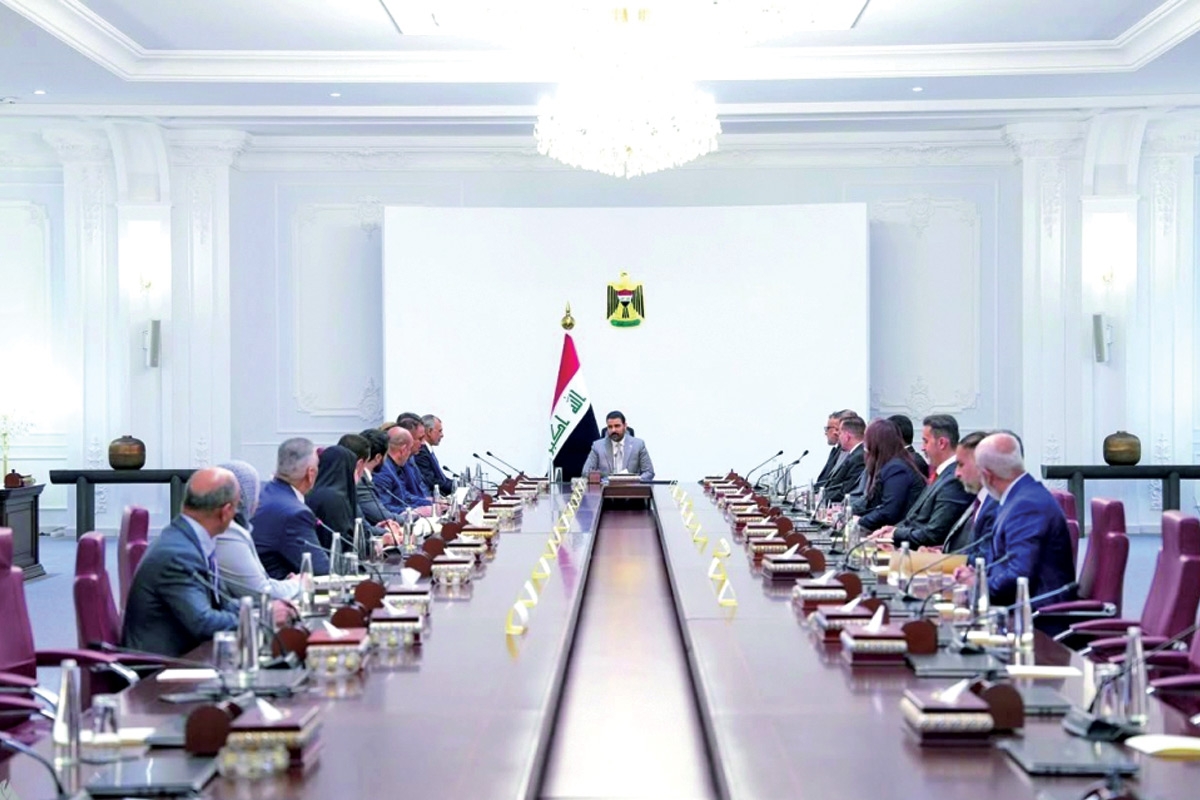
In a serious move to break free from Iran’s shadow and dismantle the dominance of extremist factions over decisions of war and peace, Iraq has established a new military operations command to secure and stabilize its borders with Kuwait and Saudi Arabia. The government also ordered the closure of dozens of fictitious offices linked to the Popular Mobilization Forces (PMF), alongside the creation of an information bank to track millions of weapons scattered across the country.
In a decision of equal weight, Iraq’s Ministry of Interior announced yesterday the application of the Anti-Terrorism Law to individuals possessing unmanned aerial vehicles (UAVs) outside legal frameworks.
As part of Prime Minister Ali al-Zaidi’s efforts to reintegrate Iraq into its regional neighborhood and contribute to enhancing regional security, a senior security source told the official Iraqi News Agency (INA) on the night of Sunday into Monday that a “cabinet directive has been issued to establish the Badia Operations Command, aimed at strengthening security and stability in the Muthanna Governorate.” Located in the far southwest of Iraq, Muthanna shares its southern border with both Kuwait and Saudi Arabia.
The source clarified that “the issuance of the cabinet directive to form the Badia Operations Command aims to enhance security and stability in the Badia region of Muthanna and its surrounding areas, as well as to strengthen coordination and openness with other military units.”
Amid the accelerating process of establishing new security and defensive arrangements—headed by the “Mecca Agreement” and the Saudi-led multinational maritime coalition aimed at deterring Iran-aligned militant threats and securing international navigation—al-Zaidi’s government has adopted a hardline stance toward armed factions. These factions had previously prevented Iraq from participating in any international or regional arrangements that would safeguard its political, economic, and security interests.
Yesterday, Major General Mqdad Miry, head of the Relations and Media Department at the Ministry of Interior, revealed that the Iraqi judiciary treats any UAV that enters or operates outside official frameworks as an act of terrorism. Consequently, UAV owners are subject to the Anti-Terrorism Law if they possess them for non-peaceful purposes or through illegal means.
Miry noted that the Special Committee for Weapon Inventory and Regulation within the Ministry of Interior seized 49 unlicensed UAVs this year.
In a significant development, Major General Miry announced the closure of 71 fictitious offices claiming affiliation with the PMF, the establishment of an information bank for six million weapons in Iraq, and the shutdown of 119 arms shops.
He further pointed out that 55,264 weapons were withdrawn from the custody of civil ministries and transferred to the Ministry of Interior. He disclosed that more than half a million weapons had been registered under citizens’ weapon registration requests.
One day after revealing a major operation to dismantle a large network planning attacks on specific targets, government spokesperson Haider al-Abudi clarified that the delay in the factions’ response to the Saudi-US strike was part of coordination and procedural measures by the state governance coalition to contain tensions and protect Iraq from becoming a launchpad for targeting neighboring countries. He affirmed that the dialogue on centralizing weapons under state control would proceed within the specified deadline.
Al-Abudi explained that al-Zaidi’s government, which has ordered the army to raise its readiness levels nationwide and canceled the leave of commanders and officers in anticipation of any emergency or clash, is working to protect the Iraqi people and send clear messages to regional states that Iraq’s territory will not serve as a launchpad for attacks on neighbors. He confirmed the continued implementation of the cabinet’s program.
Regarding the file on weapon consolidation, he stated that the dialogue is being conducted through various tracks under the direct supervision of the Prime Minister, within the legal and constitutional framework and the principle of the state of institutions. He noted at the same time that some parties have expressed concern and reservations, emphasizing that the government is working to consolidate weapons under state control during the period ending on September 30 next year.
The source told Iraqi media outlets that experts have knowledge of financial flows, particularly those involving the US dollar, which helps in tracing their paths and identifying the parties involved in embezzling public funds and smuggling them.
He added that the committee has begun its work and that the coming period will see the arrest of several “whales of corruption.” He stressed that the measures would not be limited to ministers, deputy ministers, or general directors, but would also include key figures in the theft operations, whose identities would be revealed at the appropriate time.
