Trump Calms War with Iran and Demands Compensation
As Iran continues to challenge the United States, obstructing the announcement of a nearly completed agreement with the Sultanate of Oman regarding transit arrangements in the Strait of Hormuz, and refusing to resume dir
Translated by Qiyas from الجريدة — Original source
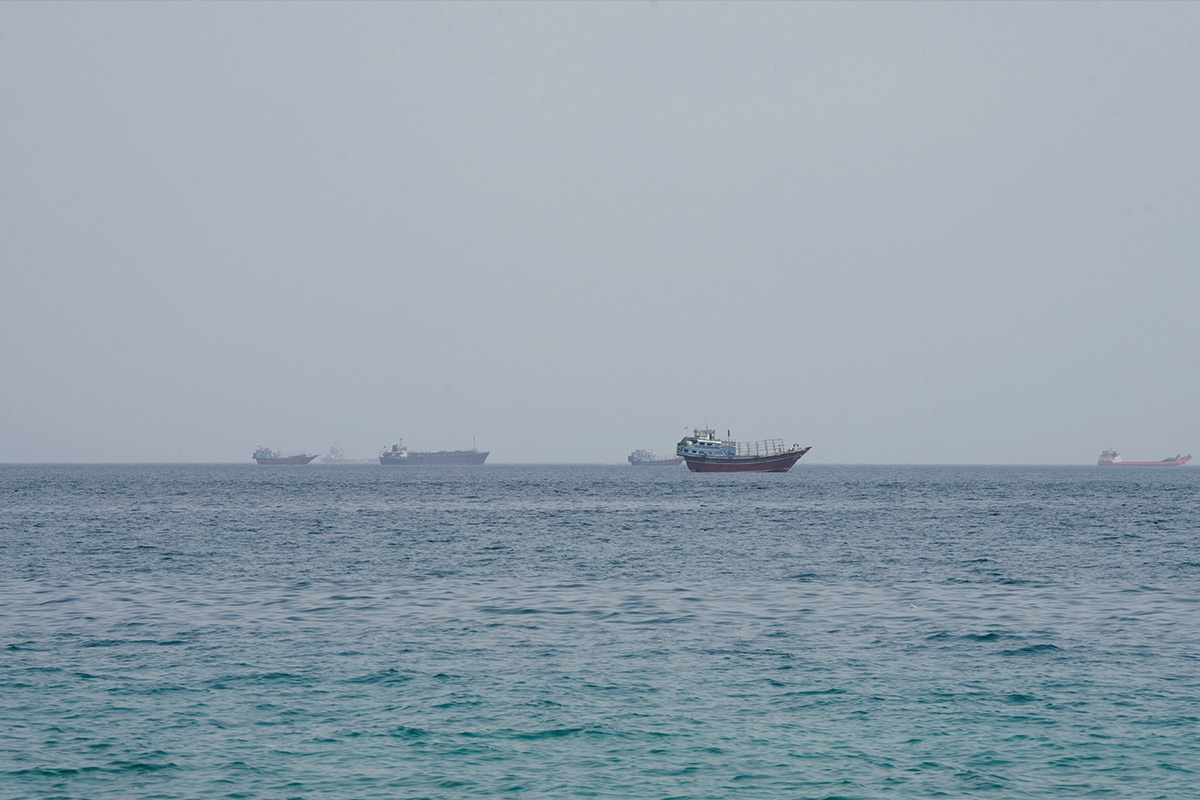
As Iran continues to challenge the United States, obstructing the announcement of a nearly completed agreement with the Sultanate of Oman regarding transit arrangements in the Strait of Hormuz, and refusing to resume direct negotiations with Washington, US President Donald Trump hinted that he is moving to escalate economic pressure on Tehran, shifting away from his previous strategy of threatening a new military attack.
In a brief interview with Axios, Trump said the United States is handling the situation with Iran calmly. Axios noted that the Republican president showed no anger or frustration during the phone interview regarding Tehran’s obstruction of the announcement of an agreement with Oman to reopen the strategic strait, after Iran issued a new list of demands last Saturday to allow ships to pass through the Hormuz.
Trump told the website, “We are handling the matter calmly. We are only negotiating with them partially. We are watching Iran, which is suffering from massive inflation and has no money.” However, he believed that things “will go fine. It’s like a game of chess.”
He stressed that Iran is “in a very bad position” economically and lacks the funds to pay its forces’ salaries. He viewed the US naval blockade as having exacerbated the economic crisis of the Iranian regime.
Later, Trump demanded that Iran pay compensation for damages it has caused over the past 50 years, confirming that he had directed his team to insist on including the compensation demand decisively in any future negotiations with Tehran.
Amid domestic criticism over the repercussions of the war ahead of the midterm congressional elections, Trump considered that with the current situation cooling down, the drop in oil prices to slightly above $80 per barrel would make Americans feel less pain from the conflict.
On the ground, US Central Command (CENTCOM) announced the tightening of naval blockade enforcement measures against Iran, with more than 20 warships deployed in the Middle East. CENTCOM stated that as of the 9th, the route of 55 commercial vessels had been changed, two had been delayed, and two others were inspected to verify compliance with the US sanctions and blockade on Iran.
This came as prominent US Senator Chris Murphy criticized the Trump administration over the war it started with Israel against Iran, claiming that a potential agreement under discussion with Tehran involves paying Iranians $100 billion annually in exchange for opening the Hormuz.
In response, Iran’s Supreme Leader Mojtaba Khamenei issued his first military decisions to fill leadership vacancies, ordering the appointment of Major General Ali Abdollahi as Chief of Staff of the Armed Forces, promoting Ahmad Vahidi from acting commander to commander of the Islamic Revolutionary Guard Corps (IRGC), and appointing Mostafa Izadi as his deputy.
Iranian Foreign Ministry spokesperson Ismail Baghaei responded to Trump’s remarks by saying that Iranians have proven themselves to be “professional chess players, whether in public or private deliberations.”
Nevertheless, the Iranian official confirmed that his country is not currently negotiating with Washington and is merely exchanging messages through intermediaries. Baghaei noted that Pakistan, which is leading mediation between his country and Washington with the help of Qatar and regional countries, had invited chief negotiator and Parliament Speaker Mohammad Baqer Qalibaf and Foreign Minister Abbas Araghchi to visit, adding that the visit would take place under suitable conditions.
Baghaei added: “Regarding the navigation movement map, an understanding was reached during negotiations with Oman, and there are still some technical points related to the joint statement under discussion, but negotiations are proceeding smoothly and constructively.”
He revealed that “we did not address the issue of fees in the negotiations with Oman regarding Hormuz, but it is natural to charge fees for services rendered.” He reiterated his characterization of the southern route, launched through coordination between Muscat, the US military, and the United Nations off the Sultanate’s coast, as “not safe.” He claimed that the route being discussed with Oman regarding “Hormuz” is temporary and will replace the southern and northern routes, noting that the issue of mine clearance will be coordinated between Iran and Oman as the two littoral states of the strait.
Meanwhile, President Masoud Pezeshkian sought to contain the confusion and disarray that emerged during the Iranian regime’s replacement of National Security Council Secretary Mohammad Bagher Khalilzadeh with former hardline Islamic Revolutionary Guard Corps (IRGC) commander Mohsen Rezaee on Sunday night–Monday morning.
Pezeshkian, who issued a decree appointing Rezaee, stated that he held a very good meeting with the reclusive Supreme Leader’s son, Mojtaba Khamenei, lasting seven hours and covering issues related to sanctions and resilience. He explained that he advised him to pursue unity and harmony, “because the enemy is currently focused on fomenting internal divisions.”
He added that “despite the enemy’s siege, we will open new channels, and our officials are working tirelessly to resolve existing problems,” pointing out that the continued “people’s refusal to surrender or bow down” is due to Mojtaba Khamenei’s message, in which he said that “the people have been awakened.”
This came as “Al-Jarida” learned from informed sources that chief negotiator Pezeshkian had informed Mojtaba, following intense communications with US Vice President JD Vance, that Iran faces a “golden opportunity” to reopen channels with Washington. They affirmed their readiness to “swallow the bitter cup” and bear responsibility for any agreement reached to end the war.
US officials told “Axios” that growing divisions exist within the Iranian regime. There is a camp led by Pezeshkian, which is highly concerned about an economic collapse and believes Iran needs to reach an agreement with the United States. Meanwhile, another camp led by IRGC commander Ahmad Vahidi refuses to make any concessions to Washington.
