Lebanon: Elements of the Islamic Revolutionary Guard Corps besieged in Ali al-Tahir
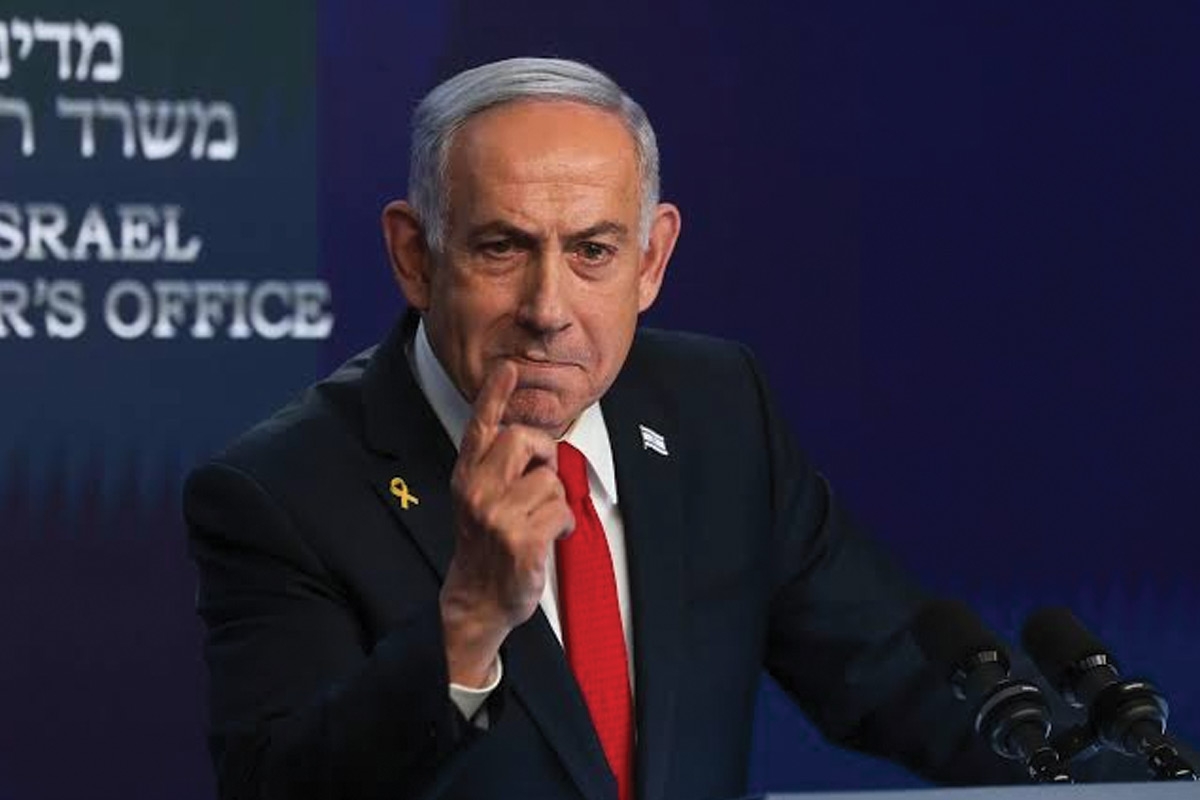
Amid reports indicating that approximately 40 Hezbollah fighters and Iranian Revolutionary Guard elements are besieged in the Al-Tayr al-Ahmar heights in southern Lebanon, Israeli Prime Minister Benjamin Netanyahu spoke
Translated by Qiyas from الجريدة — Original source
Amid reports indicating that approximately 40 Hezbollah fighters and Iranian Revolutionary Guard elements are besieged in the Al-Tayr al-Ahmar heights in southern Lebanon, Israeli Prime Minister Benjamin Netanyahu spoke of conducting a military operation of significant importance, which he said targeted those he described as “terrorists,” including elements in Al-Tayr al-Ahmar.
Netanyahu stated today that Israel has been operating forcefully in Lebanon over the past few days, adding that he could not disclose further details regarding the nature of the ongoing operations.
While information suggests that Hezbollah has rejected all proposals regarding the opening of a safe corridor for it to evacuate the military facility in Al-Tayr al-Ahmar and hand it over to the Lebanese army in exchange for removing weapons from the site, the Israeli forces’ tightening of the siege around the military installations there means cutting off all military and supply routes to the fighters inside. Reports indicate that it is no longer possible to deliver food, water, or even weapons to those under siege.
This situation may point to two scenarios: either Israel seeks to carry out a commando operation via special forces to storm the facility, or it launches a large-scale military operation against it. However, the latter would require mobilizing a large number of troops and entering into a battle with significant losses, especially since Hezbollah has decided to fight fiercely to prevent the fall of the facility, which has acquired multifaceted importance, particularly due to its strategic location. It overlooks the towns of Kafr Kila and Nabatieh, meaning that its fall would result in the military capture of Nabatieh.
The fall of Al-Tayr al-Ahmar would deal a major blow to Hezbollah’s second line of defense, shifting Israeli focus to the third line of defense, which extends between western Beqaa, Mount Lehanoun, and the Apple Valley region. Israelis have repeatedly stated their desire to control these strategic hills, which house massive military sites.
Here, the ground escalation witnessed in the south over the past few days cannot be overlooked, whether through the renewed entry of Israeli forces into the town of Zaitoun al-Gharbi (Western Zaitoun) in an attempt to establish a fait accompli regarding Israel’s return to any town it had previously withdrawn from, or through escalation via artillery shelling and drone strikes targeting the Al-Tayr al-Ahmar heights and their surroundings.
This comes as a source close to the head of the Lebanese negotiating delegation with Israel told Al-Jarida that the date for the new round of negotiations in September “is not yet fixed,” and that its convening, from the Lebanese side, is no longer a certainty or separate from what Israel will do on the ground in the coming period.
The source indicated that “Lebanon will not participate in any new round unless Israel agrees to Lebanese conditions,” foremost among which is a comprehensive ceasefire and an end to the bulldozing and destruction operations carried out by Israeli forces in several southern towns.
Thus, the situation has become divided between two images: one of political and diplomatic deadlock, and the other of military escalation that Netanyahu is poised to exploit at any moment, as he refuses to commit to any ceasefire in Lebanon or withdrawal from any area.
While there are concerns that Netanyahu may exploit the Lebanese position rejecting participation in negotiations to escalate his military operations, attention is turning to potential communications between Beirut and the administration of US President Donald Trump, in an attempt to salvage the situation and put negotiations back on track.
