To avoid new tariffs, US container shipping boom recedes
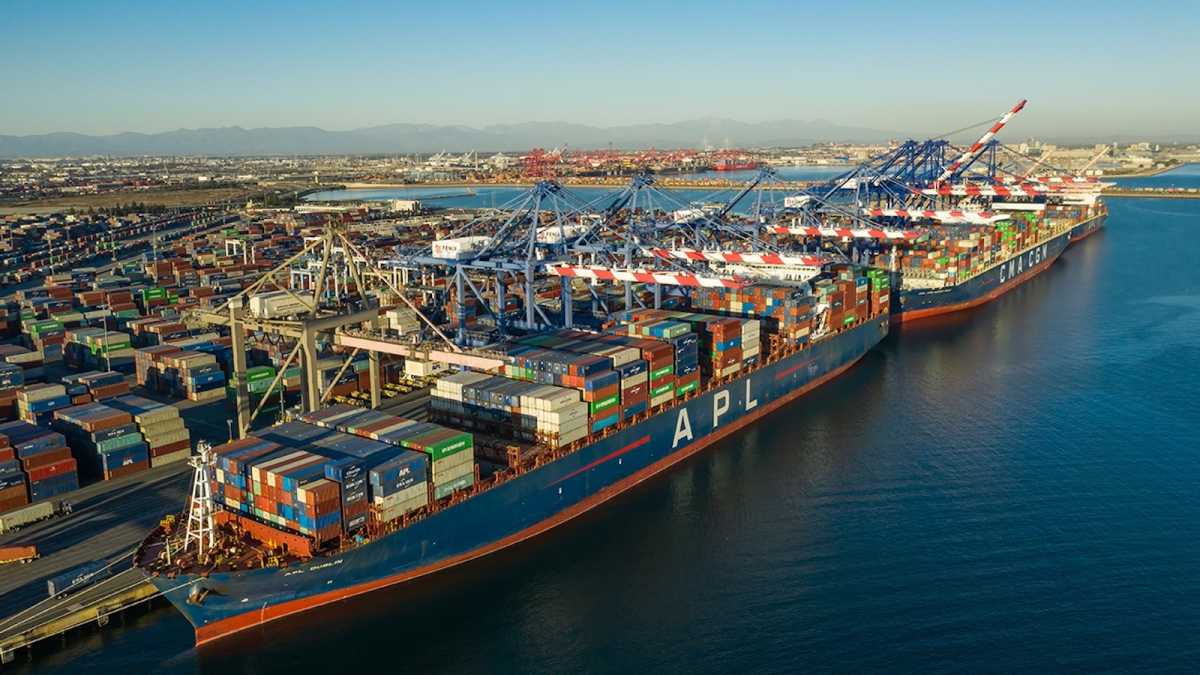
Research published on Friday, August 7, indicates that the early seasonal surge in container imports to the United States, driven by shipping companies rushing to avoid higher fuel surcharges linked to the US-Israeli war with Iran and new US tariffs, has begun to recede.
The Global Port Tracker report, issued by the National Retail Federation and maritime consulting firm Hackett Associates, expects import volumes at the country’s major container ports to remain high during the current month before declining for the remainder of the year, according to Reuters. Cargo shipping companies, which arrange transportation for clients, endorsed the report’s assessment.
The temporary 10% global tariffs, which took effect in February, expired on July 23. The following day, a new round of tariffs ranging from 10% to 12.5% began to apply, covering 60 economies and affecting 99% of US imports.
The report notes that May was the busiest month this year. The container shipping peak season, historically occurring in late summer or autumn, has been arriving earlier and more smoothly in recent years, thanks to shippers’ experience in managing supply chain disruptions, ranging from the pandemic and wars to rapid changes in US tariffs.
Jonathan Gold, Vice President of Supply Chain and Customs Policy at the National Retail Federation (NRF), stated that retailers, who account for about half of US container imports, have become adept at handling supply chain shocks.
The Global Port Tracker report forecasts a 4.2% year-over-year decline in import volumes in August, reaching 2.2 million twenty-foot equivalent units (TEUs) across seaports, including Los Angeles/Long Beach, New York/New Jersey, and Houston. The report also anticipates a continued monthly decline in imports for most of the remainder of the year, although volumes will remain above 2025 levels.
“The minimum cost does not change; fuel surcharges and canal transit fees will not decrease as demand falls.”
