Falcon Technology and Innovation Center Nurtures and Supports Young Minds from Idea to Startup
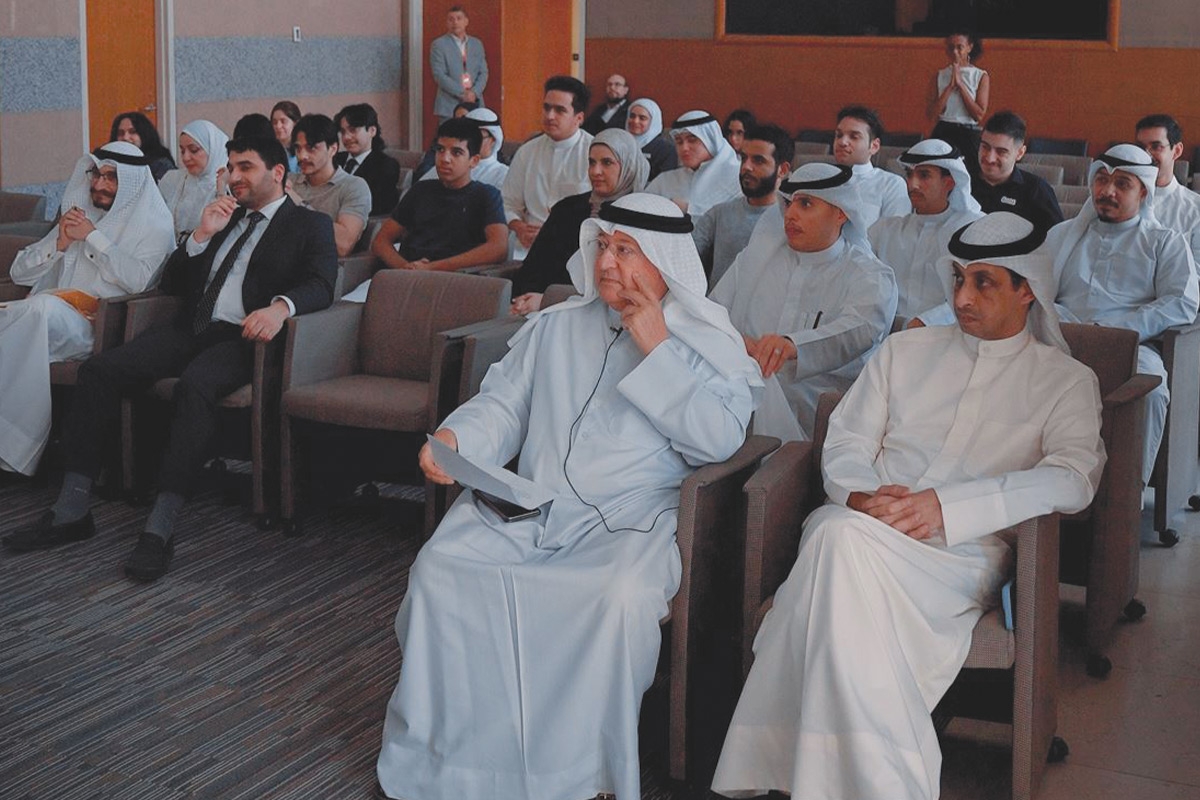
Dr. Saud Al-Anzi, Executive Director of the Hamad Abdulaziz Al-Saqer Center for Technology and Innovation, affirmed that the Center prioritizes investing in youth and promising minds, noting that its partnership with the
Translated by Qiyas from الجريدة — Original source
Dr. Saud Al-Anzi, Executive Director of the Hamad Abdulaziz Al-Saqer Center for Technology and Innovation, affirmed that the Center prioritizes investing in youth and promising minds, noting that its partnership with the Loyak Foundation has resulted in training a group of young people in entrepreneurship skills and app development. This initiative aligns with a broader strategy aimed at empowering Kuwaiti youth and preparing them to embark on technology-driven ventures.
Speaking at the graduation ceremony for trainees of the “Al-Hafra” (The Pit) training program, organized by the Center in collaboration with Loyak, Al-Anzi stated that the program was the outcome of a memorandum of understanding between the two parties. The initial phase of their cooperation yielded a training program in which 12 trainees, divided into four teams, received instruction in key skills over five weeks. They then progressed to presenting their ideas and projects before a panel of judges, receiving feedback and critiques to refine and develop their ventures.
He explained that the program’s concept simulates the real-world experience of launching a startup, introducing young people to the challenges and concerns faced by small business owners and teaching them how to address them and find appropriate solutions. Additionally, trainees were coached on how to answer judges’ questions, handle feedback, and cope with the possibility of failure. Al-Anzi emphasized that entrepreneurship requires strong skills, resilience, and flexibility from the outset.
Al-Anzi revealed the Center’s plans to launch a comprehensive future project for young innovators, featuring significant challenges and aimed at nurturing promising ideas and developing them over a period ranging from six months to a year. He noted that details of the program would be announced soon.
He added that trainees would receive training courses at the Center, alongside other programs conducted in partnership with affiliated institutions. There is also potential to leverage expertise from universities and training institutions outside Kuwait, including those in Saudi Arabia, Qatar, the United Kingdom, and the United States.
Al-Anzi stressed that the Hamad Abdulaziz Al-Saqer Center for Technology and Innovation is a non-profit organization, and its true investment lies in talented and aware young minds, with the goal of contributing to a better future for Kuwait. This is achieved by supporting idea owners from the initial stages through training, idea development, and project establishment, all the way to implementation.
Al-Anzi pointed out that the Center is not limited to artificial intelligence (AI) but also places significant emphasis on cybersecurity, considering both critical technical fields as central to its focus. He noted that specialized programs in both areas will be announced shortly.
He clarified that AI programs will range from simplified levels suitable for non-specialist users to advanced courses tailored for specialists and those seeking in-depth expertise. The same approach applies to cybersecurity programs, which will initially target corporate employees to enhance system protection, eventually extending to specialists in networks and cybersecurity, in collaboration with global companies specializing in the field.
Al-Anzi commended the rapid steps taken by the Center since its inception, noting that it began operations in December of last year and achieved clear milestones within eight months. He affirmed the Center’s continued commitment to expanding its technical and youth-oriented programs and initiatives.
For his part, Omar Al-Farsi, director of the “Al-Hafra” training program at the Hamad Abdulaziz Al-Saqer Center for Technology and Innovation, stated that the program was organized as part of a course hosted by the center in partnership with “Loyak.” In its final stage, the jury evaluated four youth-led app projects: “Salihi,” “Mawjud,” “Juma’a,” and “Rently.”
Al-Farsi noted that the participants’ level was serious and promising, demonstrating clear awareness and a strong aptitude for learning and growth. He pointed out that the students’ questions and their desire to learn more revealed a genuine interest in acquiring knowledge and developing ideas.
He added that this engagement led to the introduction of developmental projects focused on entrepreneurship and the challenges faced by business owners, which gave rise to the “Al-Hafra” program. The program’s title is motivational, reflecting the concept of learning and skill acquisition through overcoming difficulties and challenges.
Al-Farsi explained that the program offers a competitive experience for young people, requiring teams to make practical decisions and find solutions related to investment and business development, thereby immersing participants in an environment that closely mirrors the challenges they may encounter in the real world of entrepreneurship.
Al-Qattan remarked that the level of the participating students bodes well for Kuwait’s future, noting that despite the circumstances and challenges faced by Kuwait’s entrepreneurship community since the coronavirus pandemic until today, young people still possess the motivation and enthusiasm to launch their own ventures.
He added that supporting youth through a specialized center, such as the Hamad Abdulaziz Al-Saqer Center for Technology and Innovation, represents a crucial step, particularly since most of the ideas and projects submitted serve the technology sector, which has become a primary driver for various industries, while simultaneously addressing existing gaps and needs in the market.
He emphasized that young people represent Kuwait’s greatest investment, praising the role of the Hamad Abdulaziz Al-Saqer Center for Technology and Innovation in identifying these talents and supporting promising entrepreneurs. He expressed his gratitude to the center for providing this experience and affirmed his pleasure in participating in efforts to support youth so that their projects can see the light of day.
Al-Qattan continued, “Today, there are no losers or winners; all participants deserve support and development.” He stressed that the true value of such programs lies in the experiences and skills that young people acquire, which will assist them in their future careers.
Khalid Al-Muwasharji, a member of the “Salihi” project team, discussed the project’s concept, which connects users with specialized technicians to repair household malfunctions, while leveraging artificial intelligence technologies to store data on recorded issues.
He explained that the proposed system can utilize previous data to generate a report on the home’s condition, helping to address future malfunctions, detect them early, and determine repair methods by leveraging artificial intelligence.
Al-Muwasharji affirmed that the program experience yielded significant benefits for the team on both personal and academic levels, despite their team not winning the competition. He noted that the experience taught them valuable lessons, particularly in the area of teamwork.
He added that the random selection of team members helped participants learn how to work and communicate effectively under pressure, completing tasks as a unified team despite differing viewpoints. He emphasized that this diversity was an integral part of the experience and contributed to enhancing their ability to collaborate and work together.
