Kuwait Investment Company: Gulf Markets Have Demonstrated a Degree of Resilience
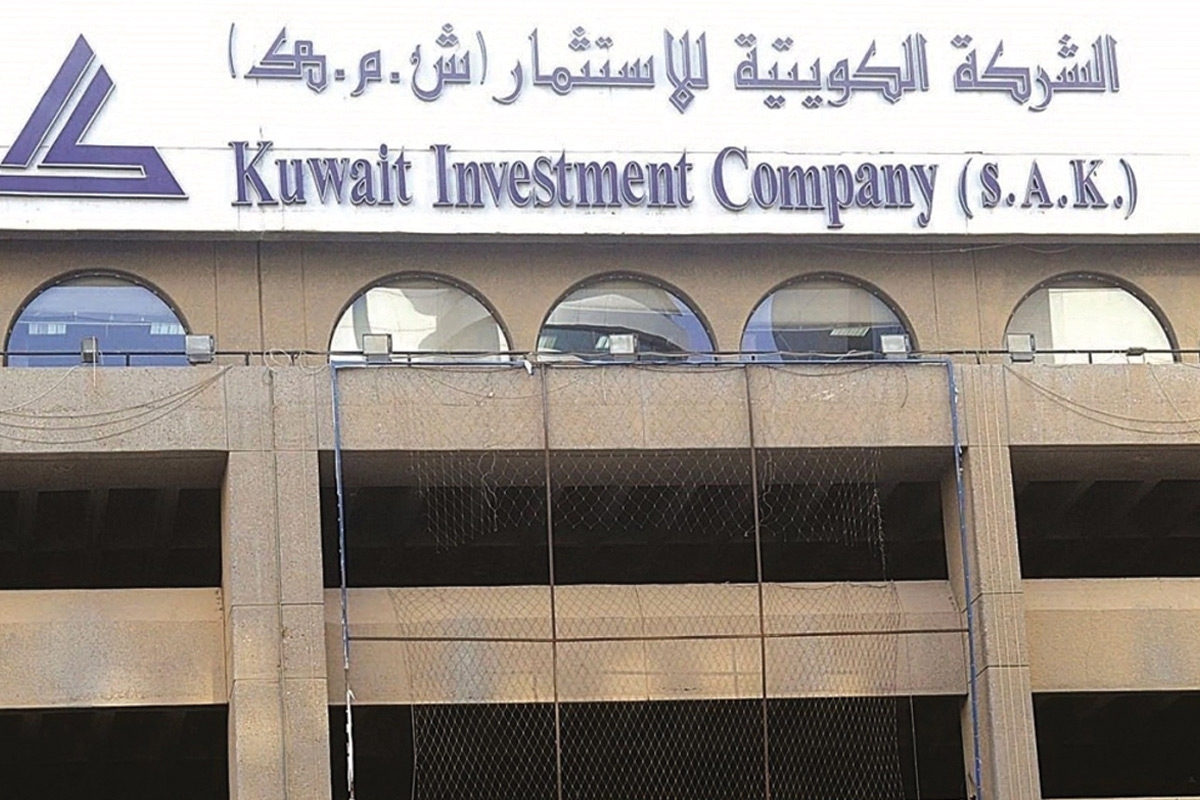
Last July witnessed a relative easing of geopolitical tensions compared to previous periods, contributing to improved investor sentiment, although regional risks remained a factor influencing liquidity flows and market directions. Gulf stock markets delivered mixed performance during the month, with the financial results of listed companies serving as the primary driver for Gulf exchanges, particularly within the banking, telecommunications, and energy sectors.
According to a report issued by Kuwait Investment Company, the Saudi banking sector recorded an 8 percent growth in net profits for the first half of 2026, reaching SAR 48.82 billion. This growth was driven by a 14.2 percent increase in Al Rajhi Bank’s net profits to SAR 13.76 billion, and a 7.2 percent rise in Al Ahli Bank’s net profits, which reached approximately SAR 13.03 billion for the first half of 2026. Similarly, banks in Abu Dhabi saw their combined net profits for the first half of 2026 grow by 12 percent to AED 25.2 billion. Meanwhile, banks in the Dubai Financial Market recorded a 4 percent growth in net profits, reaching AED 22.31 billion.
Stability in oil prices above support levels bolstered expectations for government spending, corporate profitability, and investor confidence. Additionally, investors awaited the Federal Reserve’s stance on interest rates, as reduced expectations for monetary tightening supported risk appetite in Gulf markets. Foreign investor inflows continued toward leading stocks, banks, and companies with stable earnings, a trend particularly evident in the Saudi and UAE markets.
With the start of the first-half earnings season, liquidity increased as investors moved to rebuild positions in companies that exceeded expectations. Regarding the performance of Gulf stock markets in the first seven months of 2026, the period was among the most volatile since the coronavirus pandemic, due to the convergence of several factors:
* Military escalation in the region and the accompanying disruptions to navigation through the Strait of Hormuz during the first quarter.
Despite these challenges, Gulf markets demonstrated resilience, supported by the robustness of the banking sector, increased government spending, and improved earnings for a significant number of leading companies.
Muscat Stock Exchange led Gulf markets by a wide margin in terms of returns, posting gains of 24 percent, supported by strong corporate financial results, rising investor confidence in market reforms, and expectations of an upgrade. The Saudi stock market was the only other market to end the first seven months of the year with moderate gains of 0.9 percent, benefiting from strong financial results in the banking, energy, and telecommunications sectors.
Conversely, the Qatar Stock Exchange faced pressure due to declining gas supplies, ongoing uncertainty regarding global interest rate trends, and heightened geopolitical risks, recording the largest decline among major Gulf markets at 7.8 percent. It was followed by the Dubai Financial Market, which saw its index fall by 4.2 percent, and the Kuwait Stock Exchange, which recorded a decline in its general market index of 1.69 percent.
The total market capitalization of Gulf stock markets declined by approximately $2 billion in July 2026, closing the month at around $3.96 trillion, driven by drops of roughly $6 billion each in the market capitalizations of the Dubai Financial Market and the Qatar Stock Exchange. Meanwhile, the Saudi stock market, the largest by market capitalization, rose by approximately $4.5 billion to reach a market value of $2.52 trillion. The second-highest gains were recorded by the Abu Dhabi Securities Exchange, which approached $3 billion, and the Kuwait Stock Exchange, which gained $1.2 billion during the month, bringing its market capitalization to $173.4 billion. Year-to-date, the Saudi stock market remains the top performer in market capitalization gains at approximately $169 billion, while the Abu Dhabi Securities Exchange recorded the largest losses at $67 billion. The Qatar Stock Exchange and the Dubai Financial Market posted losses of $14 billion and $9 billion, respectively, resulting in total year-to-date market capitalization gains across Gulf exchanges of $89 billion.
Trading volumes in Gulf stock markets fell by 23 percent in July 2026 to $41.5 billion, due to renewed geopolitical tensions and uncertainty in the economic and investment landscape. The Saudi stock market accounted for 55 percent of total Gulf stock market trading volumes in July, with liquidity valued at $23 billion, down 21 percent from the previous month. Liquidity in the UAE markets (Dubai and Abu Dhabi exchanges) totaled $9.3 billion during the month, a 30 percent decline from the prior month. Similarly, liquidity at the Kuwait Stock Exchange dropped by 25 percent in July to $5 billion. Consequently, total liquidity across Gulf exchanges during the first seven months of 2026 reached approximately $347 billion, including $187 billion in the Saudi stock market, $84 billion in UAE markets, and $37 billion in the Qatar Stock Exchange.
The first seven months of 2026 saw a decline in trading liquidity at the Kuwait Stock Exchange, attributed to profit-taking activities and investor caution regarding geopolitical developments and rising investment risks. Trading volumes amounted to approximately 11.4 billion Kuwaiti dinars (KWD), down 24 percent compared to the same period in 2025.
Sectorally, 30.7 percent of total exchange liquidity flowed into the banking sector, equivalent to 3.5 billion KWD. Trading was concentrated in shares of Kuwait Finance House, National Bank of Kuwait, and Boubyan Bank, with volumes of 1.36 billion KWD, 929 million KWD, and 293 million KWD, respectively. Liquidity for financial services companies and real estate firms reached 3.1 billion KWD and 1.9 billion KWD, accounting for 27 percent and 16.6 percent of trading volumes at the Kuwait Stock Exchange, respectively.
According to market classification, trading liquidity during the first seven months of 2026 was concentrated in First Market shares, accounting for 66.6 percent of the Kuwait Stock Exchange’s total liquidity, reaching 7.6 billion Kuwaiti dinars. The First Market Index declined by 2.98 percent over the first seven months of the year, compared to a 1.69 percent loss in the General Market Index, driven by losses in the banking sector index, which fell by 2.1 percent, as the First Market Index comprises most of the listed bank shares. First Market shares remain the main driver of the Kuwait Stock Exchange, with a market capitalization of approximately 44 billion Kuwaiti dinars at the end of the month, equivalent to 83 percent of the exchange’s total market value. Meanwhile, trading activity in the Main Market fell by 42 percent during the first seven months of 2026, accounting for 33.4 percent of the exchange’s liquidity, or 3.81 billion Kuwaiti dinars. This decline reflects reduced speculation on mid-cap and small-cap stocks in terms of market value. The drop in speculative activity and liquidity coincided with solid gains in the Main Market Index, which rose by 5.2 percent during the first seven months of 2026.
The Kuwait Stock Exchange’s total market capitalization reached approximately 53.3 billion Kuwaiti dinars at the end of July 2026, an increase of about 376 million dinars from the end of June 2026, but still 773 million dinars lower than at the end of 2025. This monthly rise was driven by a 968 million Kuwaiti dinar increase in the market capitalization of the banking sector, narrowing its year-to-date losses to 675 million dinars, while the telecommunications sector’s market value declined by 196 million dinars. Market capitalization is distributed across 13 sectors, led by banking with 32.3 billion dinars, representing 60.6 percent of the market. This is followed by the financial services sector, accounting for 10.54 percent, or 5.62 billion Kuwaiti dinars; real estate at 7.95 percent, equivalent to 4.24 billion Kuwaiti dinars; and telecommunications at 7.55 percent, or 4.02 billion Kuwaiti dinars. The industrial sector accounted for 4.87 percent of the Kuwait Stock Exchange’s total market value.
