Human Rights Watch: Israel’s Targeting of Journalist Amal Khalil Constitutes a War Crime
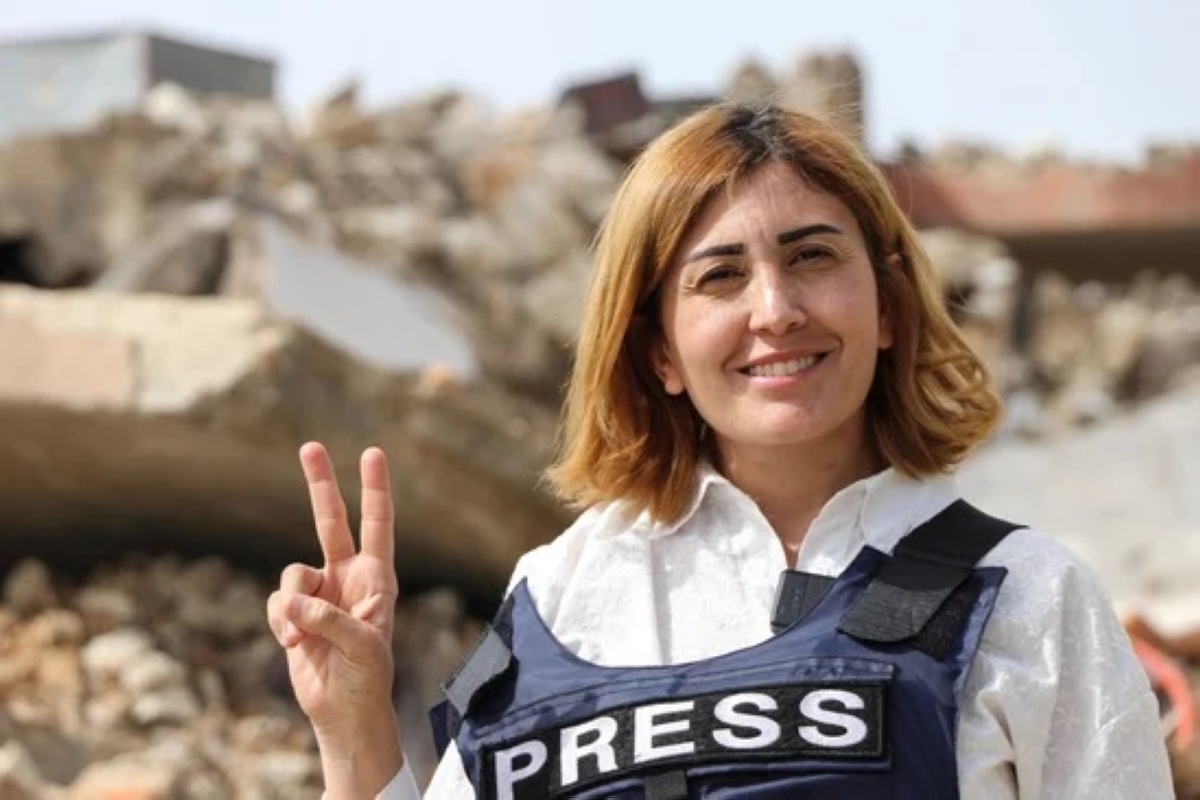
Human Rights Watch said today that the attacks carried out by the Israeli occupation army on April 22 in Lebanon, which resulted in the death of a journalist and the injury of another, included alleged deliberate attacks
Translated by Qiyas from الجريدة — Original source
Human Rights Watch said today that the attacks carried out by the Israeli occupation army on April 22 in Lebanon, which resulted in the death of a journalist and the injury of another, included alleged deliberate attacks on civilians and civilian objects, constituting war crimes.
The attacks on the southern town of Tayroun killed journalist Amal Khalil, who was covering hostilities in southern Lebanon for the Lebanese newspaper Al-Akhbar, and seriously injured independent Lebanese journalist Zainab Faraj, who was accompanying her as a photographer.
Ramzi Qais, Lebanon researcher at Human Rights Watch, said: “The Israeli occupation army claims it does not target journalists, but facts and evidence show that it has done so repeatedly.
Amal Khalil and Zainab Faraj are the latest victims in a long series of such attacks. The Israeli occupation forces’ continued killing of journalists demonstrates a brazen readiness to commit atrocities without any fear of consequences.”
Visual evidence and videos reviewed by Human Rights Watch, witness statements, and a request for conflict resolution submitted by the Lebanese Red Cross to the Israeli occupation army through the UN Interim Force in Lebanon (UNIFIL) to access the site after the first of three strikes that day, indicate that the Israeli occupation army knew or should have known that Khalil and Faraj were civilians.
The first strike, around 2:30 p.m., hit a car in front of Khalil and Faraj’s vehicle, killing two people they knew who were driving ahead of them: Ali Bazzi and Mohammad Al-Hourani. The strike forced Faraj and Khalil to abandon their car and take shelter near an adjacent building. At 3:00 p.m., UNIFIL sent a request to the Israeli army, via the Red Cross, to access the site and rescue the trapped journalists.
The second strike, between 3:21 and 3:42 p.m., hit Khalil and Faraj’s car a few meters from their hiding place, injuring Khalil and forcing them to move inside the building. The third strike, around 4:25 p.m., shelled and destroyed that building. It is believed that Israeli quadcopter drones were monitoring Faraj and Khalil during their hiding before launching the subsequent attack.
The Israeli occupation army is also believed to have hindered rescue efforts by methods that included dropping a sonic bomb from a drone, which initially forced Lebanese Red Cross medics carrying out rescue operations to withdraw without rescuing Khalil or providing care that could have saved her life, according to witnesses.
Furthermore, the ambulance was reportedly hit by small arms fire, based on witness statements and images reviewed by Human Rights Watch showing damage to the ambulance.
A report reviewed by Human Rights Watch from Tabnine Government Hospital, where Khalil’s body was taken after being retrieved that evening, stated that she died around 7:00 p.m. due to cardiac arrest. The report also stated that Khalil suffered a head injury, causing severe bleeding. The hospital report, along with the timeline concluded by Human Rights Watch’s analysis, indicates that Khalil was likely alive when Israeli forces forced the Red Cross team to withdraw from the site.
Qais said: “The evidence clearly shows that the Israeli army knew or should have known that Faraj and Khalil were civilians, yet it attacked them and prevented medics from rescuing them for hours. Lebanon must end impunity for Israeli violations, and other countries should press for accountability and use their influence with Israeli authorities to prevent further crimes.”
