Lebanon Faces Two Months of Waiting: Negotiations Do Not Halt Escalation
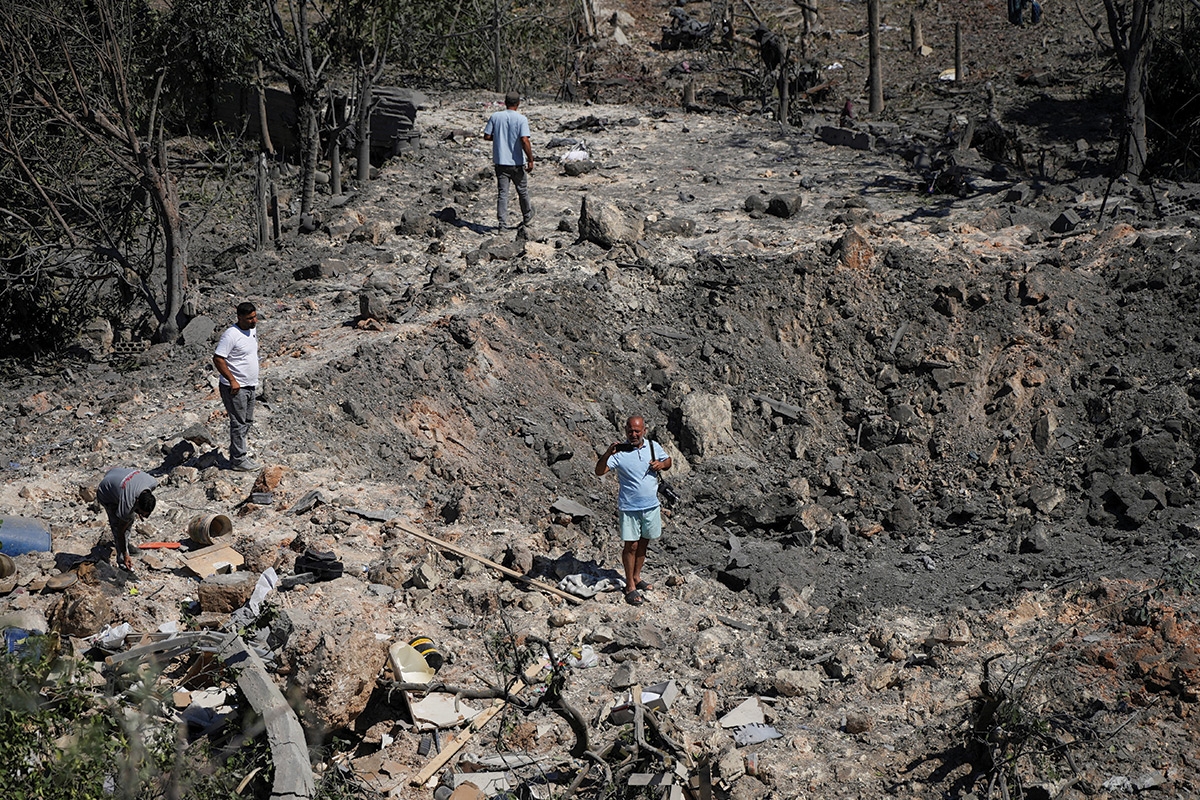
Lebanon does not appear close to exiting the dynamic that combines negotiation and escalation, as direct communications with Israel are stalling while military developments outpace the political track. With the conclusio
Translated by Qiyas from الجريدة — Original source
Lebanon does not appear close to exiting the dynamic that combines negotiation and escalation, as direct communications with Israel are stalling while military developments outpace the political track. With the conclusion of the seventh round of talks in Rome, no signs have emerged suggesting that any agreement could be implemented swiftly. Meanwhile, Tel Aviv continues to press for greater operational latitude and to impose new conditions on the negotiating table, in a scenario that seems poised to persist until after the Israeli elections, and likely for at least two months, before it becomes clear whether the political track can curb field-level escalation.
In Rome, Lebanon has yet to receive an Israeli response to its demands regarding the cessation of hostilities and the demarcation of experimental zones. Discussions on the prisoner exchange file continued, particularly regarding disagreements over who qualifies as a prisoner and the circumstances under which they were captured. Conversely, Israel has adopted the demands of Israeli families to recover the remains of their sons and relatives buried in Lebanon in previous periods. On its part, Lebanon insisted that halting Israeli escalation and bulldozing operations be considered an essential component of any sustainable arrangement.
According to sources in Baabda, the military track focused on the technical aspects of the negotiations, including military terminology, phrasing, and implementation mechanisms, while the political track addressed the issue of experimental zones, alongside Lebanon’s reaffirmation of the necessity to renew and adhere to the ceasefire.
However, the negotiation process is not unfolding in a political or security vacuum. Israeli positions are gradually hardening, and Tel Aviv does not appear willing to offer concessions that would translate into gains for Lebanon, nor does it show readiness to withdraw from any town in the south. More significantly, Lebanese officials were informed by the American side that extracting any concession from Israel before the elections would be difficult, and that Beirut should wait until after them, suggesting that the deteriorating situation will likely continue for at least two months.
At the same time, Israel is attempting to persuade Washington to allow it to carry out “localized” military operations in new areas, which it claims it wishes to enter, control, and dismantle before handing over to the Lebanese Army. Among the sites proposed by Tel Aviv is the Ali al-Tahir hill. Israel has also begun criticizing the Lebanese Army, accusing it of failing to fulfill its obligations, particularly in the experimental zones.
These criticisms carry significance beyond their immediate content, as they may mark the beginning of an Israeli campaign to hold the Lebanese Army responsible for the stagnation in implementing arrangements, thereby providing justification to evade any agreement or understanding that does not align with Israeli demands. Instead of serving as a framework for defining withdrawal mechanisms and halting escalation, the performance of the Lebanese Army could become an additional pressure card used by Israel to redefine the terms of the agreement.
According to the same sources, Israeli demands extend beyond the Ali al-Tahir hill; other areas are considered by Tel Aviv to be of military importance, including Wadi al-Hajar and Jabal al-Rayhan. Israel has clearly stated that the Lebanese Army must enter these areas and work to dismantle the military infrastructure within them, otherwise, the Israeli Army will assume this task itself.
Here, the limits of the current negotiation track become clear. Lebanon is attempting to cement the ceasefire and transform it into actionable security arrangements, while Israel seeks to retain freedom of military movement and redraw the facts on the ground before reaching a final understanding. With any Israeli concession tied to the elections, waiting itself becomes part of the equation, leaving Lebanon exposed to continued escalation and the expansion of conflict zones.
Thus, the coming months do not appear to be merely a waiting period for the results of the Israeli elections, but rather a phase in which the political track’s ability to contain the military trajectory will continue to be tested. If Israel remains capable of imposing new facts on the ground by force, negotiations will be forced to deal with them after they occur, rather than preventing them in advance. This keeps Lebanon within the orbit of war, even if the door to negotiation remains open.
