Democrats attempt to unify their ranks behind Mr. Fiennes in Michigan
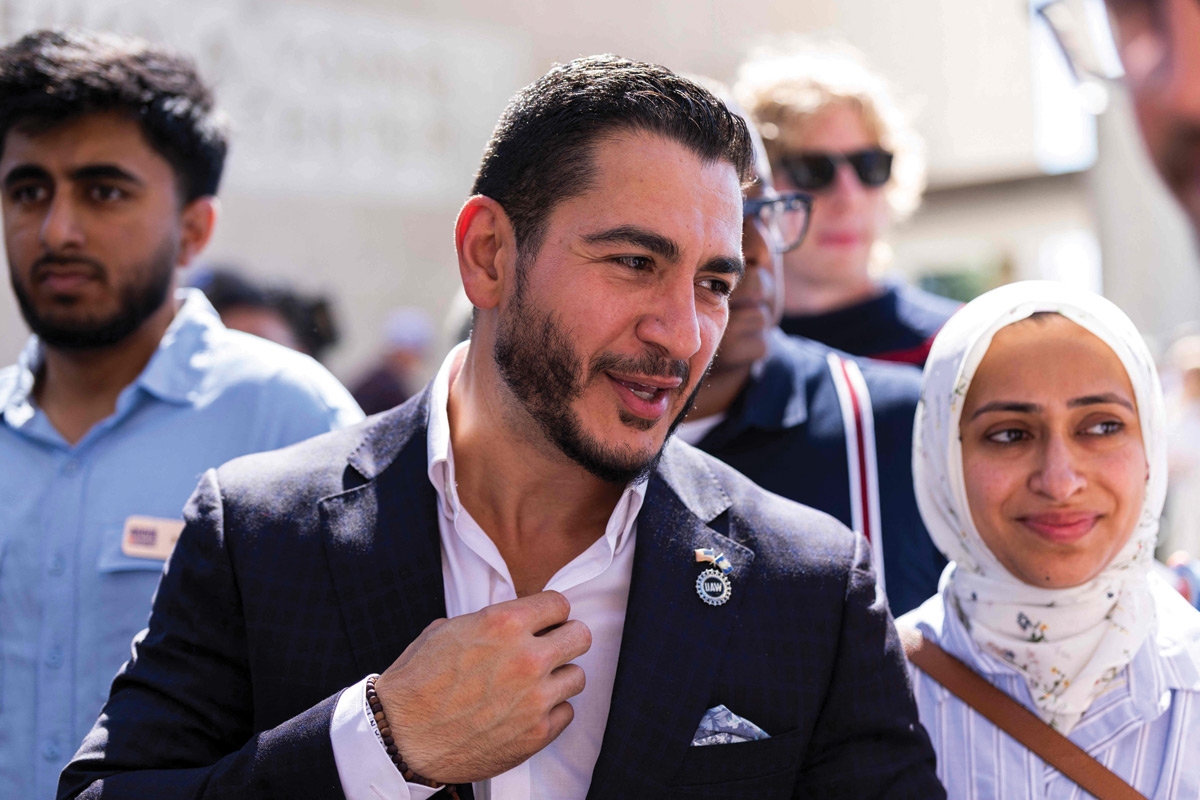
The victory of Abdulrahman Siddiq in securing the Democratic Party’s nomination for the U.S. Senate race in Michigan, defeating Representative Haley Stevens, marks a significant triumph for the party’s progressive wing. However, it presents Democrats with a difficult test in November’s general election in a swing state that could be decisive in the battle for control of the Senate.
Siddiq, a 41-year-old physician, centered his campaign on healthcare, the economy, and ending unconditional military aid to Israel. He is the first progressive candidate to win a Democratic statewide nomination in a state won by President Donald Trump in the 2024 election, and he will face former Republican Congressman Mike Rogers in November.
Party leaders quickly moved to bridge the divisions left by the primary and demonstrate their support for Siddiq. Senate Minority Leader Chuck Schumer, who had backed Stevens, stated that Democrats would unite to defeat Rogers, while Stevens pledged her own assistance to Siddiq in the general election.
Following his victory announcement, Siddiq said that differences during the primary “pale in comparison to what unites us.”
Yet the contest has reignited internal party debates over the best strategy to counter Republicans: whether to advance progressive candidates who energize the left and voters disillusioned with the political establishment, or to select more moderate candidates capable of attracting undecided voters in the general election.
Republicans did not wait long to attack Siddiq. Digital ads linked to the Republican campaign described him as “dangerous” and “the most extreme Senate candidate in America,” while Trump hailed his victory as “great news” for Republicans. Rogers stated that voters in November would face a choice between “common sense and total madness.”
During a speech in Las Vegas, Trump launched a sharp attack on Siddiq, accusing him of “embracing communism” and claiming he is “working to destroy the American Dream.”
Trump said Siddiq “doesn’t like everyone. Put him in office and you’ll find out what he likes. He doesn’t like Israel, he doesn’t like Jews, he hates them, and there’s nothing he can do about it.”
Throughout the campaign, Stevens’s supporters argued that she was the stronger candidate in a state Trump had won twice in each of the last three presidential elections. Conversely, Siddiq’s backers contended that his popular campaign successfully mobilized liberal and young voters disillusioned with traditional politics. The primary saw the highest turnout in a Democratic primary in Michigan’s history, according to the state party chair.
Nathan Gonzales, an analyst at Inside Elections, noted that Siddiq’s progressive rhetoric could make him an easy target for Republicans, who want the campaign to focus on Trump’s declining popularity and rising living costs. However, Gonzales also pointed out that Siddiq aligns more closely with the mood evident in the primaries, observing that voters are increasingly willing to support candidates who are “not Republicans and not from Washington.”
Siddiq still has significant work ahead to repair relationships within his party, having won by a narrow margin with less than 50 percent of the vote in a bitter and divisive contest.
Will Marshall, president of the Progressive Policy Institute, said that Democrats in Michigan achieved their recent statewide successes by building broad coalitions with persuadable voters, not just by mobilizing young activists. According to Marshall, election results showed that Stevens performed better in counties with large working-class and Black populations, while Siewer received greater support from white college-educated voters.
The issue of Israel was among the most prominent points of contention between the candidates. Stevens benefited from tens of millions of dollars spent by the pro-Israel political action committee AIPAC, while Siewer drew on the presence of one of the largest Arab-American communities in the United States in Michigan. If he wins in November, he will be the first Muslim elected to the U.S. Senate.
After his victory, Siewer sought to reassure Jewish voters, stating that his commitment to their safety and the safety of Jews is “the same as my commitment to the safety of my daughters.” However, his campaign continues to face questions about some of his allies, after he appeared at a campaign event alongside the controversial left-wing influencer Hasan Piker. Siewer also declined to answer a CNN question about whether his appearance with Piker was a mistake.
In an effort to demonstrate party unity, a Democratic march is scheduled to take place in Detroit, led by Pete Buttigieg, the Michigan politician who declined to run for the Senate amid speculation about his 2028 presidential ambitions.
Curtis Hertel, chair of the Michigan Democratic Party, said that 45 party-funded organizers are already working across the state, with their numbers expected to double by November. Additionally, the Senate Majority PAC has allocated $20 million to Michigan, regardless of the primary outcome.
Hertel acknowledged that frustration within the party following the primary was understandable, but added that Democrats recognize, or will soon recognize, “what is at stake for the country in terms of what happens in Michigan.”
