Basser Cemetery... A New Window into the World of Noble Virtue
Every cemetery discovered in the Theban Necropolis adds not only a new entry to the Egyptian antiquities record but also opens a window into another facet of ancient Egyptian life, rituals, art, and their relationship with the afterlife.
Among the latest discoveries is the tomb of a man named “Baser,” located in the Sheikh Abd el-Qurna area on the West Bank of Luxor (southernmost Egypt), adding another piece to the mosaic of Egyptian history.
The discovery was made by the Dutch archaeological mission affiliated with Leiden University, which has been working in the area since 2018 in cooperation with the Egyptian Ministry of Tourism and Antiquities. The mission is part of a research project that goes beyond excavation to include preventive conservation, risk management, and the preparation of the first comprehensive archaeological study of the region.
Preliminary studies suggest that the tomb, situated within the historical bounds of Luxor, known as “Thebes,” likely dates back to the Ramesside period, based on the artistic style of its inscriptions, while the writings inside bear the name of its owner, “Baser.”
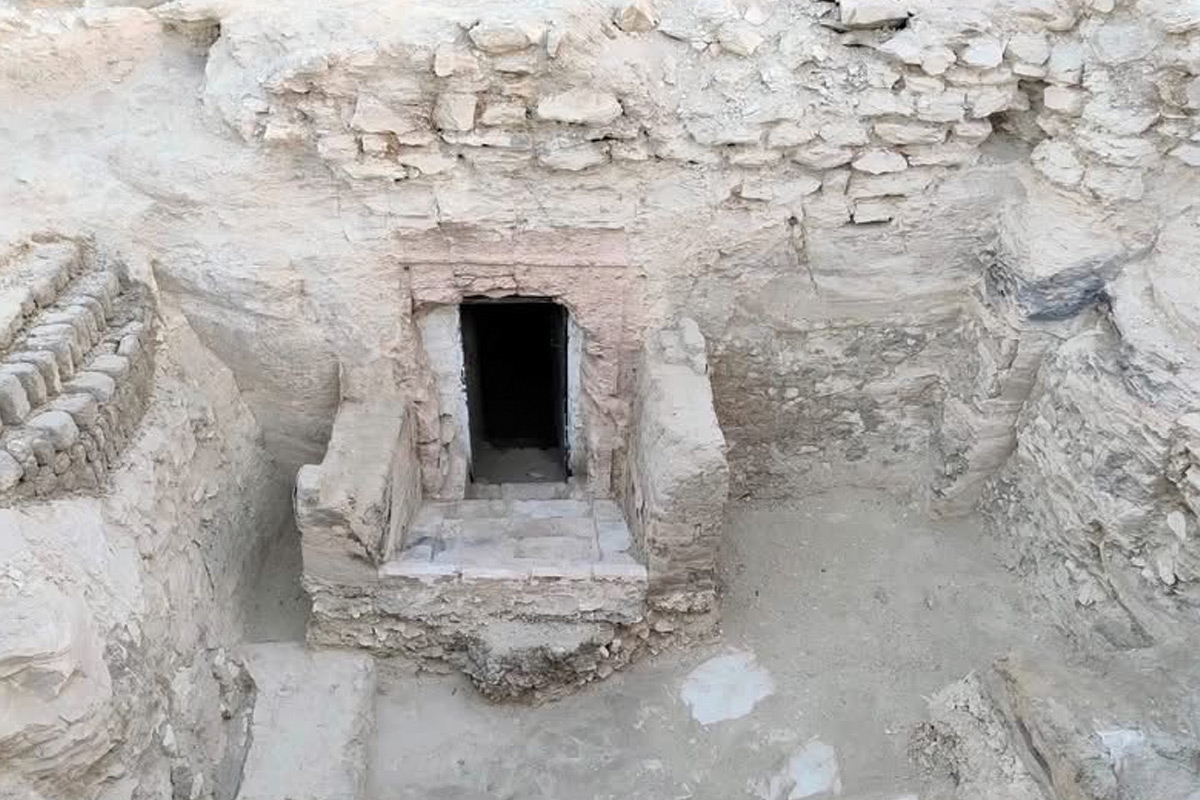
Its architectural layout confirms that it belongs to the traditional style of tombs belonging to high-ranking individuals in Thebes during the New Kingdom. It includes an outer courtyard, a rock-cut shrine in the shape of an inverted T, and burial chambers beneath the ground surface.
The courtyard still retains several of its architectural elements in good condition, including a mudbrick bench with a central opening that was intended to hold a funerary stele, alongside a staircase flanked by ramps leading to the tomb entrance.
Although a thin layer of soil still covers parts of the walls, the colored reliefs are beginning to reveal aspects of Baser’s world. He is depicted performing acts of worship before several deities within sacred shrines, while other scenes show him alongside his wife at an offering table—themes that reflected the ancient Egyptian belief in life after death.
Cleaning and restoration work is expected to uncover additional details that may help in fully reading the inscriptions and understanding the tomb owner’s status and role.
Archaeologists do not view the tomb as an isolated funerary structure but as part of a complex network of elite tombs in the Theban Necropolis. Therefore, the research team continues documentation and study efforts to identify all individuals buried in the tomb, reconstruct their biographies, and connect them to the historical and social context of the region.
The mission also plans to carry out structural reinforcement and conservation of the colored decorations in upcoming seasons, ensuring the preservation of the tomb and enabling more comprehensive study.
While many secrets of Sheikh Abd el-Qurna remain buried under the sands, this discovery confirms that the Theban Necropolis, after thousands of years, can still provide new pages from the history of the ancient Egyptians. Each discovered tomb becomes a living testament to the brilliance of art and the richness of life in one of the greatest civilizations in the world.
