Lebanon: Israeli escalation after the Mansouri canister
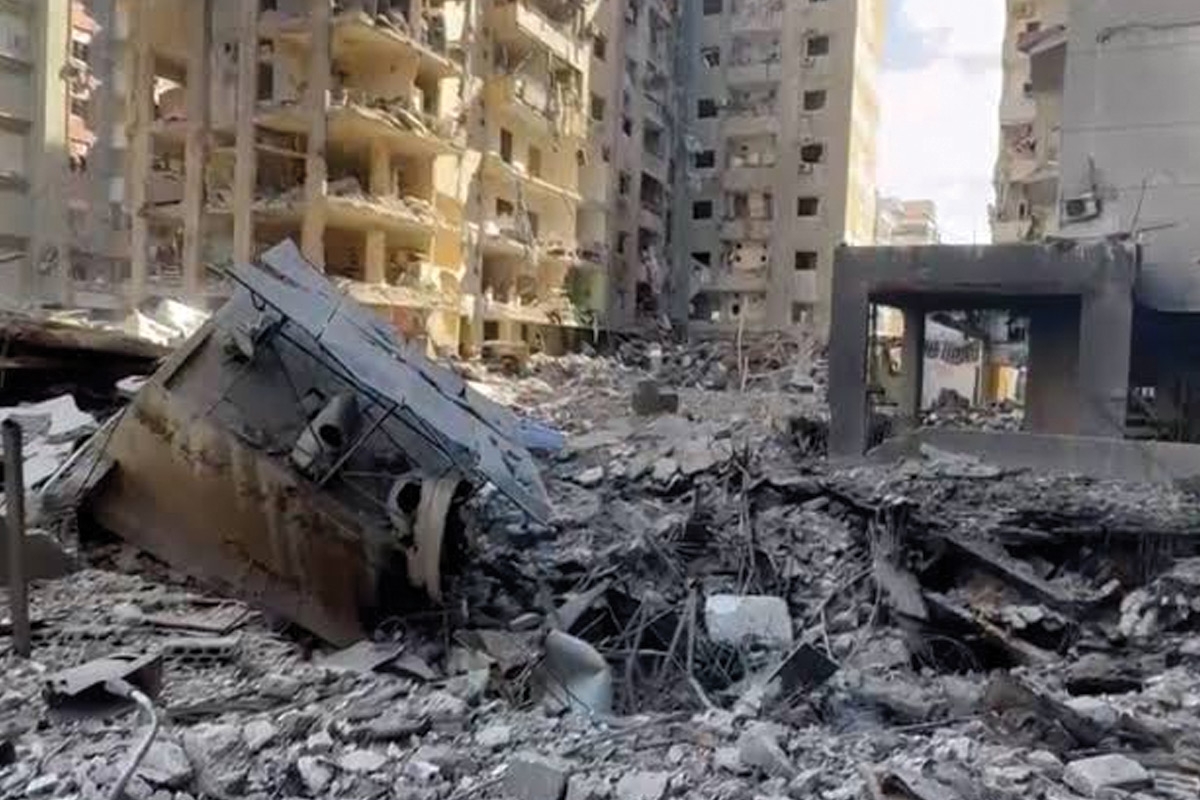
An explosive device detonated in an Israeli vehicle in the town of Mansouri, killing two Israeli soldiers, as if the blast had occurred during the negotiation session being hosted by the Italian capital, Rome. Israel qui
Translated by Qiyas from الجريدة — Original source
An explosive device detonated in an Israeli vehicle in the town of Mansouri, killing two Israeli soldiers, as if the blast had occurred during the negotiation session being hosted by the Italian capital, Rome. Israel quickly chose to respond by issuing an evacuation order for the town and carrying out retaliatory airstrikes in response to Hezbollah’s alleged violation of the agreement.
About 200 residents had already left the town when the Israeli military announced it was conducting airstrikes. At the same time, the Lebanese delegation was in contact with American officials to seek a reversal of the evacuation order and to prevent the airstrikes, while continuing to explore new experimental zones.
Even before the Mansouri incident, the Israeli army had continued its incursions, advances, and troop reinforcements in numerous southern towns, in addition to seizing more areas outside the Yellow Line.
The developments in Mansouri appear to serve as a precursor to its eventual takeover, alongside the continuation of Israeli military operations in the Wadi al-Salouqi valley and in the central sector through increased bulldozing and destruction or further incursions.
This comes as Lebanon continues to fear that Israel will persist in its military operations by expanding beyond the Yellow Line, potentially paving the way for new military operations in the near future, particularly given Israel’s insistence on controlling the Ali al-Tahir hill. According to information, Israel has given Lebanon a specific deadline to deploy its army onto the hill, which is believed to house major Hezbollah military installations. If Lebanon fails to take this step, threats indicate that the Israeli army will carry out the mission itself.
In Rome, the second day of the US-brokered negotiation round saw three parallel and separate meetings at the political, military, and border levels. Discussions in the military track focused on the operational mechanism in the two experimental zones and the possibility of expanding them, as well as scheduling new model areas, with Khiam and Bint Jbeil being proposed—a move Israel rejects. Meanwhile, sources in Baabda indicated that the Israeli side had not yet announced its position regarding the two experimental zones. The military track also discussed the deployment of the Lebanese army in the towns of Faroun and Zouitar al-Sharqiya.
Regarding the political track, Baabda sources reported that discussions addressed the issue of a third party tasked with the verification process, amid ongoing debate over the mechanism and with several countries prepared to assume this role. Information indicates that Israel and the United States agreed that Italy would oversee the verification mechanism for the withdrawal of Hezbollah’s weapons, with Lebanese-Italian military meetings to be held to coordinate on this matter.
Israel’s absolute rejection of any role for France in this regard cannot be overlooked. On the border file, information indicated that the Lebanese delegation presented a detailed proposal supported by documents tracing the ceasefire line to the Blue Line and the current situation, which received American praise as a robust and well-founded proposal.
