Kuwait Press Memory Latest news
aljaridaOpinion By محمد البغلي

Watan Al-Wajha: Savings Are Not About Rationing!
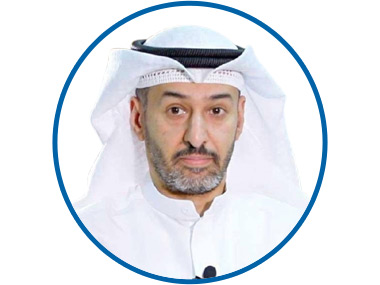
Watan Al-Wajha: Savings Are Not About Rationing!

I do not understand the rationale behind the decision issued by Minister of Commerce Osama Al-Boudi to cancel the distribution of subsidized food rations to categories that previously benefited from them, such as stateless persons (Bidoon) and Gulf nationals employed in government institutions, and to restrict these rations exclusively to Kuwaiti citizens and their domestic workers.

According to official figures circulating, the annual cost of food subsidies in the country is approximately 180 million dinars, with more than 90 percent of this amount going to Kuwaiti citizens. Consequently, the expected financial savings may not exceed a few million dinars, while the decision entails potential negative social and even economic repercussions.

For instance, most Bidoon families suffer from a fragile social safety net due to a long list of reasons, the simplest of which is the difficulty in obtaining employment or an acceptable salary. Economically, removing two segments from the subsidy system, while saving limited funds, will lead to increased demand for food in cooperative societies or parallel markets. There are concerns that consumers, including citizens, expatriates, and other consumer groups, will be forced to pay higher inflationary costs that exceed the funds saved by the state for the public treasury.

Undoubtedly, curbing financial waste is among the duties and authorities of any official. However, the value or quality of reducing any waste must be weighed against the social and economic consequences of any decision.

There may be other lists of waste that require regulation, which would be more beneficial than adjusting food subsidies, for both the Minister of Commerce and his fellow ministers, to save greater amounts of money and effort for the state, thereby enhancing spending efficiency and performance governance. Examples include reviewing rental expenses for government entities in private commercial complexes, or allowing each entity to operate in its own skyscraper without utilizing unused government buildings and schools. Other areas include limiting change orders in state tenders, particularly for roads, as well as the expenses of executives, their travel, and conferences. In these areas, savings would far exceed the total annual expenditure on food subsidies.

Furthermore, the concept of food subsidies itself requires a review of its targeting efficiency, not merely a reduction in cost by directing them to eligible recipients from the middle class and below, rather than to the extremely wealthy or those with high incomes.

The obsession of public administration should not be merely about saving money. The state is not a company whose goal is to reduce expenses or increase revenues to achieve the highest possible profit. Rather, it is an entity that makes decisions considering social, economic, and even humanitarian dimensions, which can affect segments of society for whom a single dinar can make the difference in securing their livelihood safety net.

Latest news Original source
Link copied ✓
