August 2, 1990... A historic milestone in the nation's journey of resilience
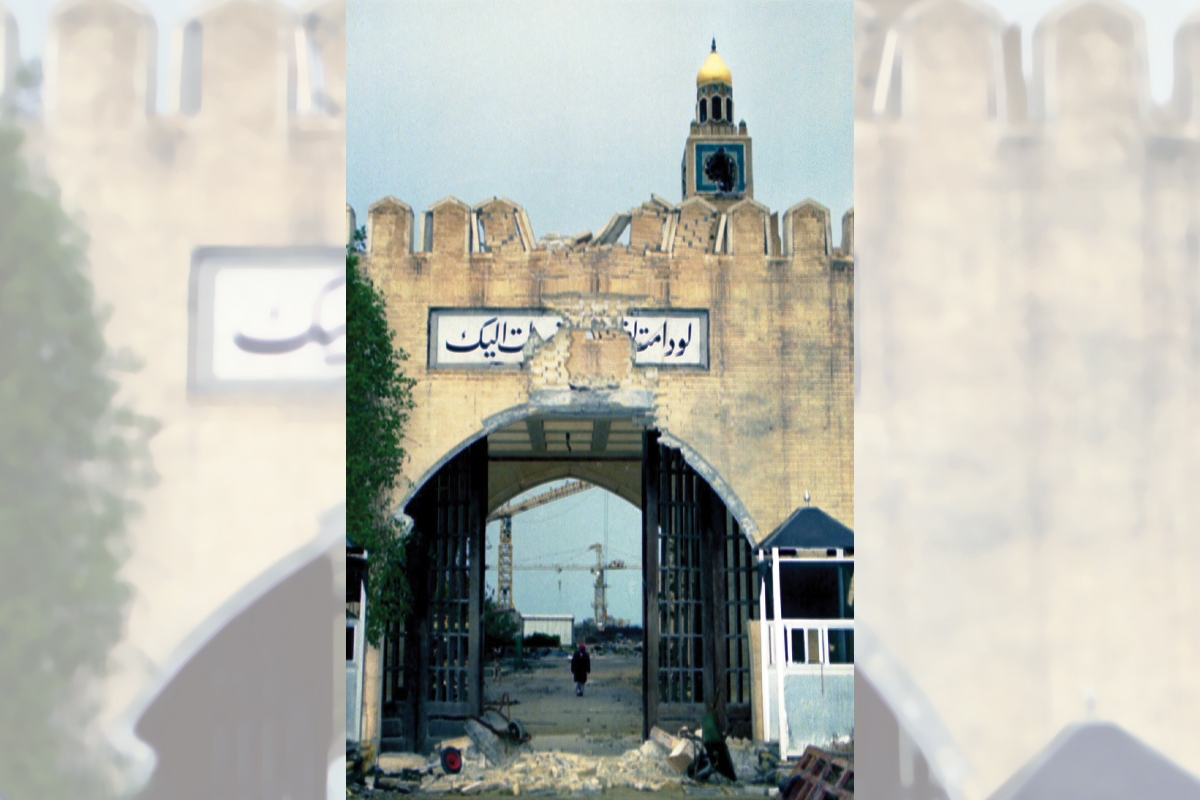
Amid the relentless and brazen Iranian aggressions against Kuwait, the nation today marks the 36th anniversary of the brutal Saddamist invasion. At that time, forces of the former Iraqi regime invaded Kuwaiti territory in a flagrant aggression targeting the state’s existence and sovereignty, attempting to erase its national identity and eliminate an independent state and active member of the international community.
In the early hours of August 2, 1990, Iraqi forces invaded Kuwait in a treacherous assault aimed at forcibly occupying the country, stripping it of its freedom, and attempting to eradicate legitimacy within its borders. The invaders employed the most heinous methods of killing, arresting, and torturing civilians, while bombing civilian and military sites, looting property, and terrorizing the innocent.
The brutal invasion was not merely a military attack, but a humanitarian catastrophe unprecedented in the region. It marked the beginning of a national ordeal that shook the conscience of every citizen, leaving an unforgettable wound in the hearts of the people and a tragic imprint on national, Arab, and international memory.
In response to this aggression, Kuwaitis demonstrated the finest examples of cohesion and national resilience. Standing united at home and abroad behind their legitimate leadership, they also recorded remarkable acts of sacrifice through the Kuwaiti resistance. This resistance dealt painful blows to the invading forces, instilled fear and panic among their ranks, and boosted the morale of the Kuwaiti people. Clinging to their rights and sovereignty, and refusing to submit to the reality of occupation, they embodied a rare national unity that shaped the contours of a historical epic. This epic dealt a major blow to the invaders’ objectives and culminated in the liberation of the country and the restoration of legitimacy on February 26, 1991.
The Kuwaiti people proved to the world that love for the homeland is invincible, and that faith in legitimacy and national unity is stronger than any brute force. The homeland cannot be erased, and the voice of Kuwaitis did not fade; rather, it echoed everywhere, demanding justice and calling upon the world to aid the land of peace.
History does not forget the important and active role of Kuwaiti women in confronting the Iraqi occupier. Kuwaiti women recorded a historical epic in defending the nation’s soil, participating in the resistance in all its forms, delivering supplies and weapons to resistance fighters, and even taking part in military operations and capturing enemy soldiers, ultimately contributing to the liberation of the country.
During the ordeal of the invasion, the country’s wise leadership exerted tremendous efforts to garner Arab and international support for Kuwait’s just cause, in addition to taking measures necessary to liberate the country, restore its sovereignty, and return security and stability to its lands.
The Kuwaiti political leadership at that time demonstrated a high degree of wisdom and foresight, embodied by the late Amir Sheikh Jaber Al-Ahmad Al-Sabah, the late Father Amir Sheikh Saad Al-Abdullah Al-Salim Al-Sabah, and alongside the historical role of the late Amir Sheikh Sabah Al-Ahmad Al-Jaber Al-Sabah, who then served as Deputy Prime Minister and Minister of Foreign Affairs. He left prominent marks in rallying Arab and international support for Kuwait’s just cause.
The world responded to the call for justice, and the permanent members of the UN Security Council adopted a unified stance against the Iraqi aggression on Kuwaiti soil. This became evident shortly after news of the invasion reached the corridors of the Security Council, which convened and unanimously adopted Resolution 660, condemning the invasion and demanding the immediate and unconditional withdrawal of all Iraqi occupying forces from Kuwait.
In implementation of United Nations Security Council resolutions, Arab and international forces converged on Saudi Arabian territory to form the international coalition for the liberation of Kuwait from the invading forces. In response, the former Iraqi regime intensified its obstinacy and tyranny, resorting to a scorched-earth policy. It deliberately set fire to 752 oil wells and sabotaged vital infrastructure, while also laying landmines and digging oil-filled trenches in an attempt to hinder liberation efforts and inflict maximum damage on Kuwait’s environment and infrastructure. However, the will to liberate Kuwait proved stronger. This was achieved in February 1991 through Operation Desert Storm, restoring Kuwait as a free and proud nation, with its flag flying high once again.
Following liberation, Kuwait established a foreign policy that distinguished between the discredited Iraqi regime and the fraternal Iraqi people, affirming that it harbored no ill will toward a people who were victims of circumstance. Instead, it stood by them in a humanitarian capacity, providing support and assistance from 1993 to the present day, reflecting the authenticity of Kuwaiti values and its steadfast principles.
To further this fraternal approach, Kuwait has, in recent years, received batches of the remains of its martyrs who fell during the Iraqi occupation, as well as batches of Kuwaiti archives and properties that had been seized. These steps reflect the political leadership’s commitment to closing outstanding files with a spirit of responsibility and fairness.
Perhaps the most distinctive aspect of this anniversary, despite its bitterness, is that Kuwait did not use it as a platform for revenge, but rather as a forum for peace and solidarity. This stance is rooted in its humanistic heritage and its constant principles of supporting regional stability and strengthening fraternal relations with Arab brothers, foremost among them the Iraqi people.
The memory of that black day in the nation’s history remains vivid in the hearts of Kuwaitis who endured the bitterness of the invasion, as well as in the hearts of the new generation who did not live through that period in their country’s history. This anniversary is not merely a passing event; it stands as a testament of respect for the sacrifices of the martyrs, the resilience of the resistance, and the loyalty of a people who did not bow but held Kuwait’s banner high. It remains a lesson for future generations and a warning against tyranny and a call to defend homelands.
Today, we live in a prosperous, secure, and generous homeland under the banner of wise leadership, from which we draw the resolve to continue the journey, pass on the lessons of the past to future generations, and renew our pledge and loyalty to this beloved nation, which will always remain free and proud, with its spirit unbroken and its flag unfallen.
Coinciding with the 36th anniversary of the treacherous Iraqi invasion of Kuwait, UAE Presidential Advisor Anwar Gargash tweeted on the X platform yesterday that “the fate of GCC states is shared,” adding that “there is no salvation for the ship that unites us except through cooperation, coordination, and unity of ranks.” He further stated, “Amid the challenges surrounding us, these lessons appear more urgent than ever.”
