Saudi Arabia, in coordination with Kuwait, forms an international coalition to protect the Red Sea, the Bab el-Mandeb Strait, and the Gulf of Aden
Amid ongoing provocations by Iran and its proxies in Yemen against global shipping, Saudi Arabia, in coordination with Kuwait and more than 50 other countries, has begun working to form a multinational coalition to prote
Translated by Qiyas from الجريدة — Original source
Amid ongoing provocations by Iran and its proxies in Yemen against global shipping, Saudi Arabia, in coordination with Kuwait and more than 50 other countries, has begun working to form a multinational coalition to protect navigation in the Red Sea, the Bab al-Mandab Strait, and the Gulf of Aden from militia attacks, particularly those by the Houthis.
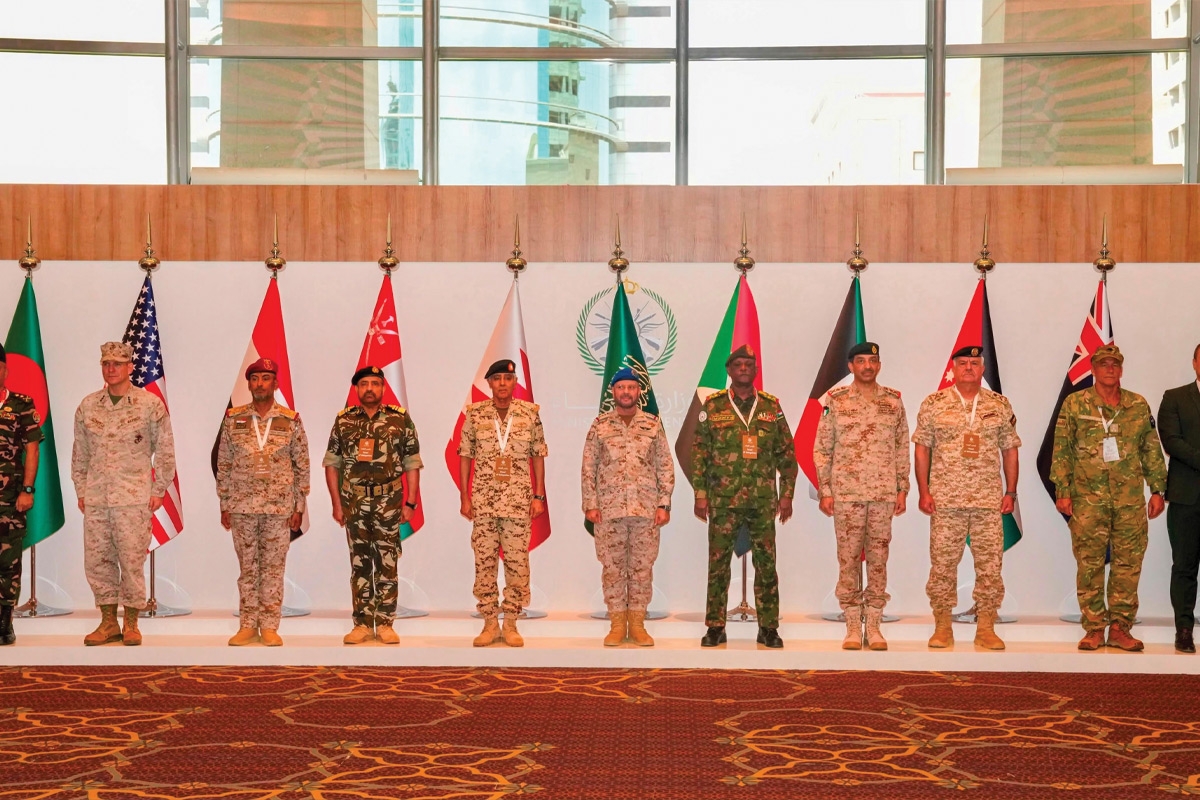
Yesterday, Chief of the General Staff of the Saudi Army, Lieutenant General Khaled Al-Shuraim, chaired the first meeting of the chiefs of staff of the participating forces in the defensive maritime coalition to safeguard freedom of navigation in the “Bab al-Mandab,” held in Saudi Arabia.
Al-Shuraim emphasized the importance of waterways and the necessity of ensuring the safety of international navigation, especially in light of current circumstances and security developments in the region. He stressed the importance of enhancing cooperation and coordination among participating states to consolidate security and stability and ensure freedom of navigation.
The Saudi Ministry of Defense stated that the meeting, which saw the participation of chiefs of staff and their representatives from 43 countries, along with a representative of the European Union, out of 51 invited countries and organizations, discussed escalating threats to maritime security, including attacks on commercial vessels, energy tankers, and maritime infrastructure. These attacks pose risks to the safety of maritime navigation, the stability of global supply chains, and the international economy. The ministry noted that participants underscored the importance of strengthening multilateral defense cooperation to confront and deter these threats and to maintain the security of international sea lanes.
As part of the meeting’s outcomes, 14 countries issued a joint statement: Saudi Arabia, Kuwait, Bahrain, Qatar, Pakistan, Turkey, Egypt, Jordan, Yemen, Bangladesh, Nigeria, Sudan, Djibouti, and Somalia. The statement affirmed their support for the multinational coalition project and welcomed the consensus reached regarding its foundational arrangements.
Participants agreed to continue the work of military planners from countries wishing to join the coalition in the coming phase to complete foundational procedures. These include finalizing the coalition’s charter and reference documents, completing the organizational structure, establishing command and control arrangements and operational mechanisms, and forming the necessary technical frameworks and teams, paving the way for the signing of the charter, the launch of the coalition, and the commencement of its missions.
Amid escalating threats from Iran and its Yemen-based proxies against global shipping, Reuters reported Saudi moves to form an international coalition to protect Red Sea navigation from Houthi militia attacks. This comes as the United States and Britain seek to convene a high-level meeting to form a similar coalition aimed at securing shipping lanes in the Strait of Hormuz.
Two informed sources told Reuters on Monday that the formation of the coalition to protect Red Sea navigation is still under discussion with dozens of countries and has not yet been finalized.
The Houthis’ decision to threaten targeting Saudi ships in the Bab al-Mandab has opened a new front in the broader conflict between the United States and Iran, leading to increased attacks on energy product tankers and other supplies, and driving up oil prices.
Following the Houthi militia’s attacks on ships, the marine insurance market in London expanded the scope of the high-risk area in the Red Sea on Monday, in accordance with directives issued by the Joint War Committee, which includes members of the Lloyd’s Market Association and representatives of the London insurance market.
The Houthis control areas far from the coast in northern and western Yemen, as well as the coastal city of Hodeidah, granting them practical influence over the maritime corridor in the Red Sea. Meanwhile, the Yemeni government controls the southern areas along the Red Sea coast and near the Bab al-Mandab Strait.
Maritime traffic in the Red Sea has not fully returned to normal since the Houthis began attacking ships off the Yemeni coast in November 2023, claiming they were supporting Gaza.
Earlier reports indicated that the Houthis collected fees from some shipping companies in the Red Sea and the Gulf of Aden in exchange for safe passage, according to a 2024 report by a UN panel of experts.
Meanwhile, Saudi Foreign Minister Faisal bin Farhan and his Italian counterpart, Antonio Tajani, reaffirmed the importance of respecting international law, including international humanitarian law, and emphasized the need to protect freedom of navigation and maritime security in the Strait of Hormuz, the Red Sea, the Bab al-Mandab Strait, the Gulf of Aden, and international sea lanes, in accordance with the UN Convention on the Law of the Sea.
The two sides acknowledged, on the sidelines of the New York Conference and the Global Alliance for the Two-State Solution in Rome, the contribution of the European naval operation “Aspides” and Italy in particular to protecting commercial navigation.
Meanwhile, Axios reported that Saudi Defense Minister Prince Khalid bin Salman visited the White House two days ago, meeting U.S. President Donald Trump and Vice President JD Vance.
According to Axios, Prince Khalid discussed the files of Iraqi and Houthi militias loyal to Iran with the U.S. Vice President, informing him that Saudi Arabia is capable of managing the situation with the Houthis and does not require U.S. intervention in Yemen at this stage.
The source stated that the Saudi Defense Minister informed Vance that attacks by Iraqi militias on Saudi infrastructure and energy facilities had crossed red lines, forcing the kingdom to respond. He noted that Saudi Arabia still prefers de-escalation with Iran, despite the joint U.S.-Saudi strike on Iran-aligned militias in Iraq.
The source indicated that the meeting between the Saudi Defense Minister and Vance aimed to convey a message from Crown Prince Mohammed bin Salman regarding the war with Iran and the situation in the region.
The source confirmed to Axios that Prince Khalid informed Vance that Israeli Prime Minister Benjamin Netanyahu is pushing for escalation with Iran, whereas Saudi Arabia prefers de-escalation and considers it the most prudent option.
Before the Saudi Defense Minister’s visit to the White House, Israeli Prime Minister Benjamin Netanyahu held meetings with Trump and Vance. An Israeli official said Netanyahu discussed the situation in Saudi Arabia “in the context of regional challenges.”
After warning that the Houthi militia has become bolder due to weak international responses and is seeking to emulate the Iranian model aimed at disrupting navigation in the Strait of Hormuz and applying it in the Bab al-Mandab Strait, Yemeni Foreign Minister Afrah al-Zoubi affirmed that Yemen’s security and stability are a cornerstone of regional security. She stressed the rejection of using Yemeni territory as a platform to threaten neighboring countries or harm maritime navigation and international trade security in the Red Sea and Bab al-Mandab Strait in service of the Iranian project and the terrorist agenda of the Houthi militia.
Al-Zoubi stated in her first post on her official “X” account the day before yesterday, following her assumption of office, that she “will work to harness Yemeni diplomacy to defend the supreme interests of the Republic of Yemen, enhance its regional and international presence, and mobilize support for restoring state institutions and consolidating security and stability.”
She added that the leadership and staff of the Ministry of Foreign Affairs are aware of the magnitude of the national responsibility at this stage, and that the ministry will effectively deploy diplomacy to defend Yemen’s sovereignty, territorial integrity, and republican system, while backing the Yemeni people’s choices in restoring their state and ending the coup by the Houthi terrorist militia, which has resulted in humanitarian tragedies and the destruction of state institutions.
She noted that the ministry will work to mobilize regional and international support, convey the Yemeni state’s messages, strengthen partnerships with brotherly and friendly nations, integrate with the Arab neighborhood, and align with the Saudi-led coalition supporting legitimacy.
She pointed out that the ministry will focus on building balanced relations with various countries based on shared interests, principles of good neighborliness, and mutual respect, reflecting Yemen’s commitment to international norms and conventions.
She clarified that the Yemeni citizen, both at home and abroad, will be at the forefront of diplomatic priorities through the development of consular services, enhanced communication with Yemeni communities abroad, and leveraging the expertise of national talents overseas.
Concurrently with efforts to reorganize military units and develop their operational and armament capabilities, the Yemeni Army showcased drone models for the first time as part of its military arsenal and equipment.
During an inspection tour accompanied by several military leaders the day before yesterday, Defense Minister Major General Taher Al-Aqili received briefings on the characteristics and readiness levels of this equipment. He reviewed military products including drones, vehicles, weapons, and various equipment, emphasizing that the efforts of the Defense Ministry’s military manufacturing department have contributed to enhancing the Armed Forces’ capabilities and equipping them with new weapons and gear.
The emergence of drones marks a notable shift in the military discourse of the Yemeni government, which relied primarily on coalition air power throughout the years of war, in contrast to the Houthi group’s expansion in using Iranian drones for internal, maritime, and cross-border operations.
