Salman Rushdie faces up to life imprisonment after conviction
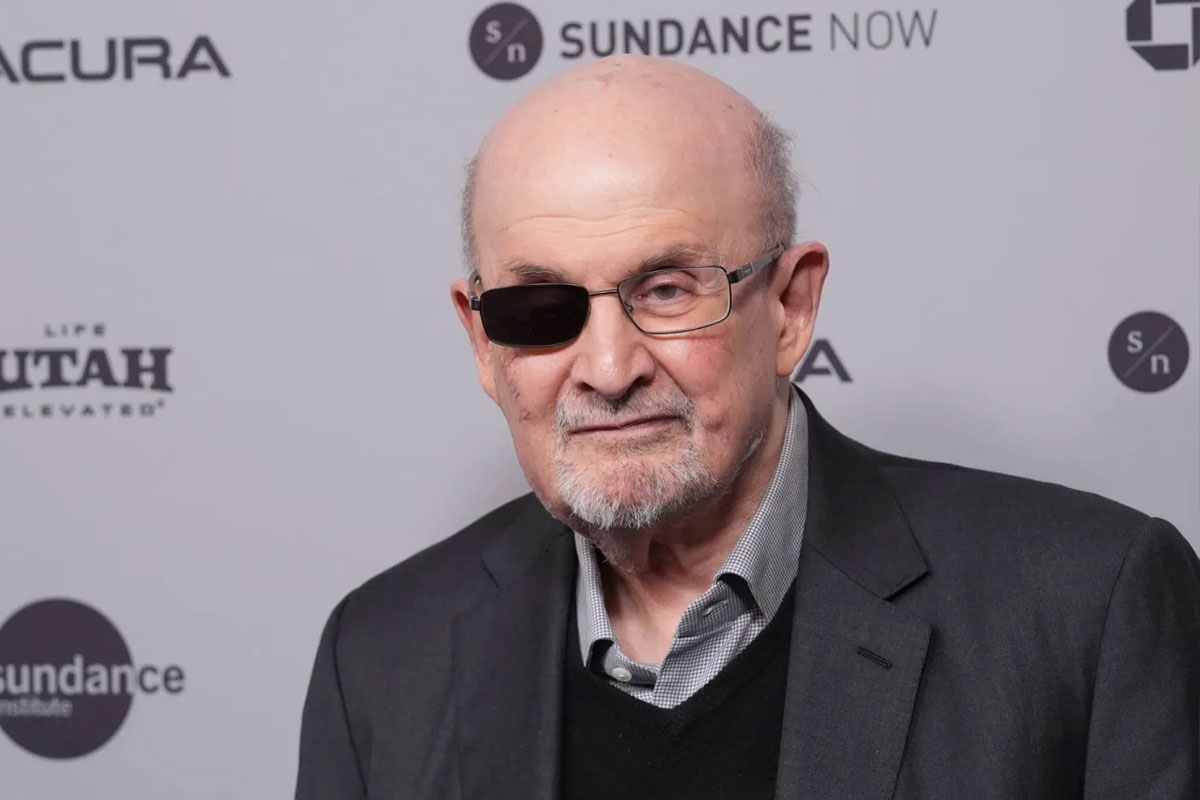
A man who stabbed author Salman Rushdie and partially blinded him during a lecture in 2022 was found guilty on Wednesday of federal terrorism charges related to the attack, which prosecutors said was motivated by incitem
Translated by Qiyas from الجريدة — Original source
A man who stabbed author Salman Rushdie and partially blinded him during a lecture in 2022 was found guilty on Wednesday of federal terrorism charges related to the attack, which prosecutors said was motivated by incitement to kill over Rushdie’s novel “The Satanic Verses.”
Hadi Matar, 28, who is already serving a 25-year state prison sentence for attempted murder in connection with the knife attack, faces a maximum penalty of life imprisonment when the federal court issues its verdict on November 3.
A jury at a U.S. district court in Buffalo, New York, deliberated for two hours before convicting Matar on all charges against him: attempting to provide material support to Hezbollah, the Iran-backed armed Lebanese group designated as a terrorist organization by the United States; engaging in transnational terrorism; and providing material support to terrorists.
The verdict concludes a trial that began on Tuesday and included testimony from the prosecution by Rushdie, 79, the Booker Prize-winning author of the 1981 novel “Midnight’s Children.” The defense did not call Matar or any other witness to the stand.
At the time of the attack, Rushdie had been facing death threats since the publication of his fourth novel, “The Satanic Verses,” in 1988.
Ayatollah Ruhollah Khomeini, then Iran’s supreme leader, condemned the book as blasphemous and issued a religious edict in 1989 calling on Muslims to kill Rushdie and anyone else involved in its publication.
Khomeini’s fatwa led to a multi-million-dollar bounty being placed on Rushdie’s head and several other violent incidents, including the 1991 murder of Hitoshi Igarashi, Rushdie’s Japanese translator.
The Iranian government distanced itself from the fatwa in 1998. However, Hezbollah’s secretary-general endorsed the edict in 2006, and Ali Khamenei, Khomeini’s successor, reaffirmed it in 2017, according to the U.S. Attorney’s Office.
