Saudi Arabia Sends a Fiery Message to Popular Mobilization Forces
Saudi Arabia, in coordination with the United States, delivered a fierce and stern warning to the Iran-backed Popular Mobilization Forces (PMF) militias operating within Iraqi territory, in response to their escalating a
Translated by Qiyas from الجريدة — Original source
Saudi Arabia, in coordination with the United States, delivered a fierce and stern warning to the Iran-backed Popular Mobilization Forces (PMF) militias operating within Iraqi territory, in response to their escalating and brutal attacks on vital oil facilities in the Kingdom, which also affected neighboring countries, including Kuwait.
In a move countering Iran’s efforts to drag regional states into its long-standing conflict with the U.S. and its directives to its proxies in Yemen and Iraq to escalate on all fronts, the Saudi Air Force, coordinating with U.S. Central Command (CENTCOM), launched a precise operation inside Iraq early yesterday. The strikes targeted PMF facilities and weapons depots, as well as sites belonging to factions loyal to the Islamic Revolutionary Guard Corps (IRGC), across the provinces of Baghdad, Wasit, Ninewa, Basra, Kirkuk, Karbala, Diyala, and Salah ad-Din.
Brigadier General Turki Al-Maliki, spokesperson for the Saudi Ministry of Defense, stated in a press release that “striking these Iran-backed terrorist militias reaffirms Riyadh’s inherent right to self-defense and to protect its assets, as well as its right to respond at the time and place of its choosing.” He emphasized that while the Kingdom does not seek escalation, it will respond to any aggression it faces.
For its part, U.S. Central Command stated that “the strikes were a strong response to more than 30 attacks launched by IRGC proxies under its direction over the past 72 hours against U.S. forces and Saudi energy infrastructure.” The command noted that Iraqi militias had carried out more than 600 attack attempts against U.S. personnel and facilities between February and April.
While CENTCOM warned the IRGC and its proxies that failure to halt these attacks would result in further U.S. military responses and additional retaliation, U.S. President Donald Trump unexpectedly confirmed that the U.S. and Saudi strikes on Iranian-backed militias in Iraq were coordinated with the Baghdad government led by Prime Minister Ali al-Allaq. Trump vowed to respond harshly to Iranian attacks on U.S. forces in Jordan.
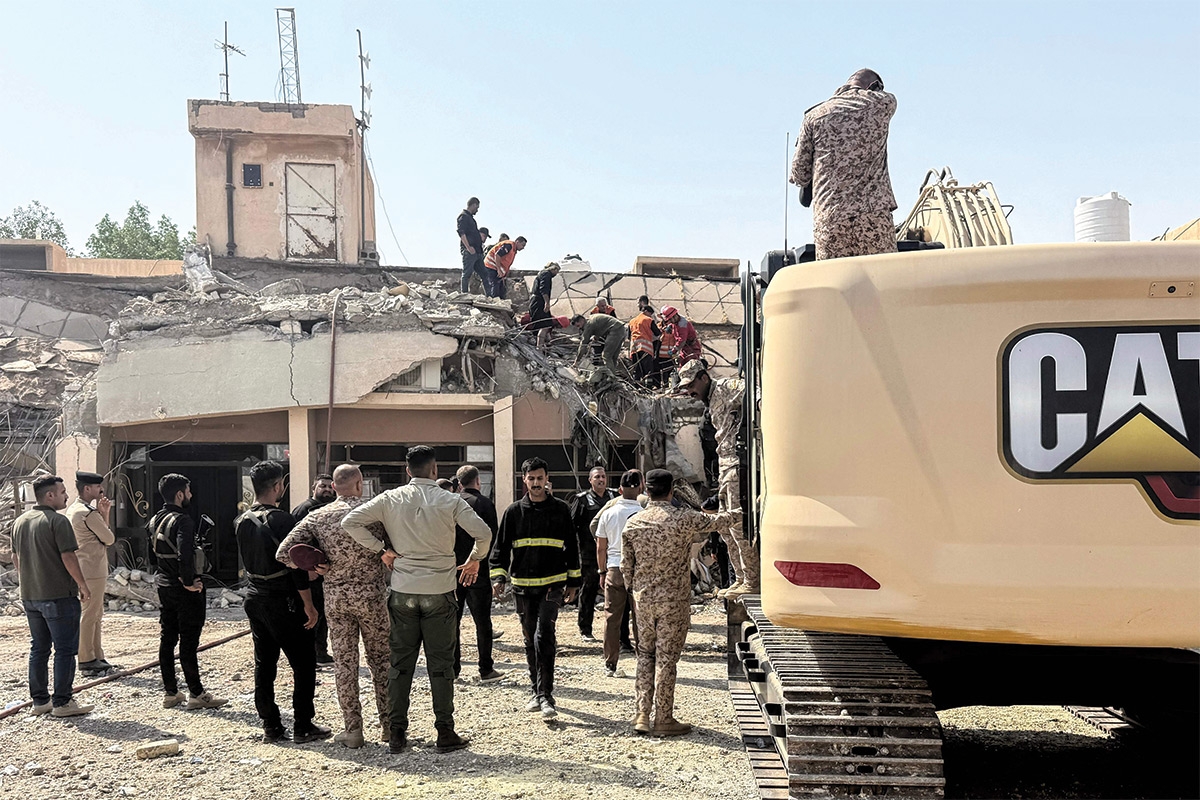
The “Hashd” militia announced that the strikes hit its facilities in the provinces of Baghdad, Wasit, Ninewa, Basra, Kirkuk, Karbala, and Diyala, resulting in the deaths of 20 of its members and injuries to 32 others, in an unconfirmed toll. The attacks also caused varying degrees of material damage to several facilities, vehicles, and military equipment.
Politically, the Saudi Ministry of Foreign Affairs stated that the aggressive approach of Iran-backed terrorist militias in Iraq came at a time when the Kingdom was making efforts to contribute to de-escalation in the region, in order to safeguard its security and stability. It characterized the militia’s choice of an irresponsible escalation path, violations of international law, and disregard for the principles of good neighborliness required by Islamic brotherhood.
The Foreign Ministry reiterated that Saudi Arabia does not seek escalation, but in the event of any attacks, it will not hesitate to take all necessary measures to protect its sovereignty, citizens, and assets.
The unprecedented Saudi move against attacks on petroleum facilities in the Eastern Region and Riyadh received broad Gulf and Arab support, underscoring that the security of Saudi Arabia is a cornerstone of Arab and Gulf Cooperation Council (GCC) security, with strong emphasis on supporting its right to take appropriate measures to protect its sovereignty and security.
Kuwait reaffirmed its absolute solidarity with Saudi Arabia, standing by its side and supporting all measures taken to protect its security, sovereignty, interests, and assets, including its inherent right to self-defense guaranteed by international law under Article 51 of the UN Charter.
The Kuwaiti Ministry of Foreign Affairs affirmed that the security of the Kingdom is an integral part of the security of Kuwait and the Gulf Cooperation Council (GCC) states, expressing its strong condemnation of the continued attacks by Iran-backed militias in Iraq. This reflects the militias’ determination to escalate tensions and destabilize the region’s security and stability, most recently through the brazen aggression of launching drones in a desperate attempt to target oil facilities in the Eastern Province yesterday evening. This act constitutes a blatant violation of the Kingdom’s sovereignty and a threat to its security and territorial integrity, at a time when the Kingdom is making sincere efforts to contribute to de-escalation in the region.
The GCC stressed the need to stand united alongside Saudi Arabia and to support all measures taken to protect its security, sovereignty, and territorial integrity, warning that the continuation of these attacks undermines international efforts aimed at reducing tensions and consolidating security and stability in the region.
In Iraq, Al-Sudani convened an emergency meeting of the National Security Council to discuss developments in the security situation and unfolding events. He directed the Ministry of Foreign Affairs to take legal measures and also decided to postpone his official visit to Riyadh, which was scheduled for today.
The Iraqi National Security Council also decided to establish a comprehensive security plan for ground operations to counter any violation of Iraq’s sovereignty and to prevent any source from threatening neighboring countries.
In a mysterious development that may indicate a potential widening of the ongoing regional conflict, a fire broke out at the port of Damietta in Egypt, where natural gas was being loaded for shipment along the Mediterranean coast.
Contrary to the British narrative, the Egyptian Ministry of Petroleum stated that the fire affected two vessels used for regasification and storage at the port of Damietta, confirming that there were no casualties or human losses. It added that it is continuing to assess the consequences of the incident without clarifying the cause of the fire.
In a fiery response to the successive attacks on oil facilities in the Eastern Province and Riyadh, Saudi Arabia, in coordination with the United States, launched targeted strikes early yesterday morning against targets in Iraq belonging to Iran-aligned militias.
Spokesman for the Saudi Ministry of Defense, Major General Turki Al-Maliki, said in a statement that “the strikes against the Iran-aligned terrorist militias come within the framework of affirming Riyadh’s inherent right to self-defense and its capabilities, and its retention of the right to respond at the appropriate time and place.” He emphasized that the Kingdom does not seek escalation but will respond to any aggression it faces.
For its part, U.S. Central Command (CENTCOM) stated in a release: “U.S. and Saudi fighter jets struck several logistical centers and weapons sites belonging to terrorists in eastern Iraq, in a strong response to more than 30 drone attacks directed by the Iranian Revolutionary Guard Corps over the past 72 hours. These unjustified attacks on U.S. forces and Saudi energy infrastructure failed.”
CENTCOM noted that Iran-aligned militias in Iraq carried out more than 600 attack attempts against civilians and U.S. facilities between February and April, and warned the Islamic Revolutionary Guard Corps and its proxies that if these attacks are not halted, they will face further U.S. military responses and additional retaliation.
For its part, the Saudi Ministry of Foreign Affairs affirmed that the aggressive approach of the Iran-aligned terrorist militias in Iraq came at a time when the Kingdom was making efforts to contribute to ending regional escalation, in order to preserve its security and stability.
The Foreign Ministry affirmed that this terrorist militia had chosen an irresponsible escalation approach, violated international law, and ignored the requirements of Islamic brotherhood, which demand adherence to the principles of good neighborliness.
It reiterated its stance that Saudi Arabia does not seek escalation, but in the event of any attacks, it will not hesitate to take all necessary measures to safeguard its sovereignty and protect its citizens and assets.
The ministry stated that the strikes were a continuation of a position previously announced by the Kingdom in two statements issued on Monday and Tuesday, following “condemned attacks” carried out by drones launched by “Iran-aligned terrorist militias in Iraq.”
On Monday and Tuesday, Saudi Arabia issued two statements regarding the interception and destruction by air defenses of drones originating from Iraq that attempted to target petroleum facilities in the Eastern and Riyadh regions, noting that these attacks were carried out by Iran-aligned terrorist militias.
Al-Maliki clarified that “these terrorist attempts were launched again from Iraqi territory and executed by Iran-affiliated terrorist militias,” affirming “Saudi Arabia’s inherent right to defend itself and its assets, and its retention of the right to respond at the appropriate time and place.”
Emphasizing the Saudi cabinet’s reaffirmation of the Kingdom’s inherent right to self-defense and protection of its assets, as well as its right to respond at the appropriate time and place, the cabinet called on the Iraqi government to take all necessary measures to ensure its territory is not used as a launching pad for aggression.
While US President Donald Trump threatened a strong response to Iranian attacks on US forces in Jordan, he revealed that the US and Saudi strikes on Iranian militias in Iraq were coordinated with the Baghdad government led by Ali al-Zaidi.
A US official told CNN that “the Iranian Revolutionary Guard has launched attacks targeting Saudi Arabia since the weekend, without any provocation,” adding that the Saudi and US strikes sent “a clear message that we will not allow such attempts to go unanswered.”
The Iran-aligned “Popular Mobilization Forces” (PMF) militia announced that the strikes hit their headquarters in the provinces of Baghdad, Wasit, Nineveh, Basra, Kirkuk, Karbala, and Diyala, resulting in the death of 20 of its members and injuring 32 others in a preliminary tally, along with varying material damage to several headquarters, vehicles, and military equipment.
The PMF clarified that its main headquarters in Basra, the Fourth Regiment of the 30th Brigade, the Armored Combat Directorate headquarters in the Nineveh Plains, and its headquarters in Amerli district of Salahuddin province were targeted by Saudi and US strikes. It also noted damage to several buildings in various areas, describing the targeting as “a highly serious escalation, a violation of Iraq’s sovereignty, and an attack on its official security institutions.”
Politically, the unprecedented measures taken by Saudi Arabia in response to attacks on petroleum facilities in the Eastern Region received broad Gulf and Arab support, which collectively affirmed that Saudi security constitutes a fundamental pillar of Arab and Gulf Cooperation Council security, while emphasizing support for its right to take appropriate measures to protect its sovereignty and security.
Kuwait reiterated its absolute solidarity with Saudi Arabia, standing by its side and supporting all measures taken to protect its security, sovereignty, interests, and assets, including its inherent right to self-defense guaranteed by international law under Article 51 of the UN Charter.
The Ministry of Foreign Affairs affirmed that the security of the Kingdom is an integral part of the security of Kuwait and the Gulf Cooperation Council (GCC) countries. It expressed its strong condemnation of the continued attacks by Iran-backed militias in Iraq, which reflect those militias’ determination to escalate tensions and undermine regional security and stability. The latest such incident was the blatant aggression involving the launch of drones in an unsuccessful attempt to target oil facilities in the Eastern Province yesterday evening, constituting a flagrant violation of the Kingdom’s sovereignty and a threat to its security and territorial integrity. This comes at a time when the Kingdom is making sincere efforts to contribute to de-escalation in the region.
Following widespread condemnations of the attack on oil facilities in the Eastern Province and Riyadh, the GCC Secretariat General announced its full support for the Kingdom and endorsed all measures taken to protect its security, sovereignty, and territorial integrity.
GCC Secretary-General Jassem Al-Budaiwi stressed that GCC member states stand united alongside Saudi Arabia, supporting all actions taken to safeguard its security, sovereignty, and territorial integrity.
Al-Budaiwi condemned the continued terrorist attacks launched by Iran-aligned militias in Iraq against the Kingdom, describing them as a serious escalation and a blatant violation of Saudi sovereignty, posing a direct threat to the Kingdom’s security and stability, as well as to regional peace and security.
He warned that the continuation of these attacks undermines international efforts aimed at de-escalation and consolidating security and stability in the region.
The Muslim World League condemned the continued attacks by Iran-backed militias in Iraq against Saudi Arabia and their attempt to target oil facilities in the Eastern Province.
On behalf of the League’s councils, bodies, and global institutions, and on behalf of all Islamic peoples under its umbrella, Basem Al-Jabir reaffirmed full solidarity with the Kingdom in all measures it takes to deter aggressors and safeguard its security and sovereignty.
Qatar, Bahrain, the United Arab Emirates, Egypt, Lebanon, and Yemen expressed their solidarity with Saudi Arabia and supported all legitimate measures it takes to preserve its sovereignty, security, and territorial integrity.
These countries strongly condemned the attempt to target facilities using drones launched from Iraqi territory, viewing it as a flagrant violation of the Kingdom’s sovereignty and a threat to its security, stability, and territorial integrity, as well as a breach of international law, the UN Charter, and principles of good neighborliness.
They declared their full solidarity with the Kingdom and their absolute support for all measures it takes to protect its sovereignty, security, and stability, including its right to respond to the sources of aggression and deter aggressors, in accordance with Article 51 of the UN Charter. They emphasized that Saudi security and stability are an integral part of the collective security of Arab states and the GCC.
For his part, Foreign Minister Sheikh Jaber Al-Jaber held a telephone conversation with his Saudi counterpart, Prince Faisal bin Farhan, discussing the latest regional developments and diplomatic efforts aimed at enhancing security and stability in the region and ensuring the safety and freedom of maritime navigation.
The Saudi Foreign Minister also held separate telephone calls with Qatari Prime Minister and Foreign Minister Sheikh Mohammed bin Abdulrahman Al Thani, and Bahraini Foreign Minister Abdullatif bin Rashid Al Zayani, to discuss regional developments and efforts aimed at de-escalation and protecting freedom of navigation in the Strait of Hormuz and the Bab al-Mandab, thereby helping to mitigate the security and economic repercussions of the crisis.
The Saudi Foreign Ministry stated that communications had seen condemnation and denunciation of the attacks carried out by Iran and its affiliated terrorist militias in Iraq and Yemen, with full solidarity reaffirmed in the face of anything that could threaten the security and stability of the region’s countries. It clarified that the ministers reiterated their rejection of all actions undermining regional security and stability, emphasizing the necessity of continuing coordination and consultation to support the region’s security and stability and enhance joint Gulf cooperation.
In Iraq, Al-Abadi convened an emergency meeting of the National Security Council to discuss developments in the security situation and unfolding events, and directed the Ministry of Foreign Affairs to take legal measures regarding strikes on Popular Mobilization Units (PMU) facilities. He also decided to postpone his official visit to Riyadh, scheduled for today, due to the security developments.
Without naming the party responsible for the airstrikes, the Iraqi presidency condemned the attacks on PMU headquarters, describing them as “an unacceptable aggression and a blatant violation of Iraq’s sovereignty, targeting its official security institutions.” It stated: “We reaffirm our firm position rejecting the use of Iraqi territory as a launching pad or arena for attacks on neighboring countries or for settling regional and international scores.”
In Iran, the Foreign Ministry considered the strikes on PMU facilities in Iraq to be “consistent with Washington and Israel’s aspirations to expand the scope of war and conflict in West Asia,” while affirming that they constitute a “blatant violation” of the UN Charter and international law.
An official, who remained unnamed and whose remarks were broadcast by Iranian state television, said that the ratio of attacks on US interests in the region to those targeting Iran represents a “major miscalculation.”
