FIFA reveals plan to sell stake in World Cup to external investors
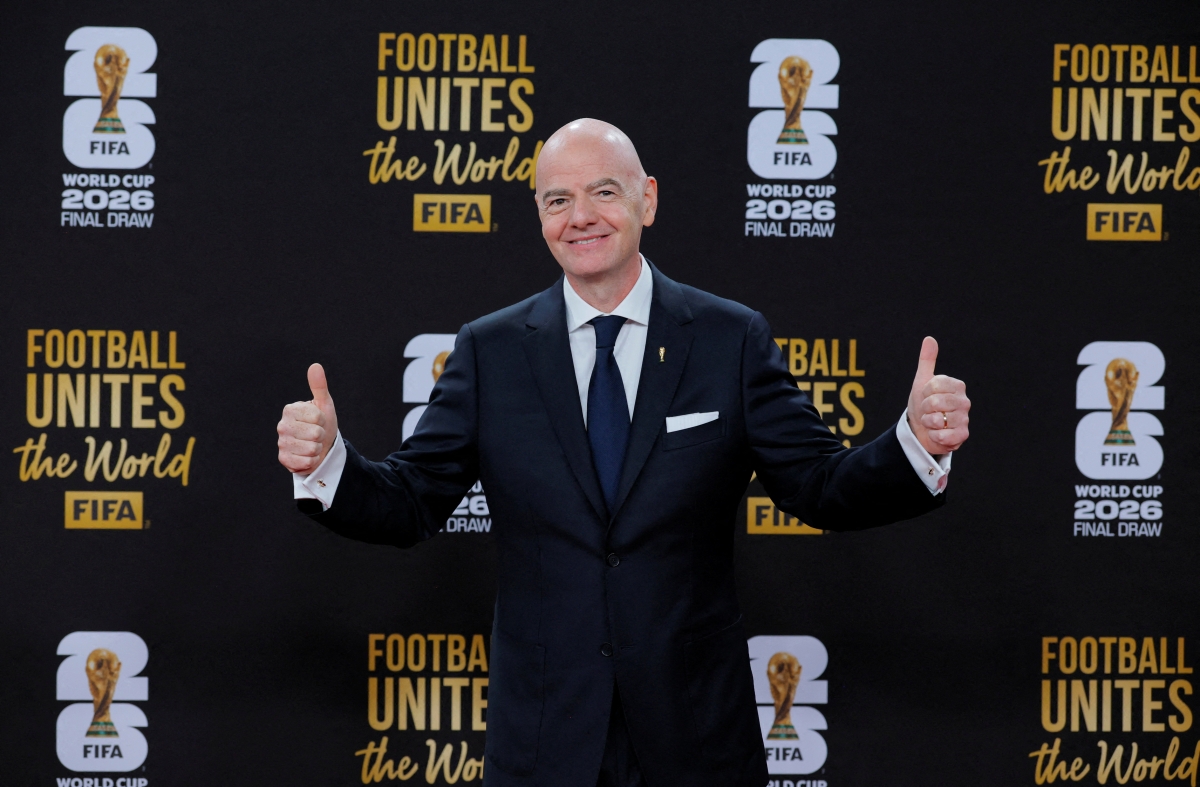
The International Federation of Association Football (FIFA) announced on Tuesday a project to establish a company responsible for managing its commercial activities, organizing the World Cup and other tournaments, and in
Translated by Qiyas from الجريدة — Original source
The International Federation of Association Football (FIFA) announced on Tuesday a project to establish a company responsible for managing its commercial activities, organizing the World Cup and other tournaments, and increasing “funding dedicated to the development of football,” by attracting external investors.
In a statement, FIFA clarified that its management “is considering the idea of consolidating all commercial rights, including broadcasting, sponsorship, ticket sales, and licensing… through the creation of a company called ‘FIFA Forward Enterprise’.”
It added that “FIFA will invite external parties to make minority investments without control rights” within this company.
The newspaper reported that FIFA President Gianni Infantino could benefit from the plan by assuming the role of commissioner of the new company after the end of his expected next term in 2031.
The Union of European Football Associations (UEFA), which comprises European associations and often criticizes FIFA’s decisions, did not delay in responding to this initiative.
UEFA stated in a press release: “The spirit of football and its governance are not capital to be speculated upon, especially in the absence of transparency regarding the destination of financial profits. None of us owns football, and FIFA has no right to sell it.”
The international federation confirmed that “FIFA will retain exclusive control over the company through a majority on its board of directors,” and will also keep “exclusive authority” regarding the governance of football, competitions, the calendar, regulatory decisions, and other matters.
As a non-profit association, FIFA retains a portion of its revenues, particularly to organize its competitions and pay its employees’ salaries, including that of its president, Infantino, who earns several million Swiss francs annually.
FIFA projected that the new company would “raise $4.2 billion” by the end of the year, and that “all its net profits will be reinvested in football,” promising its members economic returns through a new financing mechanism called the “FIFA Fast Forward Program.”
By merging all currently existing funding programs, FIFA hopes to provide more than $10 billion over the next four years to finance the development of football.
Under the current system, FIFA intended to distribute approximately $2.7 billion to member associations during the period from 2027 to 2030.
To implement this project, which still requires approval from the FIFA Council, the governing body of football stated that it is working with JPMorgan Chase and the investment fund Thriver Eternal, which “is expected to lead a group of potential investors in the new company.”
In June, prior to the launch of the World Cup, which concluded on July 19 with 48 national teams participating for the first time, FIFA, which includes tournament revenues in its fiscal year income, predicted record revenues exceeding seven billion euros ($8 billion) in 2026.
With the start of the global finals held in the United States, Mexico, and Canada, where Spain claimed the title at the expense of 2022 champion Argentina, Infantino said, “We have held discussions about expanding the number of teams to 64 in the 2030 edition.”
The Times quoted an “eminent figure in football,” who wished to remain anonymous, as saying the project “could be much worse than the European Super League,” which was intended to compete with the Champions League before failing, because it would affect all levels of the game worldwide.
The newspaper also cited another anonymous source stating that the plan would create an “unacceptable” conflict of interest for FIFA and Infantino.
In 2019, a project backed by Infantino for a $25 billion private investment in an expanded Club World Cup was rejected.
According to reports, the Japanese SoftBank Group and Saudi Arabia’s sovereign wealth fund were among the backers of the project. However, FIFA expanded the tournament from seven clubs to 32 teams starting in 2025. The newspaper wrote, “This could lead to pressure to expand both tournaments further or to hold them more frequently than the current system, which stipulates that they be organized once every four years.” Estimates of its losses when IXL, the company that was negotiating the World Cup rights, went bankrupt in 2001 ranged from $30 million to $115 million.
