Saudi Arabia calls on Iraq to curb Iran's proxies, while Kuwait stands in solidarity with Riyadh
As Iran resorts to mobilizing its proxies to threaten expanding its conflict with the United States regionally and paralyzing international navigation in the Bab al-Mandab Strait, while simultaneously obstructing ship pa
Translated by Qiyas from الجريدة — Original source
As Iran resorts to mobilizing its proxies to threaten expanding its conflict with the United States regionally and paralyzing international navigation in the Bab al-Mandab Strait, while simultaneously obstructing ship passage through the Strait of Hormuz, Saudi Arabia came under attack by drones launched from Iraqi territory. This coincided with claims by the Houthi militia that it had targeted oil supplies and transport in the kingdom for the second time within three days.
The Saudi Ministry of Defense confirmed that the drones, which it intercepted and destroyed during their terrorist attempt to target petroleum facilities in the Eastern Province and Riyadh, were launched from Iraqi territory and carried out by Iranian-backed terrorist militias. It emphasized the kingdom’s inherent right to defend itself, its assets, and to respond at the time and place of its choosing.
The Saudi Ministry of Foreign Affairs expressed its strongest condemnation of the reprehensible attacks by Iranian-backed militias in Iraq, stressing the necessity for the Iraqi government to take all necessary measures to ensure its territory is not used as a launching pad for aggression. It reaffirmed Saudi Arabia’s resolve to safeguard its security and sovereignty, deter aggressors, and its right to respond to the sources of aggression. In parallel, Foreign Minister Sheikh Jara Al-Jaber held a telephone conversation with his Saudi counterpart, Prince Faisal bin Farhan, during which they condemned and denounced the drone attacks launched by Iranian-backed militias in Iraq against the kingdom.
During the call, Al-Jaber affirmed Kuwait’s absolute solidarity with sisterly Saudi Arabia and its support for all measures taken to safeguard its security and sovereignty. Kuwait had previously expressed its strongest condemnation and denunciation of the attacks aimed at Saudi petroleum facilities by drones launched by Iranian-backed militias in Iraq, deeming them a blatant violation of the kingdom’s sovereignty and territorial integrity, as well as a breach of international law, the UN Charter, and Security Council Resolution 2817.
Kuwait reiterated its full solidarity with Saudi Arabia and its support for all measures taken to protect its security and sovereignty, emphasizing that the security of the kingdom is an integral part of Kuwait’s and the Gulf Cooperation Council (GCC) states’ security.
The Secretary-General of the GCC, Jassem Al-Budaiwi, along with Qatar, Egypt, Jordan, and Yemen, swiftly condemned the attacks by Iraqi militias against Saudi Arabia in the strongest terms, stressing that they constitute a violation of its security and an escalation that could undermine regional peace and stability.
Despite relative calm in the region, the cessation of Iran’s aggression against Gulf states, and the suspension of US President Donald Trump’s attacks on Iran to pave the way for reviving diplomatic efforts, Saudi Defense Ministry spokesperson Brigadier General Turki Al-Maliki revealed that the kingdom’s air defenses intercepted and destroyed several drones attempting to target petroleum facilities in the Eastern Province and Riyadh yesterday.
Al-Maliki stated that these terrorist attempts were launched from Iraqi territory and carried out by Iranian-backed terrorist militias, reaffirming the kingdom’s inherent right to defend itself and its assets, and its retention of the right to respond at the appropriate time and place.
The Saudi Ministry of Foreign Affairs expressed its strongest condemnation of the reprehensible drone attacks launched by Iranian-backed militias in Iraq against the kingdom, reaffirming Riyadh’s resolve to safeguard its security and sovereignty, deter aggressors, and its right to respond to the sources of aggression. It stressed the necessity for the Iraqi government to take all necessary measures to ensure its territory is not used as a launching pad for aggression.
Amid Tehran’s reliance on mobilizing its allied militias in the region, shifting operations from Iraq to Yemen to threaten expanding the conflict regionally and paralyzing international navigation in the Bab al-Mandab Strait, while simultaneously obstructing ship passage through the Strait of Hormuz, Yahya Saree, the military spokesperson for the rebel Houthi militia, claimed that oil supplies and transport from eastern Saudi Arabia to Yanbu were targeted by drones for the second time within three days.
Meanwhile, Iraqi Prime Minister Ali al-Adaibi is set to visit Saudi Arabia tomorrow, Thursday, for important talks and the signing of memorandums of understanding in several sectors, alongside discussions on security coordination and regional developments, as well as the impact of the war on security and economic stability across the region.
On the front of regional efforts to contain the escalation, Saudi Foreign Minister Prince Faisal bin Farhan received a phone call from his Omani counterpart, Badr Al Busaidi, discussing recent developments. Both sides emphasized “the importance of enhancing coordination and consultation and advancing joint diplomatic efforts to maintain security and stability in the region and ensure the safety and freedom of navigation in Hormuz.”
In a related development, the Jordanian army announced that it intercepted and shot down two drones after they breached its airspace. While Jordan did not accuse any party of responsibility for the attack, information indicated that the drones were also launched from Iraq. Additionally, the Iranian opposition party Kurdistan Free Life Party (PJAK) announced that a drone attack targeting its positions in Erbil had occurred.
Tehran, which is seeking to impose its dominance over “Hormuz,” also announced that it had prevented six ships attempting to cross the strait via the southern route inaugurated by US forces in coordination with the Sultanate of Oman. It claimed that one of those ships, which it said had turned off its navigation and positioning systems, was involved in an incident.
The Iranian military issued threats of inevitable retaliation for a Ukrainian attack on what Kyiv described as a ship transporting Russian weapons to Iran in the Caspian Sea. Meanwhile, Iranian Foreign Ministry spokesperson Esmaeil Baqaei referred to Ukrainian President Volodymyr Zelensky and Israeli Prime Minister Benjamin Netanyahu as “examples of evil,” stating that the former’s behavior “reminisces of the chaotic posturing of anarchists on the eve of World War I, the repercussions of which spread across all of Europe.”
These indirect Iranian moves came at a time when its diplomatic understanding with Washington was stalled following the collapse of the Islamabad memorandum. Baqaei stated that Iran had not requested the resumption of talks with Washington, adding, “Mediators are conveying messages from America to us, but we are not currently conducting talks with them.”
Baqaei accused Washington of diverting ships in Hormuz and using commercial vessels to transport military equipment, thereby escalating tensions in the region. He denied efforts to establish a 10-day truce, noting that ongoing negotiations were with Oman and focused on establishing necessary arrangements in “Hormuz.”
He added, “We are working with Oman, as two coastal states, to adopt mechanisms regarding maritime navigation, and these consultations are still ongoing.” He also warned that America does not determine when war begins or ends.
In an escalatory tone, Deputy Speaker of the Parliament, Hamid Babaei, stated that “Hormuz” grants the Iranian nation immense power, and today represents the peak of that strength. Babaei asserted that Iran would never reach an understanding with the United States and that it had made the ceasefire in Lebanon between Israel and Hezbollah its primary and fundamental condition in any memorandum of understanding.
Meanwhile, Trump denied that the depletion of ammunition stocks was a factor driving him to seek ways to revive diplomatic efforts to restore freedom of navigation in the Strait of Hormuz, stating that he has “far more ammunition than any country and far more than he needs.”
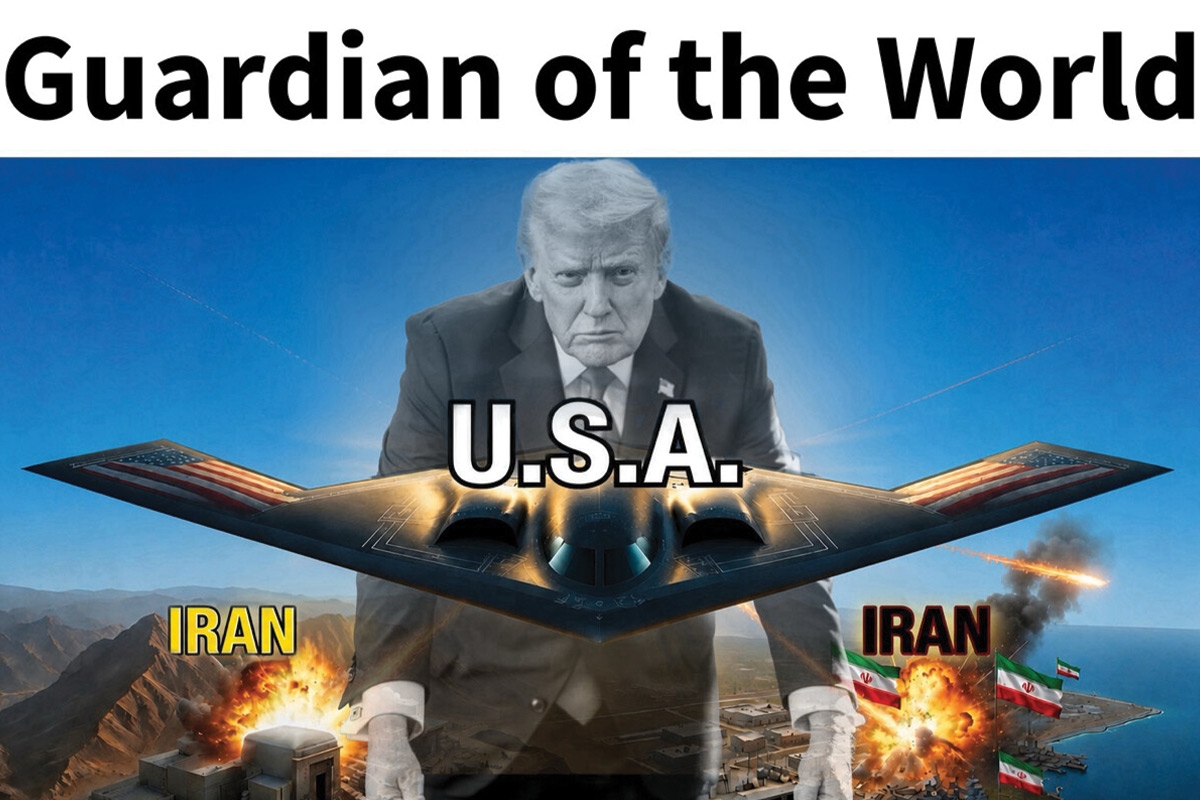
Trump posted an AI-generated image depicting the bombing of Kharg Island, as well as a photo of an Iranian oil tanker seized by his forces. This coincided with leaks from his administration indicating that it is considering how to secure Iranian enriched uranium, which is enriched to levels nearing those required for nuclear weapons.
In a parallel development, Pakistani intelligence officials expressed the belief that Trump may order a limited ground attack to isolate Iran’s coastal region before any peace agreement is reached.
One official stated, “There are numerous indicators that he intends to do so, in terms of military deployment, troop movements, and the rhetoric being used.” Additionally, the New York Post reported that U.S. special operations forces are preparing to carry out a comprehensive ground raid targeting nuclear facilities in Isfahan, Fordow, and Natanz.
Amid signs of divergences on several regional files, particularly regarding Iran and the future of Israeli military movements in the region, Channel 12 and the Ynet news site reported that Netanyahu intends to provide Trump with recent intelligence, including evidence that Tehran has accelerated its nuclear program development, intensified efforts to acquire a nuclear arsenal, and concealed strategic capabilities in deep underground facilities.
According to the information, which highlighted an increasing role for the new Supreme Leader, Mojtaba Khamenei, in advancing the nuclear program, Netanyahu will warn against a temporary deal that he believes could give Tehran time to rebuild its capabilities. He will also seek to avoid giving the impression that his visit to Washington is aimed at pushing Trump toward a new war.
