Trade War Escalates... Trump Considers Expanding Tariffs to New Sectors
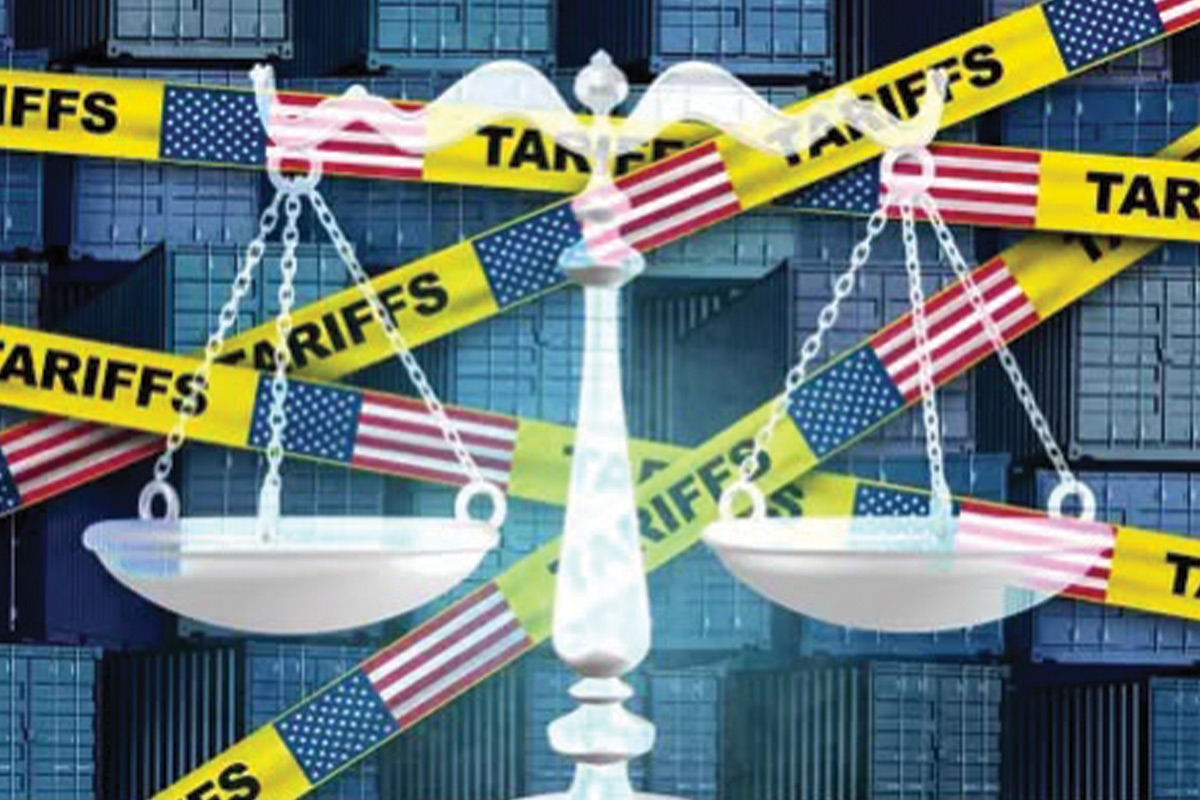
The latest round of U.S. tariffs imposed by President Donald Trump’s administration at rates of 10% or 12.5% on 60 countries around the world, due to alleged weaknesses in enforcing the ban on forced labor, marks the fir
Translated by Qiyas from الجريدة — Original source
The latest round of U.S. tariffs imposed by President Donald Trump’s administration at rates of 10% or 12.5% on 60 countries around the world, due to alleged weaknesses in enforcing the ban on forced labor, marks the first in a series of tariff measures to be unveiled in the coming months.
These measures include investigations into excess industrial production capacity, alleged intellectual property theft by Vietnam, and measures to protect national security in strategic sectors, ranging from semiconductors to robots and industrial machinery.
President Donald Trump did not have time to conduct lengthy investigations into tariffs when he returned to office last year, as he wanted to immediately pressure trading partners to extract concessions. What followed was a chaotic start to a trade agenda that was ultimately overturned by a harsh ruling from the Supreme Court this year.
Now, he and his team are moving to a new phase of building a more durable U.S. tariff wall by using more traditional and legally tested trade laws, which he lacked patience for 18 months ago.
Dan Augko, an assistant legal counsel at Canadian oil producer SinoFus Energy, specializing in U.S.-Canada trade, said, “We are at the end of the beginning of Trump’s tariff agenda... In the coming weeks, and certainly by the end of summer, we will see large parts of Trump’s trade policy fully in effect.”
This will provide greater clarity and certainty for companies regarding the final tariff structure Trump plans, while raising concerns among foreign trade ministries about the possibility of having to make further concessions to protect their access to the U.S. import market, valued at $3.4 trillion.
The new tariffs from Trump, targeting forced labor under Section 301 of the Trade Act of 1974, an unfair trade practices law he used against China during his first term, replace the temporary global 10% tariffs that expired on Friday.
This reinstates part of the tariffs Trump called “Liberation Day,” which ranged from 10% to 50% on nearly all countries, which the U.S. Supreme Court ruled illegal under a previously untested national emergency law that Trump used to impose them.
Another portion of the core tariffs is likely to be reinstated through another Section 301 investigation into excess industrial production capacity, targeting 16 major trading partners, including China, the European Union, Japan, South Korea, Mexico, and Vietnam.
This ongoing investigation targets industrial subsidies and other export-oriented policies.
Mark Bessel, CEO of Michigan-based vacuum cleaner manufacturer Bessel, said the new tariffs were largely as expected by the company, which had not stockpiled goods from China and other places in an attempt to circumvent them.
Bessel added in an email to Reuters: “We continued to run the business based on our belief that tariffs would remain in the range of 10% to 15%.”
