Lebanon seeks direct US protection in the face of Israeli occupation and Iranian oversight
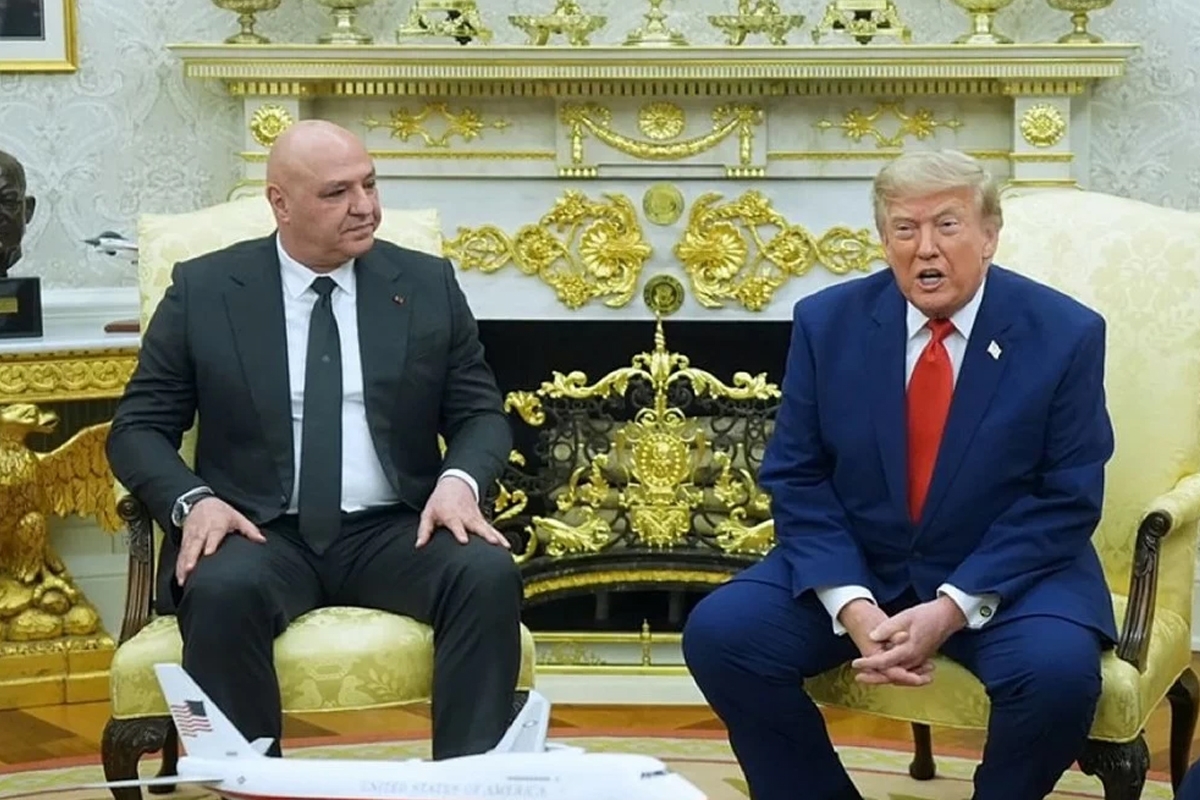
Among the issues emerging from the points and files that Lebanese President Joseph Aoun is exploring with his American counterpart, Donald Trump, and during meetings held with American officials, is the entry into seriou
Translated by Qiyas from الجريدة — Original source
Among the issues emerging from the points and files that Lebanese President Joseph Aoun is exploring with his American counterpart, Donald Trump, and during meetings held with American officials, is the entry into serious negotiations to sign security and military agreements, or a mutual defense pact.
This was a translation of an idea floated among some Lebanese officials and influential Lebanese figures in the United States. This proposal amounts to a demand for direct American protection for Lebanon, in the face of any occupation that Israel seeks to impose, relying on the military results it has achieved and its insistence on continuing them.
In response to any Iranian influence or “Iranian suzerainty,” as some Lebanese call it, this idea has been taking shape for months, particularly after Trump increased talk about the possibility of Syrian intervention in Lebanon, prompting Syrian President Ahmad al-Sharaa to address the Hezbollah file. From this came the idea of Americans forming special units within the Lebanese Army, or training these units and overseeing their operations in disarming Hezbollah. The objective of these proposals was to place Lebanon entirely under the American umbrella, under a slogan repeated by many convinced of this idea: that America alone is capable of protecting Lebanon from Israel, Iran, and Syria. Moreover, Washington is the guarantor of Lebanon’s neutrality.
Certainly, any agreement of this kind would be linked to multiple contexts. The first is formal security and military agreements, which would return the United States to Lebanon based on an official request from the Lebanese state and joint agreements. The second is that, for Americans, this path would be an inevitable consequence of signing a peace agreement with Israel, or perhaps they would be partners in these security and military agreements, potentially building upon the security and military coordination concept decided upon in the Framework Agreement. Thirdly, Lebanese proponents of this idea seek to exit any conflict between regional axes or lines, positioning themselves where the United States wants or decides, thereby avoiding the need to make a choice regarding rapprochement with Syria, Turkey, and Arab states, or with Israel. They also avoid uncertainty in selecting a future project in oil and gas fields in the eastern Mediterranean, or any trade route they wish to adopt, instead handing the decision over to the United States and what it deems appropriate.
Among the issues discussed during the President’s visit to America was also working to support the Lebanese Army financially, militarily, and logistically, as well as in terms of training. This will begin in multiple phases, particularly through organizing training courses for Lebanese Army troops by the US Army in several countries in the region, some in Jordan and others in Turkey. Additionally, efforts are underway to organize an international conference to support the army. This path is intended to serve as the beginning of a transition to new stages of security and military agreements, but it will also be linked to the file of disarming and restricting weapons to the state’s authority.
In this context, the proposal emphasized by Aoun is gradual: work begins swiftly in the south of the Litani River to fully disarm, after which the focus shifts to the north. Several ideas have been put forward, some of which he discussed during a dinner held in his honor at the Lebanese Embassy in Washington, citing as examples the Irish Republican Army or the Colombian guerrillas. The point of these references is that disarming requires a lengthy process and time, and that the entry point must be linked to Israel’s withdrawal from southern Lebanon and to providing all the prerequisites for reconstruction to ensure the return of residents. This will require financial and economic support, while American interest in investing in Lebanon, particularly in the oil and gas and transit sectors, has not been absent.
