Bangkok Bank Ambassador to Al-Jarida: Our products comply with Sharia provisions
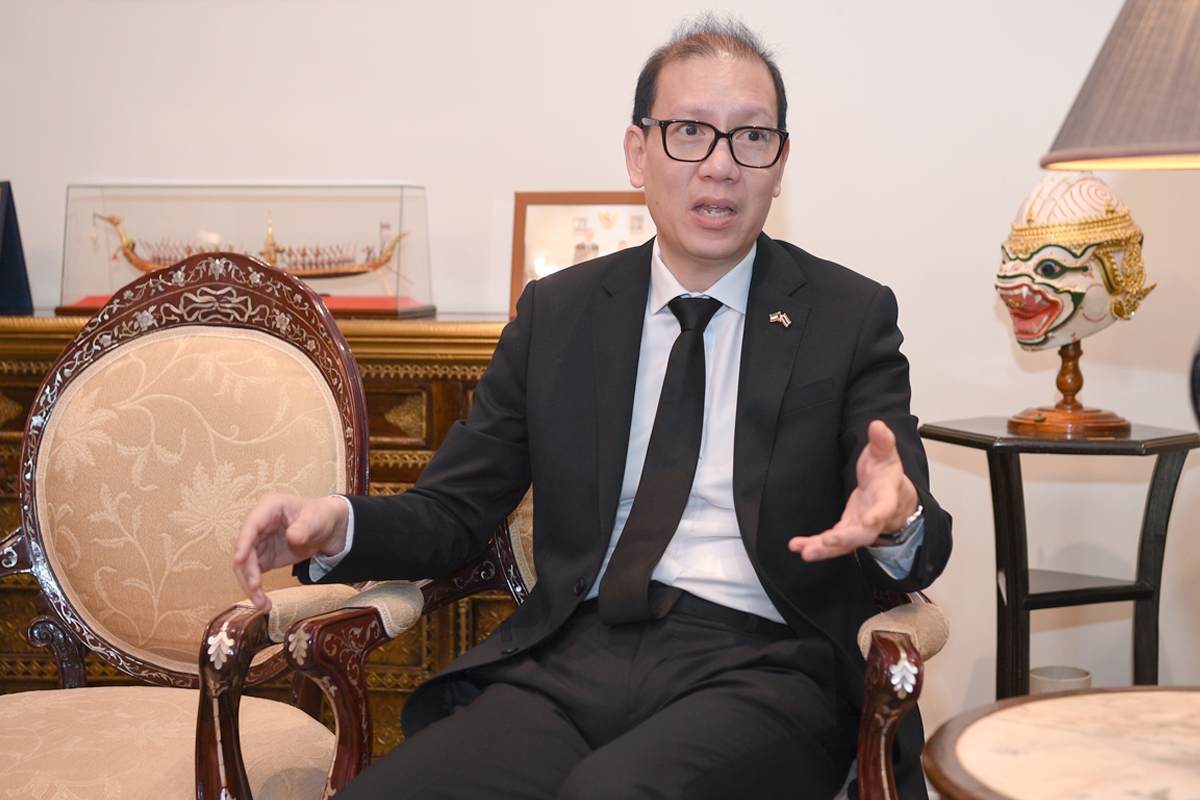
• What are the key strengths of the Thai Halal standards, and what distinguishes them from others?
- Thailand is globally recognized as the “World’s Kitchen,” and our Halal products enjoy a well-established international reputation that combines high quality with full compliance with Islamic Sharia principles. This success is built on Thailand’s long-standing experience as one of the world’s largest exporters of food products.
We recognize that the Halal industry is fundamentally based on trust, and we therefore place the utmost importance on this aspect, alongside our commitment to international standards and the requirements of consumers in various markets.
Thailand’s Muslim population numbers approximately 2.8 million, roughly twice the population of Kuwait, which has provided us with extensive expertise in developing the Halal ecosystem. Furthermore, Thailand established the “Halal Science Center at Chulalongkorn University” in 1995 to support inspection and control processes and ensure food safety using the latest scientific methods.
At the international level, the Central Islamic Committee of Thailand (CICOT), the primary authority responsible for issuing Halal certificates, collaborates with more than 154 Halal institutions across 56 countries through mutual recognition agreements. This enhances the reliability of Thai Halal certificates and confirms their alignment with international standards.
- Certainly, Thailand possesses both the potential and the ambition. As previously mentioned, we are globally known as the “World’s Kitchen,” and we rank among the leading producers of high-quality food, including Halal products.
• With the resumption of direct flights between Kuwait and Thailand, do you see new opportunities to facilitate the export of fresh and frozen Thai Halal meat and food products to Kuwait? Are there ongoing discussions with Kuwaiti authorities or the private sector in this regard?
- Thailand and Kuwait have maintained long-standing air connectivity, which is a crucial factor in strengthening economic and trade relations between the two countries. Direct flights not only bring peoples closer but also open new horizons for business and investment and facilitate the movement of goods and services.
Moreover, the presence of Thai products in the Kuwaiti market is not new; many Kuwaiti stores and restaurants already use Thai ingredients and products.
In this context, the Embassy recently led a delegation of representatives from the Kuwaiti business sector to participate in THAIFEX – ANUGA ASIA 2026, held at the IMPACT Exhibition and Convention Center in Bangkok.
• What areas do you consider most important, particularly regarding Halal certification, food security, scientific research, and regulatory standards?
- There are four key areas that can form the basis for deeper cooperation between Thailand and Kuwait:
First: Cooperation in the field of Halal certification. We hope this initiative will enhance communication between the relevant authorities in Kuwait and the Central Islamic Committee of Thailand (CICOT), whether through mutual recognition agreements or memoranda of understanding, thereby facilitating the trade of Halal products and supporting efforts to achieve food security and diversify import sources in Kuwait.
Second: Food security. Kuwait relies heavily on food imports, whereas Thailand is a major global producer and exporter of food, creating a natural complementarity between the two countries.
Third: Scientific and research cooperation, particularly in areas such as Halal testing, laboratory development, food innovation, and traceability systems, where Thailand possesses extensive expertise.
Fourth, regulatory coordination and the exchange of expertise: sometimes the problem is not the availability of products, but rather differing procedures or unclear requirements for companies. The greater the understanding between regulatory authorities and relevant institutions in both countries, the easier, faster, and more transparent trade becomes.
For me, the objective is clear: to translate institutional cooperation between Thailand and Kuwait into practical and tangible results on the ground, particularly in the business sector.
• In addition to food products, Thailand promotes itself as a Muslim-friendly tourist destination. What is the importance of the Halal industry within your country’s broader economic and tourism strategy? And what message would you like to convey to Kuwaiti consumers, investors, and travelers?
From 2024 to 2026, Thailand ranked fifth among non-OIC member destinations in the “Mastercard-CresRating Global Muslim Travel Index,” reflecting the efforts made by various sectors in Thailand to enhance Muslim-friendly tourism and develop Halal hospitality services.
In recent years, the Tourism Authority of Thailand has launched applications, publications, and specialized tourism routes to facilitate the experience of Muslim visitors, including food tourism routes and Muslim-friendly destinations.
- Yes, this is one of our key objectives. Thailand is among the world’s top exporters of seafood and poultry, and we have the capacity to meet the growing demand for Halal products in the Kuwaiti market.
During the recent period, the Embassy has focused on strengthening communication between major Kuwaiti retailers and Thai exporters, to ensure that the products available in their country align with the needs of consumers in Kuwait.
We are also working to introduce Kuwaiti companies to trade fairs and Halal product exhibitions in Thailand, as they provide an important opportunity to meet exporters of various sizes and sectors, and to explore opportunities for direct cooperation.
