Condolences: Sulaiman Al-Badr...
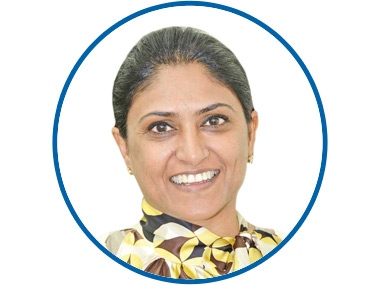
When loved ones and family members pass away to join their Lord, the Almighty, their absence pains us, and words become too small to describe the magnitude of their loss. All that remains is prayer, and the memories stored in our minds—moments and recollections that bring back those we love as if they were still among us.
The loss of my father, Dr. Sulaiman Saadoun Al-Badr, caused me deep sorrow. He was a man who embodied the highest meanings of humanity, loyalty, generosity, love for doing good, and service to his country, family, relatives, and those in need. It pained me even more to receive news of his passing while I was miles away from the homeland, in a moment when I wished distances could be shortened so I could be with my family to bid him farewell alongside them.
I refer to him as “father” because parenthood is not solely defined by blood ties. There are individuals who, through their place in our hearts, their tenderness, their support, and their actions toward us, assume the status of a father. My uncle, Abu Khalid—may God have mercy on him—was one of such men.
In moments of loss, memories crowd in, with both small and significant events coming to the forefront. Words fail me to do justice to his noble biography or to condense a life marked by generosity, work, and goodness into a few lines.
For above all titles and positions, he was a human being in the truest sense of the word.
He was gentle in character, calm in disposition, noble in spirit, and loyal to his family and friends. He was keen on maintaining family ties, inquiring about relatives, and standing by their side. Doing good occupied a significant portion of his life; he helped the needy and extended a hand of assistance to those in need, both within and outside Kuwait, in silence whose details were known only to those close to him.
He did not seek praise, nor did he speak of what he did. He performed good deeds because he believed this was what a person ought to do.
This was also true in his public life; quiet in his presence, yet profound in his impact.
He spent many years within the embrace of Kuwait University as a professor, academic, and administrator, and later as Dean of the Faculty of Arts. He contributed his knowledge and efforts to educating generations of Kuwaiti youth. He carried a passion for the history and civilization of the Arabian Gulf and believed that knowledge is a mission, and that education is the foundation upon which nations are built and generations shape their future.
Then came one of the most difficult chapters in Kuwait’s history.
Our country emerged from the trauma of the invasion burdened with wounds. Kuwait was rebuilding its institutions and restoring its life, while education faced an exceptional challenge. Our children had lost an academic year due to the invasion, and the future of an entire generation depended on extraordinary decisions suited to circumstances that were far from ordinary.
One of the most prominent challenges at that time was known as the “Integration Year,” a decision taken to address the academic year students had lost during the invasion, enabling them to make up for what they had missed and return to their educational path without losing another year of their lives.
Decisions may be summarized in a sentence or a paragraph after the passage of years, but those who lived through those days know that behind them lay great responsibility and exceptional conditions.
Kuwait had just emerged from the invasion. Schools and universities, like other state institutions, were striving to rise again. It was imperative that students return to their classrooms, that schools and universities resume their roles, and that people feel life was returning to normal.
Under these circumstances, it was necessary for men to bear the responsibility of decision-making and place the future of Kuwaiti children above all else.
Dr. Sulaiman belonged to a generation that believed education is the foundation of nation-building, and that Kuwait’s true investment lies in its people—in their knowledge, intellect, values, and future. This generation viewed serving the country as a duty without condescension, and saw official positions as responsibilities rather than privileges.
However, positions, no matter how high, do not define a person. What remains in our memory today is not the position or the titles, but the human being.
Those who knew Dr. Sulaiman Al-Badr up close recognized in him the calmness of a scholar, the dignity of an educator, gentle character, and the simplicity of a humble man.
He remained that quiet man, who never needed to raise his voice to be heard, nor speak of himself to be known.
These are qualities that do not appear in resumes, nor are they recorded in official documents, yet they are preserved in a more enduring and truthful place... in the hearts of people.
He belonged to a generation that worked much and spoke little, gave generously without making his contributions a subject of self-promotion, and served his country, family, and community with quiet dedication and sincerity.
Today, as I reflect on his life from thousands of miles away from the homeland, I realize more than ever that a person’s legacy is not measured by what he accumulated, the titles he held, or the number of positions he occupied.
It is measured by a kind word spoken at the right time, a hand extended to the needy without anyone noticing, knowledge he imparted, students he taught, relatives he maintained and loved, and a country he served when it needed him most.
As for us, his family and loved ones, what remains of him is far more precious than any position or title:
May Allah have mercy on you, O Abu Khaled, with a vast mercy. May He forgive you, honor your guest, expand your provision, and place all the knowledge, goodness, generosity, family ties, and service to your country and family that you offered in the scale of your good deeds.
You have departed from our sight, but you will never depart from our hearts.
Some men, when they pass away, do not disappear; because they have left an imprint in every heart that knew them, a remembrance in every righteous deed, and a legacy in life that is recounted with goodness.
