Withdrawal of 290 Million Barrels from Global Oil Reserves
The International Energy Agency (IEA) said on Tuesday that member countries had withdrawn approximately 290 million barrels of oil from their reserves since the announcement of the measure on March 11. In March, the agen
Translated by Qiyas from الجريدة — Original source
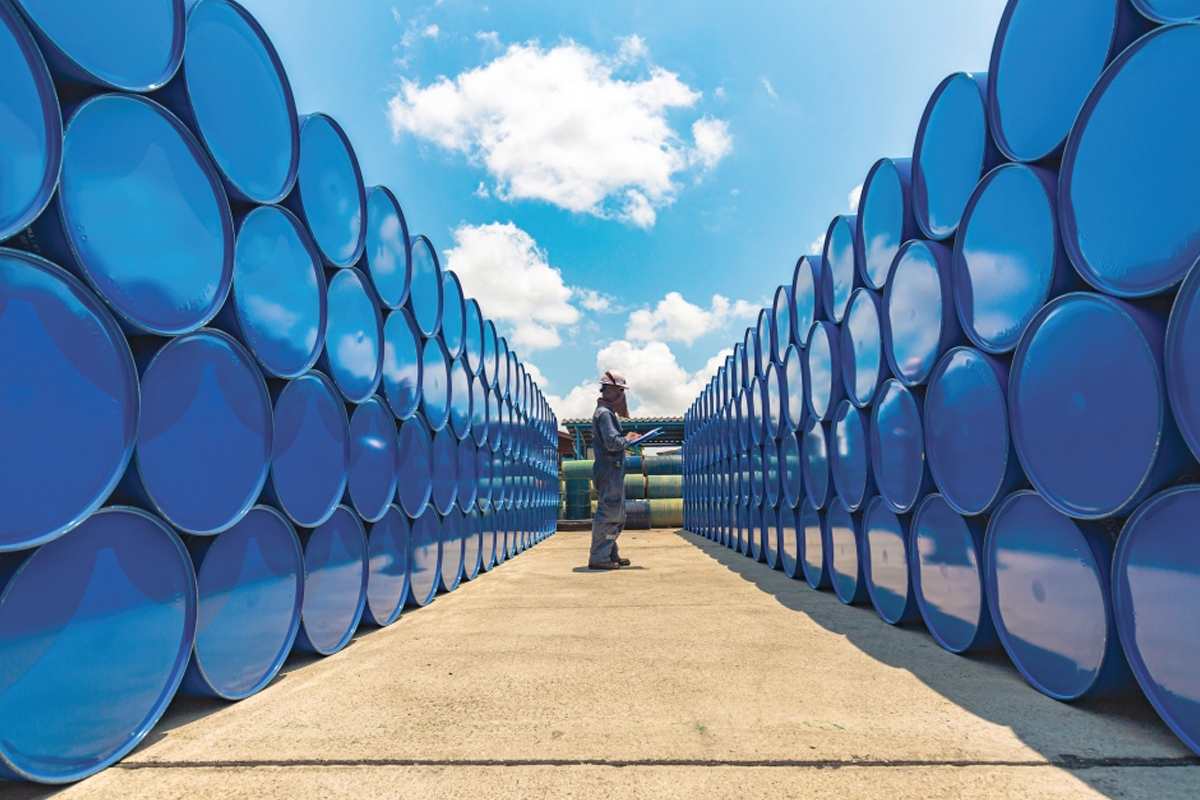
The International Energy Agency (IEA) said on Tuesday that member countries had withdrawn approximately 290 million barrels of oil from their reserves since the announcement of the measure on March 11. In March, the agency approved the release of a record 400 million barrels of oil from strategic stockpiles to help counter rising global crude prices following the outbreak of the US-Israeli war against Iran.
The price of Kuwaiti crude oil rose by $2.58 to reach $84.83 per barrel in Monday’s trading, compared to $82.25 in Friday’s trading, according to the Kuwait Petroleum Corporation.
In global markets, oil prices rose on Tuesday morning as markets assessed reports of mediation efforts between the United States and Iran, alongside ongoing exchanges of attacks and Houthi threats in Yemen to impose a maritime blockade on Saudi Arabia.
Analysts at ING Bank said in a note: “There is some hope for de-escalation between the United States and Iran. Reports suggest that mediators are proposing a ten-day ceasefire, which could put the memorandum of understanding back on track.”
The bank added that fundamental differences remain between Washington and Tehran, while US President Donald Trump vowed revenge after the killing of several American soldiers.
For its part, Goldman Sachs expects Brent crude prices to rise above $120 per barrel by the fourth quarter of this year if disruptions in the Strait of Hormuz persist.
Bank analysts noted in a note that escalating tensions in the Middle East and a drop in oil flows from the Arabian Gulf to less than 45% of pre-war levels could drive oil prices higher again.
Conversely, the bank’s current forecasts point to Brent crude reaching $80 per barrel in the fourth quarter of this year and $75 next year, assuming a de-escalation of tensions in the Middle East.
Goldman Sachs also raised its forecasts for natural gas prices in Europe for the second half of this year, anticipating a delayed return of liquefied natural gas (LNG) exports from the Middle East to normal levels.
The bank increased its forecasts for standard European natural gas futures contracts to €60 and €53 per megawatt-hour for the third and fourth quarters, respectively, up from previous estimates of €41 and €40, according to Reuters.
The bank postponed its estimate for the recovery of Middle Eastern gas exports to October, instead of the previously expected July, and anticipates that gas storage levels in northwestern Europe will fall to around 67% by the start of winter in late October, compared to its previous estimate of 74%.
It warned that a decline in supply in the European gas market could push prices toward €65 per megawatt-hour, particularly if the continent experiences severe cold waves next winter, thereby exacerbating Europe’s energy vulnerability.
A research report from S&P stated that “optimists may view the latest US attacks as a final attempt to strengthen the negotiating position before reaching a settlement and reopening the Strait of Hormuz.”
The report added, “The risk, however, lies in the prolongation of the stalemate, with continued instability in energy flows, rising oil prices, and repeated attacks.”
The Iran-aligned Houthi movement in Yemen said on Monday that it would impose a naval blockade on Saudi Arabia, potentially opening a new front against the United States in its war on Iran and increasing the threat to global energy supplies and trade outside the Gulf.
A preliminary Reuters survey showed that U.S. crude oil and gasoline inventories are expected to have fallen last week, while distillate product inventories are likely to have risen.
Three informed sources said the Indian Oil Corporation canceled oil loading operations at Iraq’s Basra port due to rising risks and attacks on some ships passing through the Strait of Hormuz.
The state-owned Indian company had been preparing to load about 2 million barrels of Iraqi crude onto the large crude carrier “Leela Jamnagar” around July 23.
The sources said another state-owned refining company, Mangalore Refinery and Petrochemicals Limited, also canceled plans to load oil from Iraq onto the Indian-flagged vessel “Dish Gurav.”
The two Indian companies did not respond to Reuters’ requests for comment.
India has advised shipowners, operators, and manning agencies not to deploy Indian sailors on vessels traveling through the strait following the resumption of combat operations in the region.
The Maritime Regulation Authority has urged ship captains to exercise caution regarding the security situation in the Gulf, the strait, and adjacent waters, and called for continued monitoring of navigational warnings. Before the war, about 20 percent of the world’s energy supplies passed through the strait.
Tensions have escalated since the collapse of the fragile truce between Washington and Tehran in early July, with a return to intense exchanges of strikes and worsening disruptions to navigation through the strait.
U.S. crude oil inventories in the Strategic Petroleum Reserve fell by about 5.1 million barrels last week to 311.4 million barrels, marking the lowest level since March 1983.
According to the latest data from the U.S. Department of Energy, Strategic Petroleum Reserve stocks dropped by 104.04 million barrels from the start of the war on Iran in late February through July 17, Reuters reported.
On a total inventory basis — which includes commercial stocks and the Strategic Petroleum Reserve combined — U.S. inventories fell by 129 million barrels to 726.2 million barrels as of July 10, the lowest level since 1984.
This continuous drawdown comes as part of Washington’s commitment to an agreement to release 172 million barrels from the Strategic Petroleum Reserve to ease energy supply pressures.
The European Commission advised EU member states not to impose three-year sanctions on oil and gas companies that violate methane emission rules, in a move aimed at avoiding energy supply disruptions.
The new rules were scheduled to take effect starting in January 2027, requiring oil and gas imports into the EU to comply with methane emission monitoring standards applied to companies operating within the bloc.
In a statement on Monday, the Commission said member states should not impose fines or sanctions on non-compliant companies during 2027, 2028, and 2029, to ensure stability in oil and gas supplies and avoid potential market disruptions.
Analysts at Morgan Stanley said the European diesel market is experiencing a severe crisis due to supply disruptions caused by the war in the Middle East and the closure of the Strait of Hormuz, pushing refining margins in the old continent to record levels.
The US bank clarified in a note issued the day before yesterday that the situation is extremely critical, pointing out that its supply and demand models indicate that stockpiles in Europe are falling to their lowest levels in several years.
The bank noted that diesel refining margins in northwestern Europe have reached record levels, while stockpiles are expected to begin declining from August, reaching approximately 299 million barrels in November—the lowest level for this time of year since at least 2015.
Nevertheless, the bank does not expect diesel prices in the European market to rise further, as current prices already reflect the tightness in the market.
During Monday’s trading, European diesel futures rose by about 3.5% to $1,219.5 per ton, marking the highest level since May 20.
