Washington Accuses Cuba of Running Espionage Campaign Targeting Highest Levels of U.S. Government
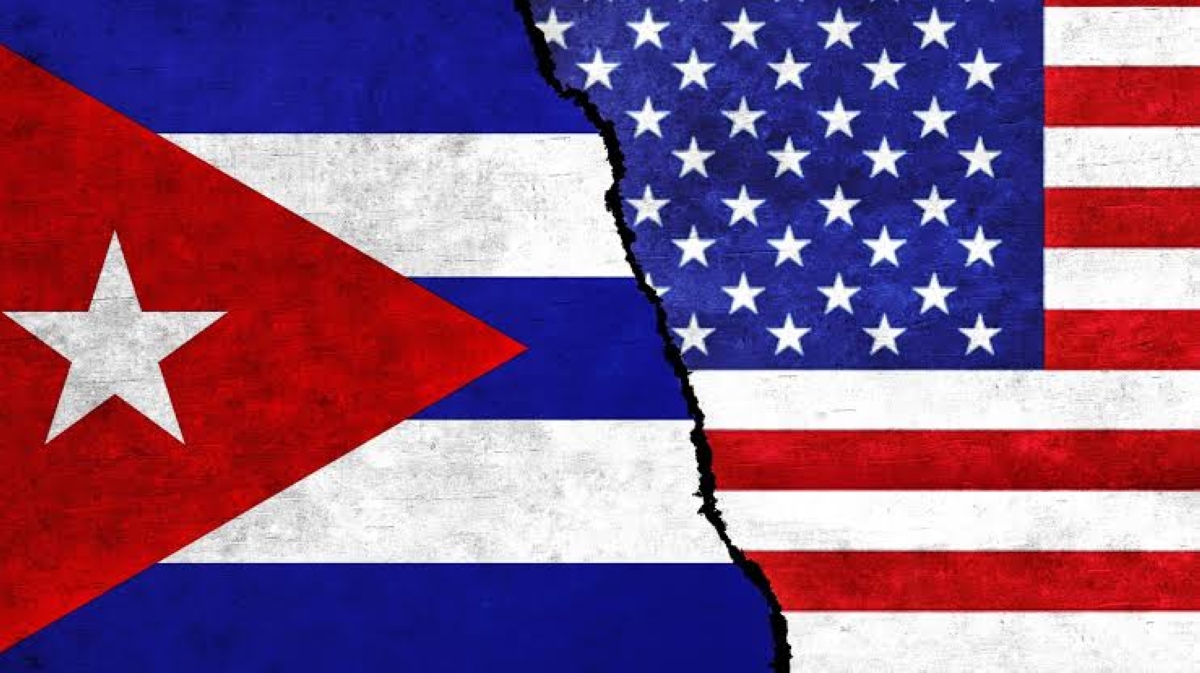
The United States accused Cuba on Monday of running a decades-long espionage campaign that succeeded in breaching the highest levels of the U.S. government in Washington, as President Donald Trump seeks to end communist
Translated by Qiyas from الجريدة — Original source
The United States accused Cuba on Monday of running a decades-long espionage campaign that succeeded in breaching the highest levels of the U.S. government in Washington, as President Donald Trump seeks to end communist rule on the island and revives anti-leftist rhetoric in his country.
The U.S. State Department issued a report containing no significant new information, but it intensified pressure on Havana amid a campaign in which Washington imposed an oil embargo and new sanctions on Cuba, while leveling accusations against former Cuban leader Raul Castro.
This coincides with a Trump-led narrative that harks back to the Cold War era, portraying left-wing U.S. political figures as a communist “threat” that must be eradicated “like cancer.” It comes ahead of the U.S. midterm elections scheduled later this year.
In its report, the U.S. State Department stated that Cuba “infiltrated the highest ranks of the U.S. government, recruited and nurtured generations of American activists, and supported an unprecedented wave of left-wing terrorism on U.S. soil.”
It added that this campaign was “one of the most persistent and damaging foreign intelligence breaches in U.S. history.”
While the accusations represent an escalation in tensions between the United States and Cuba, espionage between the two countries is not new and has long been known.
Since the Cold War era, the United States has arrested Cuban intelligence officers, including five who were convicted in the 1990s of infiltrating civil society groups in Florida, as well as Ana Montes, who spied from a high-ranking position within the Defense Intelligence Agency.
In more recent cases, former U.S. State Department intelligence analyst Walter Kendall Myers and former U.S. Ambassador to Bolivia Victor Manuel Rocha pleaded guilty in separate cases involving espionage on behalf of the communist state.
In response, the U.S. Central Intelligence Agency (CIA) and Cuban exiles attempted to assassinate former President Fidel Castro more than 600 times, according to estimates once provided by his former intelligence chief, Fabian Escalante.
The report issued on Monday included broad, albeit unproven, allegations that Cuba cultivated relationships with left-wing groups around the world and in the United States with the aim of fostering a “predominant sense of resentment and deep hatred for the United States and the West in general.”
It noted that the communist state influenced “a disproportionately large number of the most famous and influential extremist movements in America,” with the goal of “stoking division within the United States.”
Former President Barack Obama sought rapprochement with the Cuban government in 2015, hoping that a diplomatic approach would improve relations after half a century of hostility.
But Trump quickly reversed course, adopting a hardline stance and reclassifying Cuba as a state sponsor of terrorism on his first day in office.
Since then, the United States has threatened to impose sanctions on countries supplying oil to the island and enforced an energy embargo on Cuba that contributed to repeated power outages across the country.
Trump has repeatedly stated that the Cuban government would be next to fall after the overthrow of Maduro, and in June he said the United States would “almost immediately take control” of the Caribbean island, located about 145 kilometers from Florida.
