Rubio praises 'moving forward toward peace' after meeting Aoun
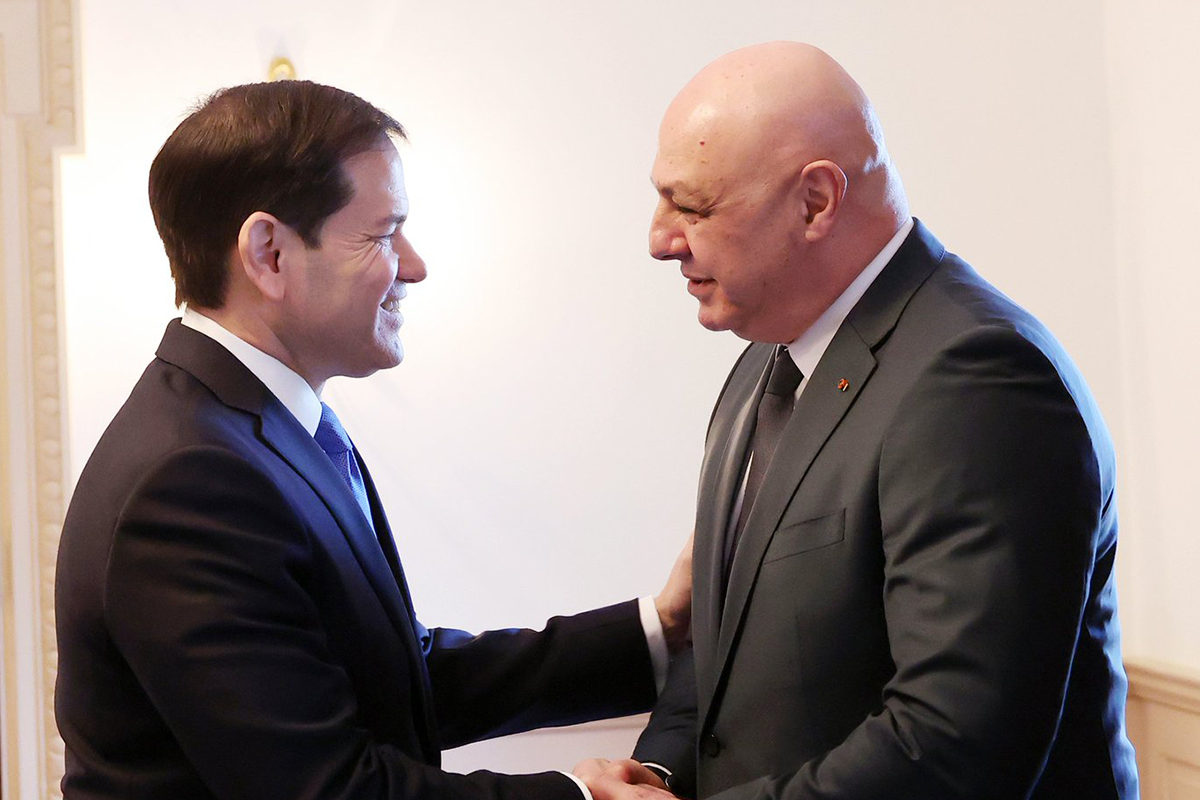
US Secretary of State Marco Rubio praised Lebanon’s “progress toward peace” on Sunday after meeting Lebanese President Joseph Aoun in Washington, following the latest round of talks with Israel in Rome. Aoun’s visit mark
Translated by Qiyas from الجريدة — Original source
US Secretary of State Marco Rubio praised Lebanon’s “progress toward peace” on Sunday after meeting Lebanese President Joseph Aoun in Washington, following the latest round of talks with Israel in Rome.
Aoun’s visit marks the first by a Lebanese president to Washington since 2009. The Lebanese presidency announced that Aoun will meet Donald Trump at the White House on Tuesday.
In a statement, the State Department said Rubio “commended the courage of the Lebanese government, led by President Aoun, for its determined efforts to restore Lebanon’s sovereignty, disarm Hezbollah, dismantle its terrorist infrastructure, and advance toward peace.”
The visit comes amid Lebanese government negotiations with Israel, mediated by the United States, focused on the withdrawal of Israeli forces from areas occupied since its last war with Hezbollah.
Lebanon and Israel began US-mediated negotiations in April, the first in decades, with the aim of reaching a peace agreement and ending the state of war between the two countries.
On June 26, they signed a framework agreement that specifically calls for the disarmament of Hezbollah, a gradual Israeli withdrawal from southern Lebanon, and the deployment of the Lebanese army starting in “two experimental zones.”
The presidency quoted Aoun as emphasizing during his meeting with Rubio the “necessity of aligning the Lebanese position with the American stance on implementing the three-part framework through achieving the first Israeli withdrawal from the first model zone.”
The two countries agreed during a new round of talks in Rome this week to complete the structure of experimental zones and begin implementing them within days, in accordance with the agreement between the two sides, as Washington announced.
Hezbollah refuses to surrender its weapons or engage in direct negotiations with Israel and their outcomes, relying on its backer, Iran, to halt the war with the Jewish state.
The framework agreement does not specify a timeline for withdrawal, while Israeli officials have repeatedly stated that their forces will not withdraw from a “security zone” extending ten kilometers into Lebanese territory until Hezbollah is disarmed, a step that analysts doubt the Lebanese state can accomplish.
The war impacted Lebanon after Hezbollah launched a missile attack on Israel on March 2, in response to the killing of Iranian Supreme Leader Ali Khamenei on the first day of the US-Israeli war against Iran.
Israel responded with air strikes and a ground invasion. Despite a ceasefire being reached, it continues sporadic attacks and maintains control over territories in the south.
Aoun’s visit to Washington comes amid renewed hostilities between the United States and Iran since last week, raising fears of a renewed escalation of the conflict in the Middle East.
The Lebanese presidency stated on Saturday that Aoun would hold “meetings and consultations with several US officials addressing the situation in Lebanon and ways to stabilize the ceasefire,” as well as “Israel’s withdrawal from Lebanese areas it occupies.”
