Jordan Maintains Its White Gold
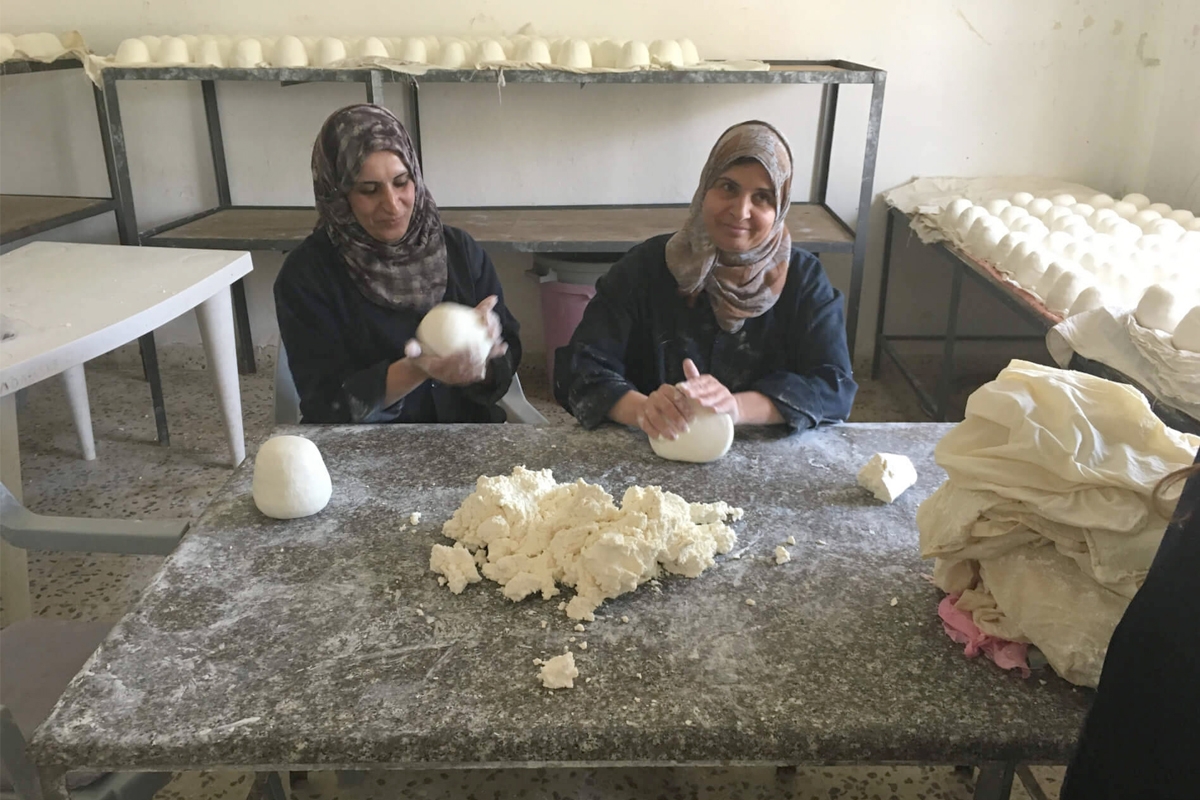
Amidst containers of milk and white balls of jameed stacked in preparation for drying, Sahar Al-Majali spends her days, as she has for decades. Since learning the craft as a child from her mother, she has continued producing Jordanian jameed, one of the kingdom’s most prominent traditional products, preserving a trade passed down through families across generations.
Sahar, 55, from Karak Governorate in southern Jordan, told Reuters on Monday: “I have been working with jameed for 45 years. I learned it from my mother and family when I was young.”
With the start of March each year and the availability of sheep’s milk, Sahar begins her production season at home, continuing until around August. Despite the effort and time the process requires, she says that the availability of modern equipment has significantly reduced the burdens faced by jameed makers in the past, while her family members participate in various stages of production.
Sahar’s home-based project produces approximately 60 kilograms of jameed annually, along with local ghee. She emphasizes that jameed remains a key ingredient in preparing Mansaf, the most famous dish on Jordanian tables.
Today, jameed continues its journey from kitchens and homes to markets and factories. Many families in Karak Governorate still maintain traditional production methods, while modern technology has entered the industry to boost production and improve quality.
Emad Baqa’in, who owns a jameed production plant in Karak city, said: “In the past, before refrigerators and cooling methods existed, Bedouins used a method to preserve milk and sheep’s milk for long periods. They would dry and salt the milk, storing it for months, allowing them to benefit from the milk even outside its season.”
Baqa’in added to Reuters that “over time, jameed became an essential part of Mansaf, one of the most famous Jordanian dishes and a symbol of generosity and hospitality.”
He continued: “Today, jameed is no longer just a food prepared for home storage; it has become a product with value, and people call it ‘white gold.’”
