2030 World Cup in 6 countries and 3 continents
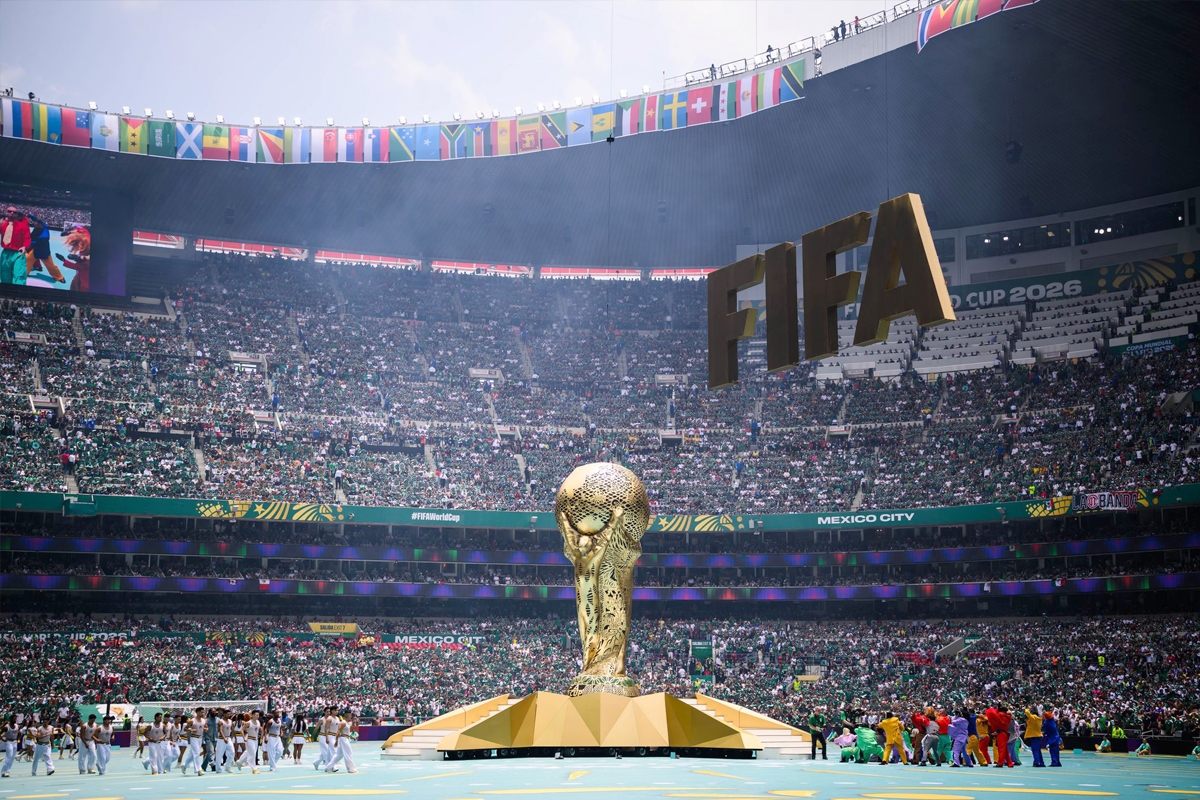
The curtain fell today on the largest edition in the history of the FIFA World Cup, as speculation has already begun regarding a potential further expansion of the tournament for the 2030 edition. Four years from now, si
Translated by Qiyas from الجريدة — Original source
The curtain fell today on the largest edition in the history of the FIFA World Cup, as speculation has already begun regarding a potential further expansion of the tournament for the 2030 edition. Four years from now, six countries will host the tournament, and FIFA President Gianni Infantino stated that they are exploring the possibility of increasing the number of participating teams to 64. Here are the key points to know about the 2030 World Cup:
Most of the tournament matches will be held in Spain, Portugal, and Morocco. However, to mark the centenary of the first World Cup held in Uruguay in 1930, one match will be played in each of Argentina (Buenos Aires), Paraguay (Asunción), and Uruguay (Montevideo). These three matches are scheduled to take place at the beginning of the tournament. According to the current schedule, the event will run from June 8 to July 21, making it the longest World Cup in history, lasting 44 days.
Until now, increasing the number of teams by an additional 16 was considered logistically almost impossible, as a tournament featuring 64 teams would require 128 matches—an increase of 24 matches over the current format and double the number of matches in the 2022 Qatar edition. Infantino confirmed during the current tournament that this idea deserves further study after its conclusion.
Current plans indicate that matches will be held in six stadiums in Morocco, three in Portugal, and eleven in Spain. In Europe, the qualifying system for the 2030 World Cup will undergo radical changes to align with the league format used in European club competitions. Currently, national teams compete in groups of four or five teams, playing home and away matches. The group winner qualifies directly for the World Cup, while the runner-up has a chance to qualify through playoff matches.
Under the new system, the top 36 national teams in the UEFA Nations League will be distributed into three groups of 12 teams each. Each team will play six matches against six different opponents, with teams ranked in a league table within each group.
The group winners will qualify directly for the World Cup, while additional spots will be decided through playoff matches, with UEFA to determine the details of allocating these spots later. National teams not among the top 36 will also compete in a league format. The six host countries will automatically qualify for the finals, while qualifying processes in other continental confederations may also see adjustments if the 64-team format is adopted.
Organizing the tournament across three continents carries significant political implications for global football. The rotation system for hosting the World Cup has rendered the confederations of North, Central America and the Caribbean, Europe, Africa, and South America ineligible to bid for the 2034 edition. This has paved the way for Saudi Arabia, representing Asia, to host the 2034 World Cup.
