48 agreements between Washington and Baghdad... most notably the "Banias Line"
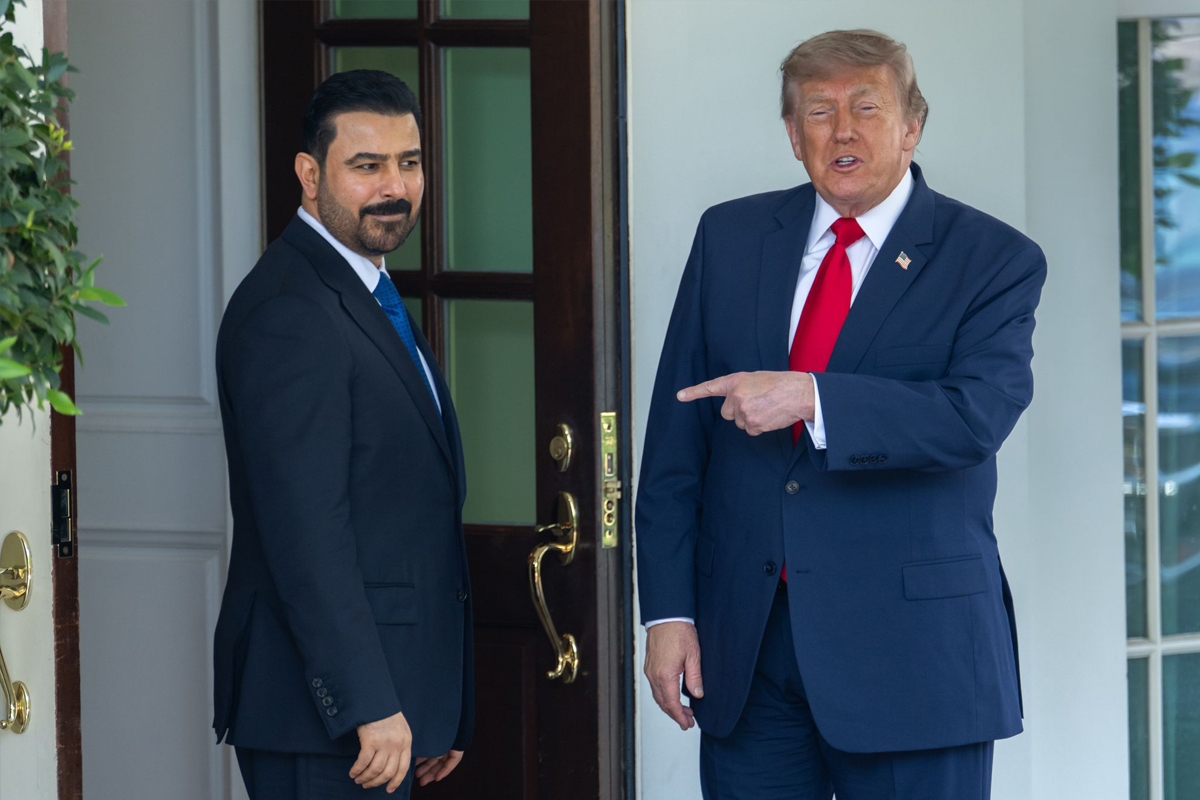
Iraq signed 48 agreements, memoranda of understanding, and economic cooperation deals with U.S. companies, many in the oil sector, during a visit by Prime Minister Ali Al-Obaidi to Washington, his office announced today.
These agreements include “cooperation and partnership between the ministries of Oil and Electricity, their respective companies, and other government sectors, with ExxonMobil, KBR, GE Vernova, Shell, and Halliburton,” as well as “a cooperation and service introduction agreement between Starlink and the Media and Communications Commission, and a cooperation agreement with Halliburton.”
The statement added that “the agreements also included a memorandum of understanding between Keylight Technology and the Iraqi private sector, as well as PepsiCo, and several companies regarding the construction of oil pipelines transporting crude to Banias on the Mediterranean Sea, partnership agreements in the education sector, and others between the private sector in supply and pharmaceutical manufacturing.”
U.S. President Donald Trump praised Iraqi Prime Minister Ali Al-Obaidi, describing him as a “hero,” during a meeting at the White House last Tuesday, as Washington continues to pressure Baghdad to curb Iranian influence.
The visit’s outcomes also included progress on financial reform, following the announcement of an understanding between the Central Bank of Iraq and the U.S. Treasury Department to rehabilitate seven Iraqi banks to regain access to international correspondent banking channels, paving the way for resuming dollar transactions after meeting compliance and governance requirements. Additionally, an agreement was reached with JPMorgan Chase to open a branch in Iraq to finance projects implemented by U.S. companies, a move the Iraqi government described as a step enhancing the country’s integration into the global financial system.
Iraq announced today that it had signed a memorandum of understanding with Syria regarding the establishment of a pipeline to export crude oil through the Syrian port of Banias on the Mediterranean Sea, a move aimed at expanding export outlets.
Al-Obaidi’s office stated that “the Ministry of Oil signed a memorandum of understanding with the Syrian side regarding the construction of a pipeline to export crude oil through Syrian territory from the port of Banias on the Mediterranean Sea.”
For its part, the Iraqi Ministry of Oil said in a statement that it “signed a memorandum of understanding with the Syrian Ministry of Energy aimed at enhancing joint cooperation in implementing the Vital Energy Corridor project, which links Iraqi oil production to global export markets via the Mediterranean.”
According to the statement, the project will be implemented by a consortium comprising U.S. companies Chevron and TI, and Qatari company UCC, while the pipeline’s capacity will be determined during the phase of preparing the project’s technical and engineering studies.
The project is expected to enhance economic cooperation between Iraq and Syria, open new investment opportunities in the energy sector, and support trade and energy flows in the region by linking Iraqi oil exports to global markets through a strategic Mediterranean outlet, according to the Iraqi Ministry of Oil.
U.S. Presidential Envoy to Syria and Iraq, Tom Barrack, recently stated that Al-Obaidi has outlined a project that will redraw the region’s transportation and energy map, rendering the Strait of Hormuz “secondary” within two years.
He noted that the plan relies on high-level coordination with Syria, Jordan, Turkey, Lebanon, and Egypt, aiming to create a geographic and economic connectivity network that bypasses traditional waterways.
He clarified that by adding Turkey, Azerbaijan, Turkmenistan, and Central Asia to the “Middle Corridor,” which links Mesopotamia, the Levant, and the Gulf, large volumes of gas will be routed to Europe as a commercial alternative. He added that “this means we have begun to find a way to weave a new reality, entirely different from the language of lethal liquidation and military mobilization everywhere.”
Brack described US policy toward Iraq over the past 23 years as “tragic,” adding that “the lesson learned from these failures lies in finding strong leadership capable of maneuvering.” He regarded the new Iraqi prime minister as a young leader who possesses “the clarity, transparency, and strength necessary to create prosperity.”
