China to Trump: The World Knows Who Interferes in Others' Affairs
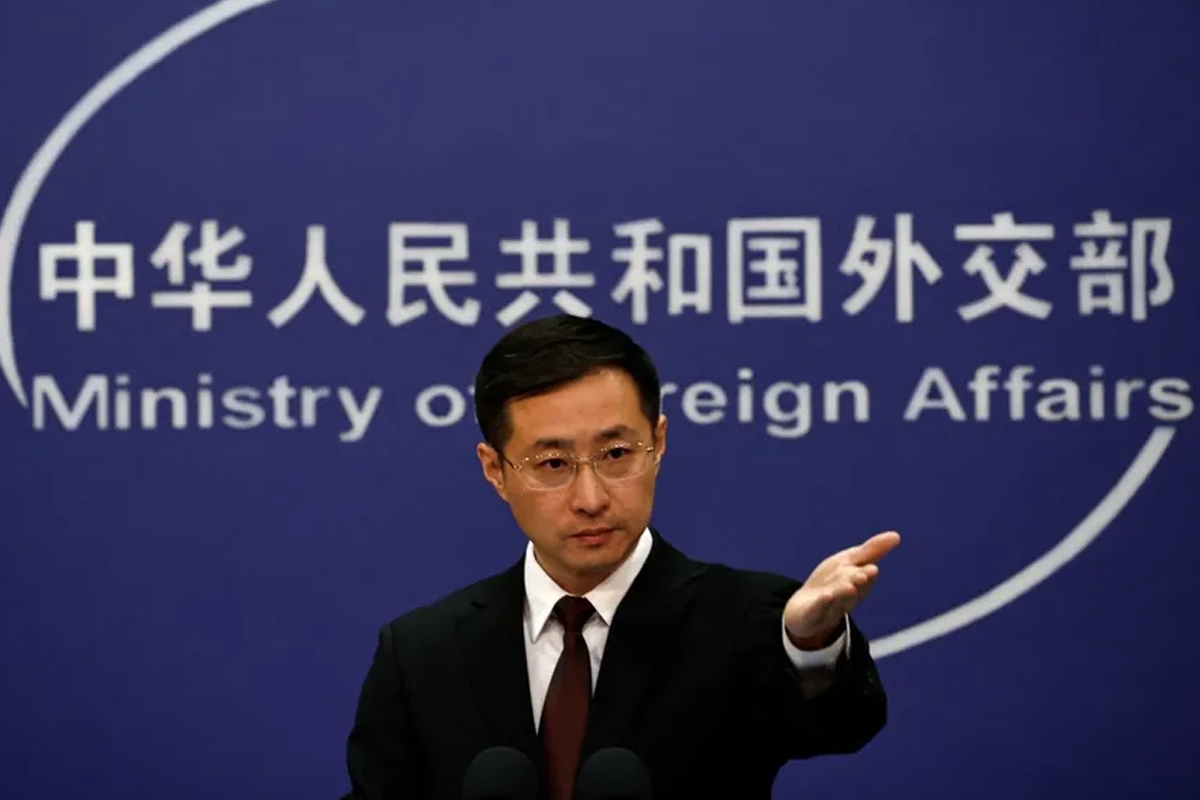
China has rejected US President Donald Trump’s allegations that it interfered in the 2020 presidential election, which he lost to his Democratic rival, Joe Biden, insisting that it has no interest in doing so. Liang Jian
Translated by Qiyas from الجريدة — Original source
China has rejected US President Donald Trump’s allegations that it interfered in the 2020 presidential election, which he lost to his Democratic rival, Joe Biden, insisting that it has no interest in doing so.
Liang Jian, a spokesperson for China’s Foreign Ministry, dismissed Trump’s claims of “election interference,” describing them as entirely baseless and “a deliberate, malicious smear that has long been proven to be pure nonsense.”
Ahead of the anticipated visit by Chinese President Xi Jinping to Washington in September, Trump announced late last Thursday the declassification of intelligence documents he said revealed what he described as the largest Chinese hack of voter data in US history. He accused officials within the intelligence community of concealing this information and directed the Department of Justice and security agencies to open investigations into the matter.
Jiang said that China adheres to the principle of non-interference in the internal affairs of other countries, never interferes in US elections, and has no desire to do so.
When asked whether this would affect the upcoming visit by the Chinese president to Washington, Jiang said: “We urge the United States to stop making China an issue in its elections and to take actions that contribute to strengthening relations.”
He clarified that the world is already witnessing who is deliberately interfering in the internal affairs of other countries, who has long conducted arbitrary surveillance on governments, companies, and ordinary people around the world, and who has stolen massive amounts of data on foreign citizens.
In a statement to CNN, a spokesperson for the Chinese Embassy in Washington said: “China has always adhered to the principle of non-interference in the internal affairs of other countries. The US election is a domestic US matter, and its outcome is determined by the votes of the American people.” The statement added: “China has never interfered in US presidential elections, and it never will.”
A prominent Beijing-based political affairs expert noted that Trump’s rhetoric against China revealed a “huge crisis” within the American democratic system.
Cheng Yongnian added that these claims represent campaign rhetoric for the midterm elections in November, and are unlikely to affect Beijing-Washington relations, according to the South China Morning Post.
In an interview, Nian added that instead of repeatedly blaming other countries, Washington should study how to reform its own democracy.
In his speech, Trump said the documents “show that over the years, starting with the 2020 election cycle, China carried out what is believed to be the largest election data breach in history, resulting in the illegal acquisition of files on 220 million American voters,” including names, contact information, party affiliations, and “other sensitive data,” describing this alleged breach as an “unprecedented nightmare for election security.”
Trump clarified that “Central Intelligence Agency (CIA) reports indicated that since 2018, the Chinese Communist Party adopted a policy aimed at using all domestic and external elements opposing the US President (Trump at the time) to reduce votes in his favor and prevent his re-election.”
Trump’s attack on China comes within the framework of a broader campaign led by his administration to push for new regulatory measures in the electoral system, including proof of citizenship when voting and enhanced security for election infrastructure, as the midterm elections scheduled for next November approach.
Yesterday, Trump threatened to revoke the licenses of several American television networks after they declined to broadcast his prime-time address on their main channels, characterizing the move as part of a “conspiracy” against him. According to Reuters, two of the three major American television networks—NBC and ABC—along with CNN, did not air the speech on their primary channels, sparking criticism from Trump, who continues to exert unprecedented pressure on the American media.
