Lebanese Army deploys south ahead of meeting with Israel
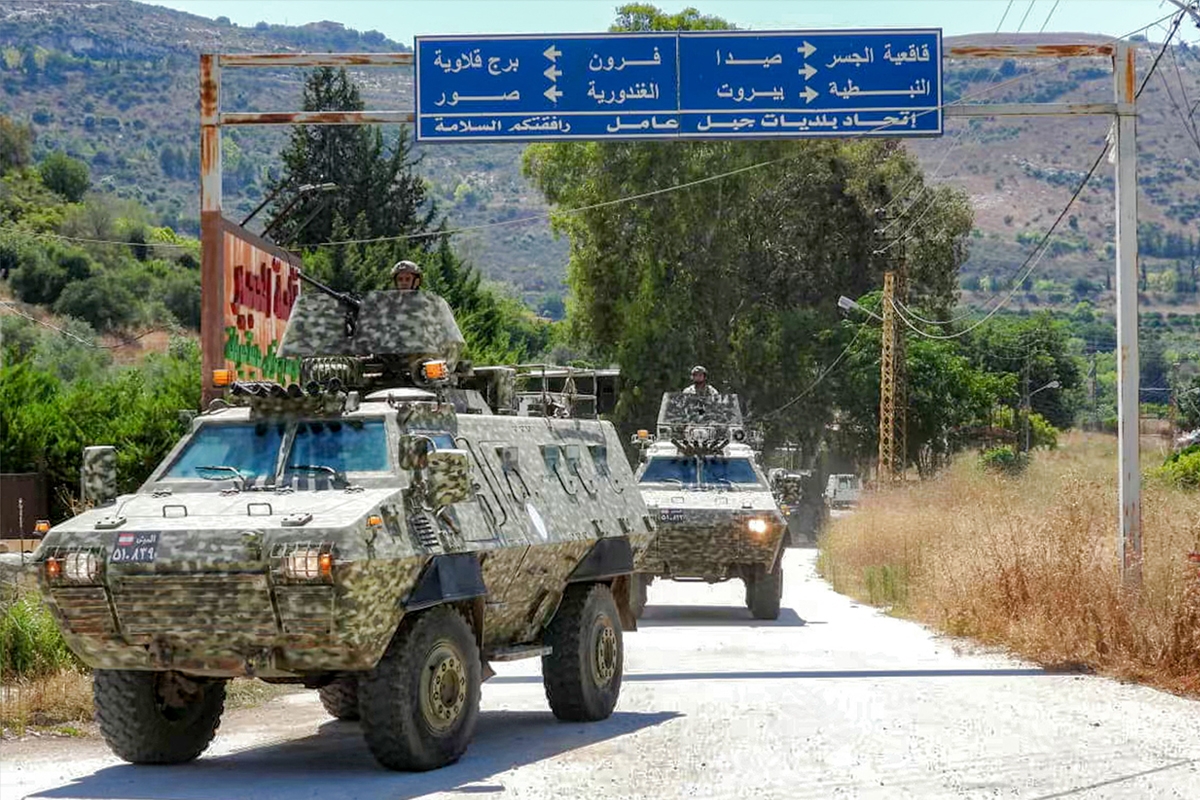
On the eve of the anticipated military meeting between Lebanon and Israel yesterday, the Lebanese Army sent a clear field message by patrolling several towns in the south, including Zouitar al-Gharbi, Faroun, Ghendourieh
Translated by Qiyas from الجريدة — Original source
On the eve of the anticipated military meeting between Lebanon and Israel yesterday, the Lebanese Army sent a clear field message by patrolling several towns in the south, including Zouitar al-Gharbi, Faroun, Ghendourieh, Sarafand, Qlaouieh, and Bourj Qlaouieh. These are the areas Israel demands serve as starting points for the “experimental zones” proposed under the “understanding formula” signed between the two countries with U.S. mediation.
This Lebanese move aims to consolidate Beirut’s rejection of the proposal, arguing that these towns remain under the control of the Lebanese state and are not subject to Israeli occupation; therefore, there is no justification for subjecting them to exceptional arrangements or establishing experimental zones there. Lebanon seeks to affirm that any approach must begin with areas where the Israeli army is still deployed, as these constitute direct occupation zones from which withdrawal is required.
In contrast, indicators suggest Israel is moving to entrench its presence in areas it now considers “secure,” and at this stage, it rejects any withdrawal from towns located within the “Yellow Line.” In this context, Israeli Defense Minister Israel Katz informed his U.S. counterpart, Pete Hegseth, that Israel is determined to keep its forces in the “security zones” it has established inside Lebanon, Syria, and the Gaza Strip.
This development coincided with leaks indicating that the Israeli army is constructing facilities within Lebanese territory, likely interconnected military sites, reinforcing the impression that Tel Aviv is working to transform its current deployment into a long-term presence rather than a temporary positioning pending new security arrangements.
This trajectory contradicts U.S. President Donald Trump’s announcement regarding the necessity of Israel’s withdrawal from areas in southern Lebanon. In this context, the visit of Lebanese President Joseph Aoun to Washington and his meeting with Trump have gained special importance. Information suggests that Beirut appears reassured by the visit’s outcomes, which may lead to political and economic support for Lebanon, alongside discussions on convening an international conference to support the Lebanese army, as well as exerting U.S. pressure on Israel to halt the war and military operations it is conducting in the south.
According to information, Trump is pressuring Israel to set a timeline for withdrawal from Lebanon within six months. However, Israeli Prime Minister Benjamin Netanyahu continues to refuse to provide any clear commitment on this matter. Based on these data, Netanyahu, who has reportedly delayed his visit to Washington, is seeking a green light to implement a new pattern of military operations. This would involve Israeli forces entering specific areas believed to be populated by Hezbollah, dismantling its positions, and disarming it, before handing these areas over to the Lebanese army.
However, this scenario raises Lebanese fears that it could lead to a sensitive confrontation between the army and Hezbollah in areas being subjected to new security arrangements, particularly if it involves field coordination with Israel. Such a development could complicate the army’s mission to deploy and extend state authority.
While Beirut seeks to prevent linking the Lebanese arena to the Iranian file, Israel is betting on using the “framework formula” to redraw the rules governing the Lebanese state’s dealings with Hezbollah. Nevertheless, any new escalation in the regional war between Washington and Tehran could bring Hezbollah back into the confrontation circle and overturn all arrangements currently being solidified.
