Suspension of financial benefits for ineligible cases under the "Patron of the Disabled"
Al-Jarida learned that an update of data for women caring for individuals with severe disabilities, initiated by the Public Authority for People with Disabilities (PAPWD) at the beginning of this year, resulted in identifying a number of ineligible cases, as well as cases that failed to respond to the Authority’s repeated calls to revise their information within the stipulated deadlines. The Authority clarified that payments to these individuals were immediately suspended, and procedures were launched to demand the repayment of all financial amounts received without entitlement during previous periods.
According to PAPWD sources, there are direct directives from Minister of Social Affairs and Labour Dr. Amthal Al-Huwaili to the Authority’s executives and officials to recover any financial amounts disbursed to persons with disabilities or their caregivers without legal entitlement, emphasizing that these are public funds that must be protected. She stressed that any woman caring for a person with a disability who fails to revise her information with the Authority risks facing legal and administrative measures, in accordance with Articles 6 and 7 of the Executive Regulations of Law No. 8/2010 concerning the Rights of Persons with Disabilities, and Administrative Decision No. 340/2022.
She noted that if it is proven that the data submitted by a woman caring for a person with severe disability is inaccurate during the revision process, Article 7 of the Executive Regulations will be applied, which stipulates that “the woman caring for a person with severe disability must repay all amounts disbursed to her by the Authority if it is proven that the data she submitted was incorrect.” She confirmed that the data update achieved financial savings for the Authority estimated at hundreds of thousands of dinars.
Sources emphasized that these measures are part of efforts to strengthen financial and administrative oversight within the Authority, ensuring that financial and in-kind benefits are directed only to eligible beneficiaries. They pointed out that PAPWD has a comprehensive supervisory system that periodically reviews files, updates data, and verifies eligibility in coordination with relevant government entities.
It was clarified that the Authority has been working during the recent period to address a number of accumulated files, primarily concerning prosthetic devices. It succeeded in providing and distributing a large number of wheelchairs and hearing aids to eligible beneficiaries after years of waiting. Sources added that approximately 10 companies are contracted with the Authority to provide wheelchairs according to the appropriate technical specifications for their users.
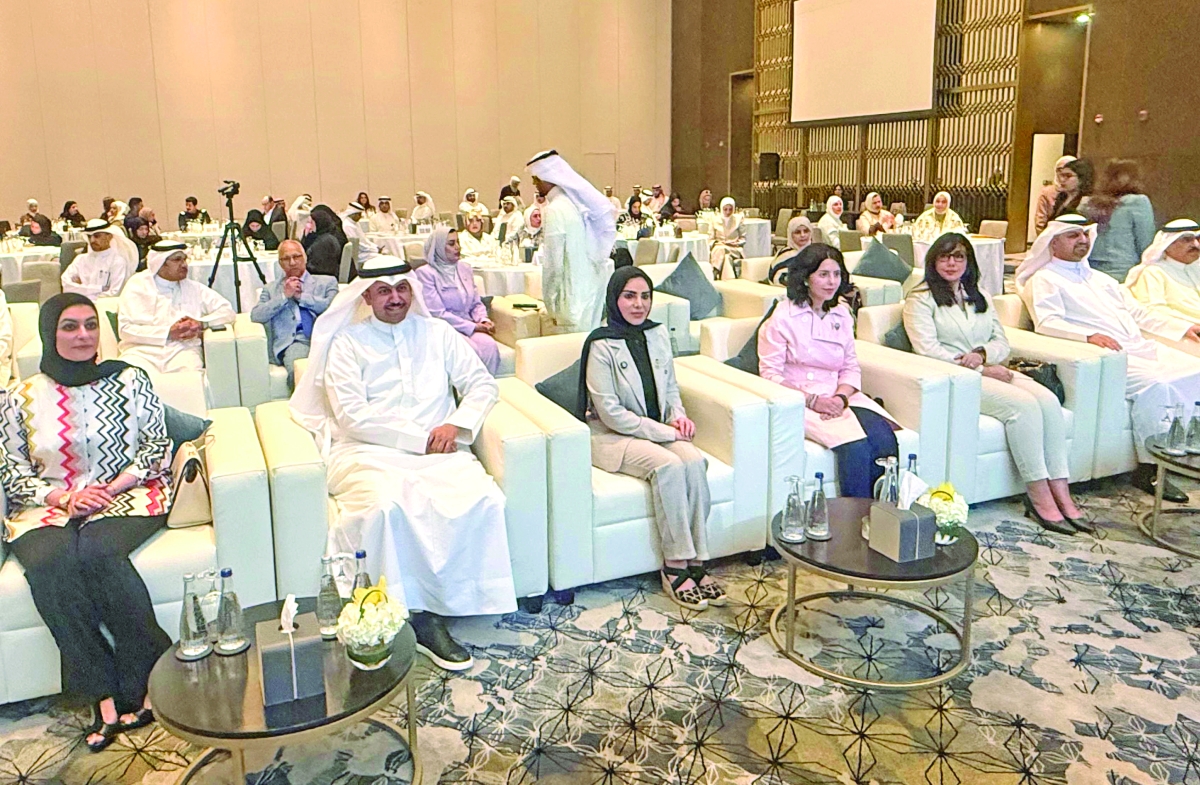
Meanwhile, Minister Al-Huwaili, Chairperson of the Supreme National Committee for the Implementation of the Convention on the Rights of Persons with Disabilities, yesterday opened a specialized workshop on the Convention on the Rights of Persons with Disabilities and the preparation of an institutional action plan for mainstreaming disability issues. The workshop is organized by the Supreme National Committee in partnership with the United Nations Economic and Social Commission for Western Asia (ESCWA), in coordination with the Ministry of Foreign Affairs and PAPWD, with the participation of representatives of government entities that are members of the National Committee.
She explained that the Supreme National Committee, established by a Cabinet decision, plays a pivotal role in coordinating national efforts among government entities and monitoring the implementation of Kuwait’s commitments under the Convention, thereby enhancing joint institutional work and improving the quality of services provided to persons with disabilities.
She added that “the workshop aims to build the capacity of National Committee members and government entities in applying the provisions of the Convention, and to enhance skills in preparing periodic reports on monitoring its implementation, alongside preparing an institutional action plan for mainstreaming disability issues into government policies and programs, in line with international best practices.”
Sumaya Al-Majzoub, the Social Affairs Officer at the United Nations Economic and Social Commission for Western Asia (ESCWA), stated that “integrating and mainstreaming disability issues into policies and institutional processes is not merely an ancillary item, but a legal and human rights obligation, and a developmental imperative without which sustainable development efforts cannot succeed.”
Al-Majzoub emphasized in her speech during the workshop that at the forefront of these international commitments is the United Nations Convention on the Rights of Persons with Disabilities, which established a comprehensive and binding international framework for removing environmental, attitudinal, and institutional barriers, and ensuring the equal and effective participation of all.
