To His Excellency the Minister of Electricity: Interconnection, Digitalization, and Governance (1/3)
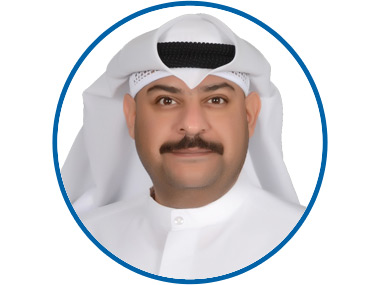
I have not, in over ten years of writing opinion pieces—and in the years prior, in scattered writings—ever used a personal column to present a personal experience that might be interpreted as an attempt to exert pressure or to leverage connections (or mediation) for a particular matter. Indeed, by the grace and favor of God, my pen has never been known to serve as a paid instrument for any agenda or purpose; rather, it has been and will remain free, guided by the author’s conviction and conscience. However, in this instance, it has become necessary to recount a personal experience that befell me, the author of this article, supported by evidence, indications, arguments, and even the names of those involved. I go further to say that this article is of a highly specific nature, at a refined level, as it presents both problems and solutions simultaneously, unlike other articles of a similar kind.
Therefore, Your Excellency, the Minister of Electricity, Water, and Renewable Energy, Dr. Sabah Al-Makhzoum, it is incumbent upon you to direct your leadership and utilize all your authorities to (first) investigate and ascertain the details of what will be mentioned herein, and (second) to hold those responsible accountable in due course, serving as a deterrent to other employees and a positive example for citizens in the future. This will also help avoid any future errors through this experience. Last, but not least, it is essential to benefit from the recommendations presented here to facilitate operations related to your ministry. Although, at the time of writing this article, I (wrongly) completed tasks that were not my personal errors, I inform Your Excellency that this matter will not be resolved in a matter of minutes using the staff of Moses, peace be upon him. Rather, the “branch is broken,” problems are accumulated, and “decay has taken root” in the corners of the ministry.
However, there is always a silver lining amidst the clouds, a cause for optimism: within these problems, there has been talk of converting your ministry into an authority. Thus, it may be beneficial to avoid such errors and problems, and to prevent citizens from having to “go through seven rounds of hardship” for mistakes with which they have no connection.
I discovered by pure chance, after visiting three different locations—due to the closure of several of your branches in the interior regions—that the block, commonly known as “the block,” imposed on me in your MEW PAY application, needed to be lifted through a direct review by the ministry itself. Why all this? Because I am in the construction phase of my private residential building, and like any ordinary citizen, I wish to pay any outstanding bills—once electricity service has been restored—after approximately two months. Now, upon arriving at the ministry, it was discovered by chance that my name had been incorrectly listed as the source, and that the relevant departments and administrations had committed this unintentional error. The matter was resolved peacefully, and we moved on. However, in reality, this incident opened Pandora’s box of troubles. I should have been joyfully strutting, unable to hide my happiness from those around me.
But before delving into the real hardships and calamities faced by my visits and consumers of the ministry’s services, have the ministry’s leaders not heard over the past years about the possibility of linking services with centers distributed across the country? Or is it not possible to serve customers through direct communication with the ministry? Or is the goal of the application not digitalization, human oversight, and digital intervention to overcome difficulties? These are just the beginning of the surprises I have witnessed. The story continues.
