Speech: My Great Friend
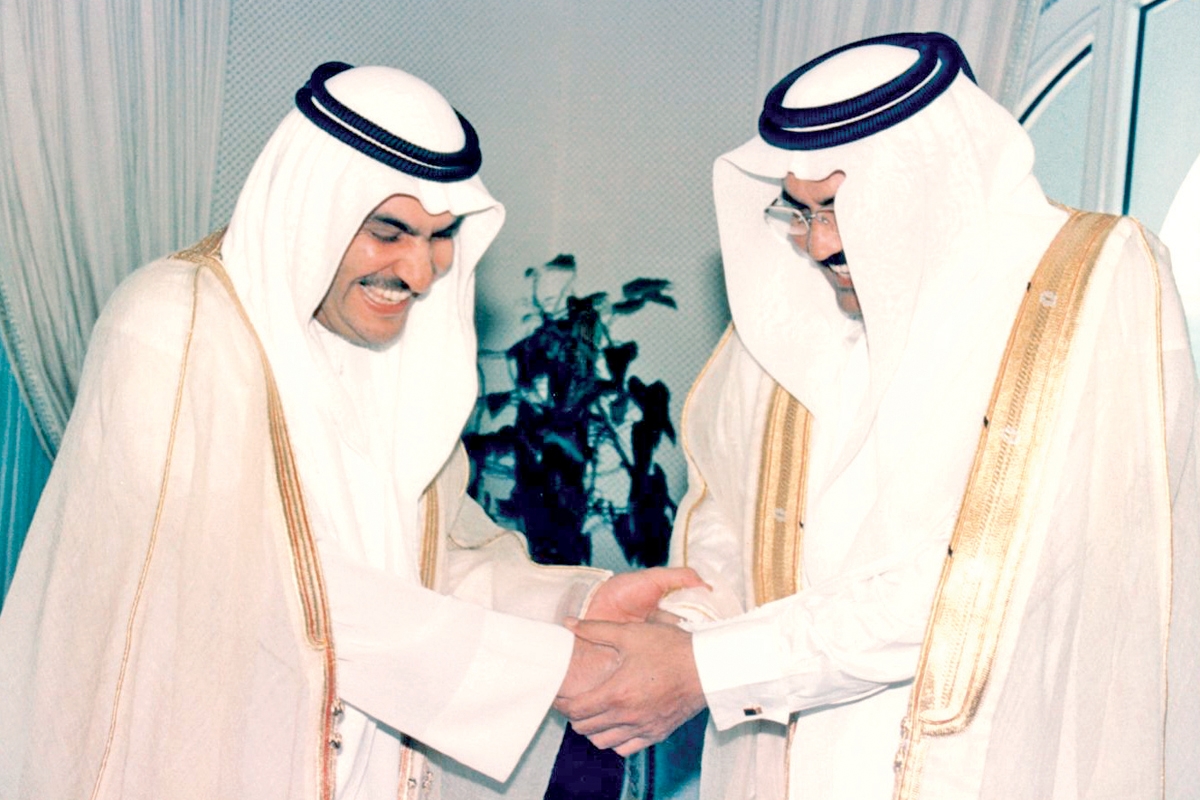
It is never easy to mourn a man of the stature of a nation, nor is it simple to condense into a few lines a relationship forged by time, solidified by shared stances, and preserved by secrets. But today, I do not write with the pen of a politician or a journalist, but with the heart of a friend, shaken by separation. I speak with a bitterness softened by acceptance of God’s decree and destiny: “Today, I have lost my great friend,” Emir and Father Prince Sheikh Hamad bin Khalifa Al Thani.
Before delving into this elegy, amidst the rubble of grief, my memory returns to the roots of our friendship, which I will cherish for as long as I live. It began in the early 1980s during one of my visits to Doha, when His Highness was Crown Prince. At that time, I realized I was facing an exceptional personality, driven by ambitions that transcended geographical boundaries, an indomitable will that knew no impossibility, and a determination capable of moving mountains.
Over the decades that followed that meeting, I had the honor of being close to him. When he ascended to the throne as Emir of the State of Qatar, I was privileged to conduct the first press interview with him, broadcast live at the time via Qatar’s official television station, and published in Al-Qabas newspaper on September 2, 1996. Among his remarks then was a statement that remains etched in memory: “Democracy is an inevitability, and once started, it must continue.” He also emphasized his strong commitment to strengthening Kuwaiti-Qatari relations, making them more resilient, until they became a model of brotherhood, unity, coordination, and shared destiny.
In many milestones that brought us together, I knew him as a distinguished listener, a true friend, loyal in his affection, and trustworthy in his advice. He listened with all his senses, discussed with an open mind, and accepted differing opinions with an open heart and the spirit of an elder brother.
Sheikh Hamad has passed away, but his legacy will remain carved in the memory of the region and the world. Since he assumed power in 1995, his ambitions were not merely visions on paper, but unprecedented achievements that transformed Qatar, elevating it from a quiet Gulf state to a regional and international power that is difficult to overlook.
Sheikh Hamad believed that a country’s size does not determine its status; rather, it is shaped by will, vision, and investment in human capital. Thanks to this far-sighted vision, Qatar became the world’s largest exporter of liquefied natural gas, a global investment power, and a significant presence in various international forums.
Nor did he, may God have mercy on him, ever neglect his domestic front, where the Qatari citizen was the center of his attention. He placed him at the forefront of his priorities, channeling massive investments into the health and education sectors, firmly believing that building the individual is the foundation for building nations. As a result of this wise policy, unemployment rates in Qatar fell to their lowest levels, living standards rose to record highs, and the Qatari citizen’s share of GDP soared to among the highest globally. Qatar also topped human development indices issued by international organizations, alongside a stunning economic and urban boom that transformed Doha into one of the modern world’s metropolises, while preserving its identity and authenticity.
If history immortalizes rulers by what they built, it will linger long on June 25, 2013, when the late Sheikh Hamad taught the world a profound lesson in generosity and selflessness, reflecting his love for his country in its most splendid form. At the peak of his service, he proved that he was not a prisoner of the throne nor a seeker of power, but a seeker of elevation for his nation, when he voluntarily abdicated in favor of his son and Crown Prince, His Highness Sheikh Tamim bin Hamad Al Thani.
This moment crowned the journey of an exceptional leader, and a vision that transcends the present and anticipates the future, manifesting his wisdom in discerning selection, upbringing, and preparation. The handover of responsibility to His Highness Sheikh Tamim bin Hamad was not merely a transfer of power, but a continuation and extension of ambition. Sheikh Tamim has proven himself to be the finest successor to the finest predecessor, bearing the banner with utmost integrity and capability.
What Qatar witnesses today—its sustained renaissance and growing regional and international role—is but a blessed fruit of the “Father Emir’s” planting, and a natural extension of his leadership school, whose proud features are evident in Sheikh Tamim’s leadership.
Farewell, “Father Emir” and “Great Friend.” With your passing, Doha has lost the architect of its renaissance, and the Arab nation has lost a courageous leader. As for me, I have lost a friend who filled every space with wisdom, loyalty, and nobility. We extend our deepest condolences and sincere sympathies to Qatar—its leadership, government, and people—and we say only what pleases God: “Indeed, to Allah we belong and to Him we shall return.”
