Lindsey Graham's Death Sparks Wave of Speculation
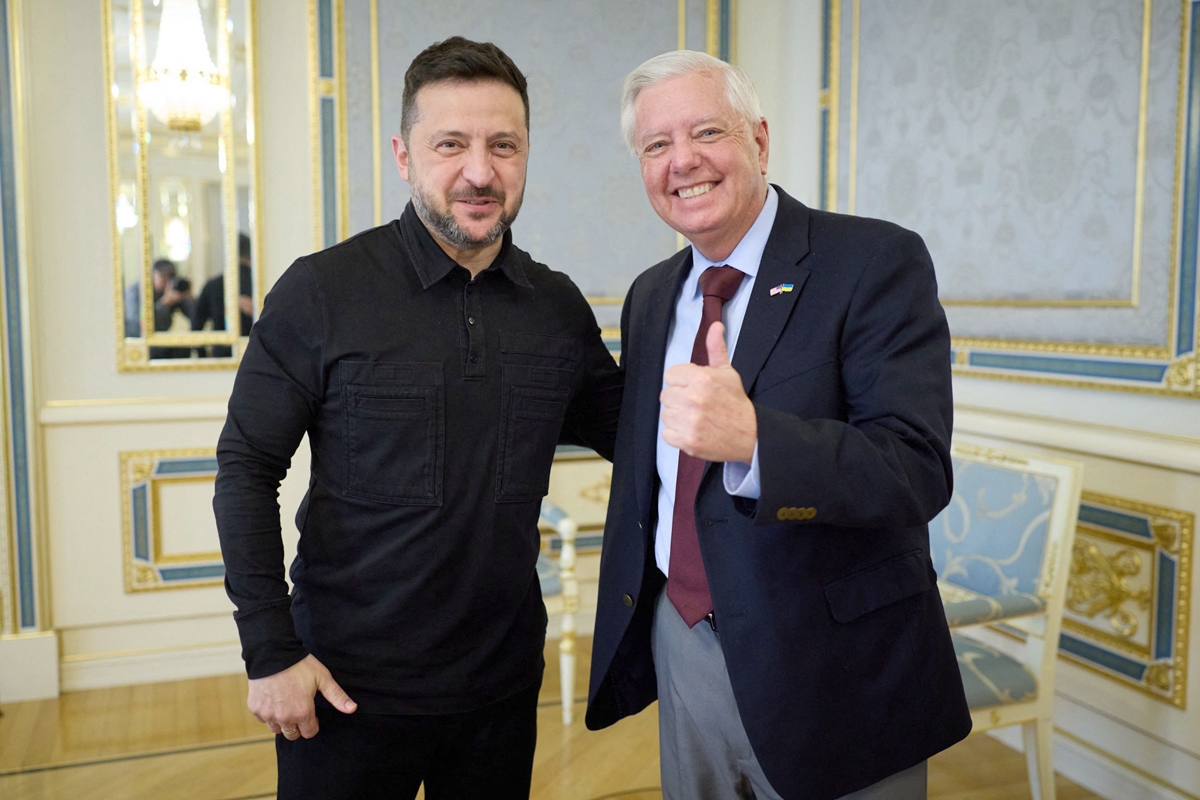
Prominent U.S. Senator Lindsey Graham, one of the most hawkish opponents of Iran and Russia, a staunch defender of Israel, and a close ally of Donald Trump, died yesterday at the age of 71, sparking a wave of rumors and
Translated by Qiyas from الجريدة — Original source
Prominent U.S. Senator Lindsey Graham, one of the most hawkish opponents of Iran and Russia, a staunch defender of Israel, and a close ally of Donald Trump, died yesterday at the age of 71, sparking a wave of rumors and speculation, particularly as he had returned just hours before his death from a visit to Ukraine. This came days after images surfaced at the funeral of Iran’s late Supreme Leader Ali Khamenei calling for his assassination.
His office said in a statement, “U.S. Senator Lindsey Graham died on Saturday evening, July 11, following a sudden illness that did not last long,” adding that “his family (...) requests privacy during this difficult time.”
NBC News reported that emergency services received a call on Saturday evening regarding a “cardiac arrest” at Graham’s home in Capitol Hill, Washington, according to police call recordings reviewed by the network and other media outlets.
The U.S. President was among the first to mourn “one of the greatest people I have ever known,” adding via his Truth Social platform that the late senator “was a hardworking man and a true American patriot. Everyone will miss him greatly.”
The Republican senator from South Carolina ran unsuccessfully for the Republican presidential nomination in 2016, when he was an opponent of Trump. However, he later returned to support Trump’s bid for a second presidential term, which helped repair their relationship.
Graham was known for his support of war with Iran and had called for years for the overthrow of the Islamic regime in Tehran, considering it the source of all the region’s tragedies. He was also a strong supporter of Ukraine, helping to curb the Trump administration’s efforts to abandon Kyiv. Ukrainian President Volodymyr Zelensky described him as “a true defender of freedom and of the principles that make our world safer.”
Graham was known for his unwavering support for Israel. Israeli Prime Minister Benjamin Netanyahu mourned him, describing him as “one of the greatest friends” of the Jewish state, adding that he “understood that the security of Israel and the United States is inseparable.”
In 1994, Graham was first elected to the U.S. House of Representatives, before being elected to the Senate in 2002 and re-elected in 2008, 2014, and 2020. He most recently served as chairman of the Senate Budget Committee.
South Carolina Governor Henry McMaster described him as “a person who cannot be replaced.” He wrote on the X platform: “He was one of the strongest defenders of South Carolina and the United States, and a loyal and steadfast friend.”
Graham also served as a military lawyer, achieving the rank of colonel in the Air Force, an experience that shaped his foreign policy views in favor of U.S. intervention. In 2002, he voted in favor of the invasion of Iraq following the September 11 attacks, and later supported maintaining a long-term U.S. military presence in Afghanistan.
His sudden death sparked a wave of rumors and speculation, especially on social media. Days earlier, Graham himself had shared images calling for his assassination, which were displayed in Tehran during Ali Khamenei’s funeral. His death came after the new Supreme Leader, Mojtaba Khamenei, vowed revenge for his father, despite Trump’s threats to crush Iran over reports of Tehran plotting his assassination.
On the other hand, tweeters and commentators raised the possibility that he was poisoned in Ukraine by Russian intelligence. Graham had angered Russian President Vladimir Putin when he said, “The Russians are dying in this war... This is the best investment we have ever made in our lives to exterminate the Russians,” and in another statement, he insisted that “the only way to end this war is for someone in Russia to assassinate this man” (referring to Putin).
