Mojtaba Khamenei Defies Trump's Warning, Vows Revenge for His Father
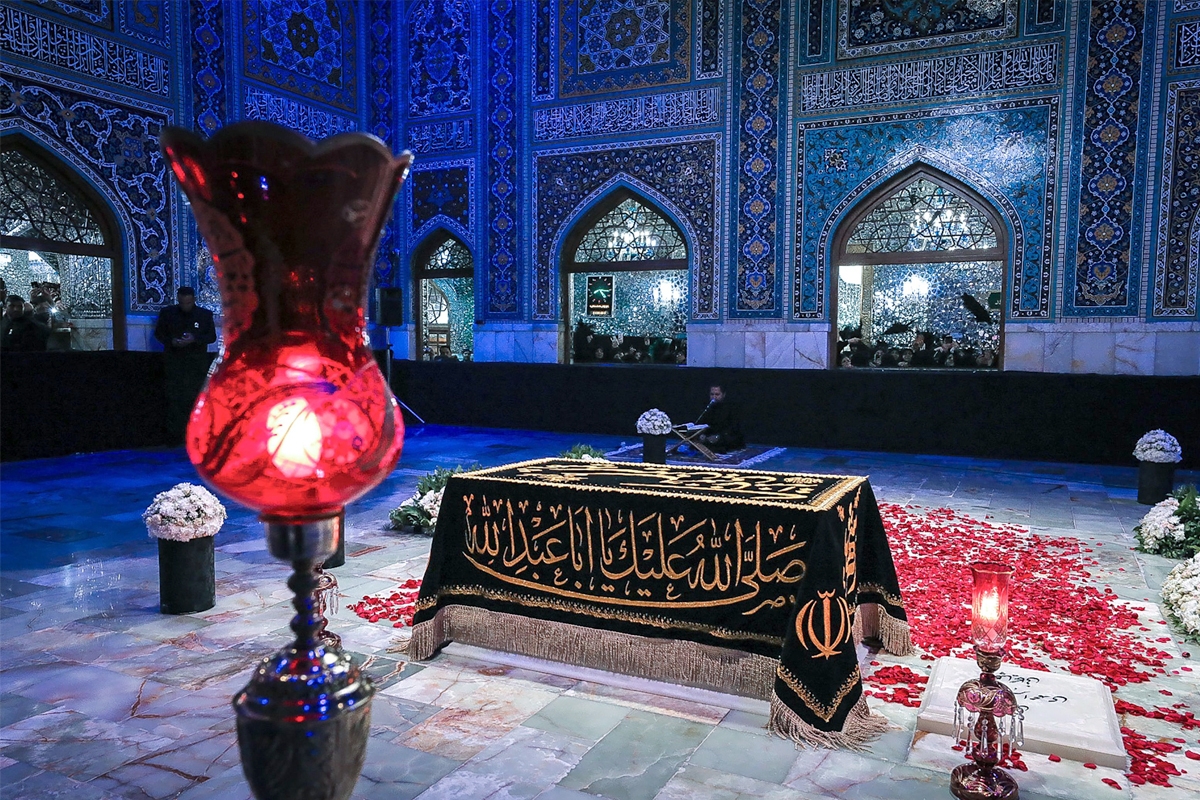
Iran’s reclusive Supreme Leader, Mojtaba Khamenei, vowed in a written message published yesterday to avenge his father, following his absence from the funeral and burial ceremonies that concluded late Thursday night in M
Translated by Qiyas from الجريدة — Original source
Iran’s reclusive Supreme Leader, Mojtaba Khamenei, vowed in a written message published yesterday to avenge his father, following his absence from the funeral and burial ceremonies that concluded late Thursday night in Mashhad, renewing doubts about his health.
The message, relayed by Fars News Agency, affiliated with the Islamic Revolutionary Guard Corps, stated, “Revenge is our nation’s demand, and it must certainly be carried out.” Addressing the late leader, the statement added, “We pledge that we will avenge your pure blood and the blood of all martyrs of these two wars from the murderers, criminals branded with disgrace. These criminals, whose names are known and documented from top to bottom, will take with them to the grave their wish to die peacefully in old age on their deathbeds. They must realize that this matter does not depend on my presence or that of other officials.”
Mojtaba’s message came after U.S. President Donald Trump warned that he had prepared plans to “annihilate” Tehran if it attempted or succeeded in assassinating him.
Trump posted on his social media platform, Truth Social, that there were “a thousand missiles ready to be launched and targeted at the Islamic Republic, with thousands more to follow immediately, should the Iranian government carry out its threat, voiced in various parts of the world, to assassinate the President of the United States, which is me, or attempt to do so.”
He added, “Orders have already been issued, and the U.S. military is on high alert, prepared, and capable, for a renewable one-year period, of completely destroying all areas of Iran.”
Meanwhile, as the latest round of strikes between Washington and Tehran ended without resolving the issue of navigation in the Strait of Hormuz, which had been the cause of the violence, U.S. media reported that the Trump administration had demanded that Tehran clearly declare it would cease firing on ships in the Strait of Hormuz, in compliance with the memorandum of understanding signed between the two countries.
Axios reported that Tehran had been given a deadline of hours to issue an explicit statement publicly acknowledging that the Strait of Hormuz is open, committing to cease fire on commercial vessels, and confirming that all channels of the strategic waterway would be open and free.
According to Axios, the message, conveyed directly to Tehran through regional intermediaries, warned Iran of severe consequences if it chose to ignore the warning.
In response, Reuters and The Wall Street Journal reported that Iranian officials had already apologized for firing on three oil tankers, including two Saudi and Qatari vessels, last week—an incident that triggered a firm U.S. response.
Iranian officials blamed the attack on extremist Iranian elements opposed to negotiations, fearing that the passage of ships through the southern Omani corridor would affect Tehran’s influence in negotiations.
While U.S. ABC News reported that both the American and Iranian negotiating delegations would return to the negotiating table, this time in the Sultanate of Oman, Iranian Foreign Minister Abbas Araghchi held talks in Muscat yesterday with his Omani counterpart, Badr Al Busaidi, regarding joint arrangements for managing the Hormuz Strait, while simultaneously asserting that Tehran “has kept its word regarding the memorandum of understanding, unlike Washington.”
For its part, Fars News Agency, citing a source close to the Iranian negotiating team, denied reports that talks with Washington were set to resume. The Iranian source stated that negotiations were ruled out until Washington reversed its positions, adding that the US would be considered to be backing down if it implemented agreed-upon understandings, including resolving the issue of passage through the strait according to Iranian arrangements, restoring oil exports and flows to normal levels, and establishing a special working group on Lebanon.
A Qatari delegation visited the Iranian capital yesterday, while Axios, citing a source described as well-informed, reported that a new round of US-Iran technical negotiations was expected to take place next week, likely hosted by Switzerland.
In another matter that could heighten tensions between Tehran and Washington, exclusive satellite imagery obtained by CNN indicated that Iran may be in the process of rebuilding some of its nuclear facilities suspected of being linked to the development of nuclear weapons, particularly at the Parchin site.
This coincided with confirmation from a US official that Washington would not conclude any political agreement with Tehran unless it obtained “nuclear dust,” emphasizing that the US had numerous alternatives and options if Iran refused to meet this condition.
At a time when this marked a return to US hardline stances on highly enriched uranium following former President Trump’s earlier suggestion that he might accept a reduction in Iran’s enrichment levels, a US official affirmed that the President had given negotiators sufficient space and time to move forward toward a nuclear deal, “but not excessive space and time,” adding that alternative options were being planned in case a nuclear agreement was not reached.
In this context, Ma’ariv reported that the Israeli military had completed preparations for a broad attack on Iranian infrastructure in anticipation of a new military confrontation with Tehran or an Iranian attack on Israel, while Prime Minister Benjamin Netanyahu preferred not to engage in escalation at present, fearing it could spiral into a wider regional conflict.
Meanwhile, Saudi Crown Prince Mohammed bin Salman discussed current regional developments, including talks between Tehran and Washington, in a phone call with the US President. Both sides emphasized the importance of maritime navigation security and supported all efforts contributing to regional security and stability.
In a separate phone call, Saudi Foreign Minister Faisal bin Farhan and his US counterpart discussed the necessity of joint coordination to ensure regional security and stability.
