Washington and Tehran: 'Strikes' Return and Islamabad's Note Stumbles
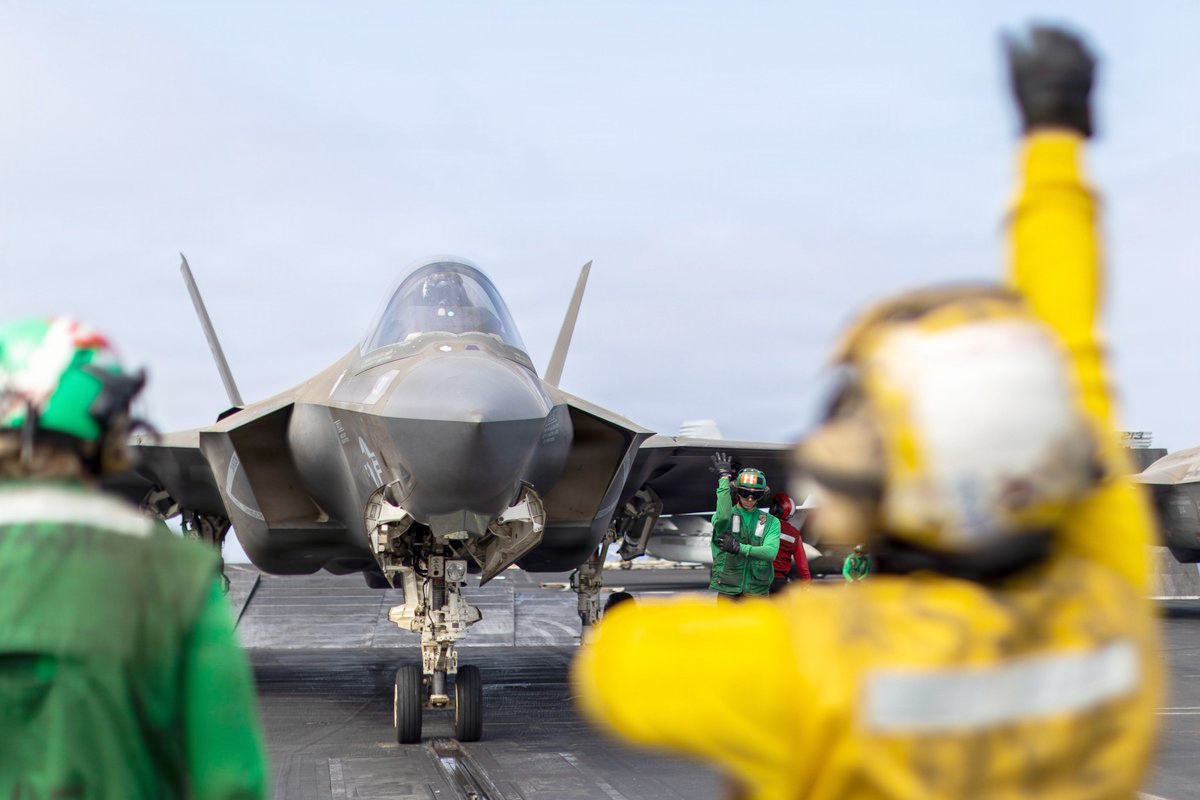
US forces launched wide-ranging strikes on Iran in response to maritime attacks, leading to the collapse of the Islamabad note and escalating tensions in the region.
Translated by Alqyas from Al-Jarida — Original source
Tensions in the region have escalated again, following Iran’s renewed violation of treaties and agreements by launching an unjustified aggression against Kuwait and Bahrain, as it and the United States resume communicating through military strikes—a move that may deliver a potentially decisive blow to the memorandum signed between Islamabad and Washington.
In response to Iran and its Revolutionary Guard’s illegal attacks on a Saudi oil tanker, a Qatari gas carrier, and other commercial vessels in the Omani waters of the Strait of Hormuz, U.S. Central Command (CENTCOM) launched a series of wide-ranging punitive strikes against Iran on the night of Tuesday-Wednesday. During this time, U.S. President Donald Trump, speaking from Ankara where he participated in a NATO summit, hinted at continuing the strikes with greater intensity.
CENTCOM stated in a statement yesterday that the strikes targeted sensitive infrastructure, including air defense systems, coastal radar sites, command and control networks, and anti-ship missile capabilities. It noted that more than 60 small boats belonging to the Revolutionary Guard were destroyed in the strait and its surrounding waters, aiming to undermine Tehran’s ability to threaten international navigation and trade. The military operation followed Iran’s attacks on the Qatari oil tanker “Al-Rakiyah,” the Saudi oil tanker “Widian,” and the oil tanker “Prosperity.” CENTCOM affirmed that Iran’s actions constituted an “unjustified aggression” and represented a clear and serious violation of the ceasefire agreement.
While the Axios website cited a U.S. official stating that the strikes were five times stronger than those carried out ten days prior, Iranian television reported hearing two explosions at the pier of Ziarat village in Sirik County, as well as seven explosions at Sirik port and the destruction of communication towers in Hormozgan Province.
Massive explosions were also observed around the strategic city of Bandar Abbas, overlooking the Strait of Hormuz. Several explosions were heard on Qeshm Island, which overlooks the Strait of Hormuz, and in the southern part of Kharg Island, which serves as the hub of Iran’s oil exports. Amid Iranian secrecy regarding material and human losses, reports emerged of the death of a Revolutionary Guard commander in a drone attack in the southwest of the country.
In a parallel punitive move, the U.S. Treasury Department revoked an exemption that had allowed Iran to sell oil and petrochemical products following the signing of a temporary memorandum of understanding reached between Tehran and Washington through Qatari-Pakistani mediation. The Treasury granted Iran a deadline until the 17th of the current month to conclude any transactions, whereas the previous license was set to expire on August 21 next year.
While another official told the Wall Street Journal that warships were on standby to reimpose a blockade on Iranian ports if Trump decided to do so, the Revolutionary Guard claimed it targeted 85 important U.S. military facilities in the region and the Kingdom of Bahrain, and shot down an enemy MQ-9 drone in the skies over Khormuj. Tasnim News Agency reported the death of eight Iranian soldiers in the U.S. strikes.
The Iranian military acknowledged carrying out attacks on Kuwait and Bahrain, and placed “the United States fully responsible for the consequences resulting from the repeated and blatant violation of the ceasefire,” asserting that “all its bases in the region are legitimate targets for its drones.”
In response, the Bahraini Ministry of Interior announced that its air defenses intercepted Iranian missile and drone attacks that breached the kingdom’s airspace without recording any casualties. Meanwhile, the Kuwaiti military stated that its defenses repelled two ballistic missiles and 13 hostile drones.
Bahraini authorities accused Iran of continuing its systematic hostile approach through its heinous missile and drone attacks on civilians in the Kingdom, affirming that all its weapons and units are at the highest levels of readiness and preparedness to defend the country.
In Ankara, Trump threatened to attack Iran again, stating that the preliminary ceasefire agreement with the Islamic Republic had “ended,” although he did not clarify whether Washington would return to a full-scale war.
When asked whether the memorandum of understanding had ended, he said, “For me, I think it has ended. I don’t want to deal with them.”
However, he indicated that he would speak with his special envoy, Steve Witkoff, and his advisor, Jared Kushner, “if they want to negotiate with Iran to see how things can develop, but for me, this is a waste of time.”
He reiterated his goal of war, which is to prevent Tehran from acquiring a nuclear weapon, but noted that this objective might need to be achieved without an agreement.
He again hinted at seizing Iran’s Kharg Island, reimposing sanctions on Iranian ports in the Gulf, and destroying Iranian energy facilities.
Qalibaf did not limit his comments to recent US military strikes; he also pointed to renewed oil-related sanctions and violations he described as “Iranian arrangements” in “Hormuz,” as well as Israeli attacks on Lebanon. Qalibaf wrote on social media: “The era of bullying and extortion is over. We are not among those who make concessions under pressure.”
Iran’s Foreign Ministry also stated that Washington’s actions “empty the memorandum of understanding of its substance,” warning Washington to bear the consequences of violating the agreement.
On his part, President Masoud Pezeshkian cut short his visit to Iraq to attend the funeral of former Supreme Leader Ali Khamenei in the cities of Najaf and Karbala, and returned to Tehran. Although reports indicated that the recent escalation against tankers was initiated by the Islamic Revolutionary Guard Corps without political approval, Pezeshkian stressed that his country “rejects the games of the US government and firmly asserts its rights.”
Amid the escalating tensions on the ground, US Secretary of Defense Pete Hegseth canceled his first planned visit to Israel. Meanwhile, the Hebrew-language Walla news reported that the Israeli military held a coordination meeting with US Central Command (CENTCOM) in preparation for a scenario of renewed confrontations.
This coincided with statements by Prime Minister Benjamin Netanyahu, who affirmed that Iran is staggering and that the “Revolutionary Guard” has lost much of its funding due to the joint war with Washington. However, he warned that Tehran remains capable of rebuilding its nuclear program if not deterred, and continues to pose a threat to both Israel and the United States.
