Gulf-Atlantic meeting discusses the Hormuz crisis as Iran attacks tankers
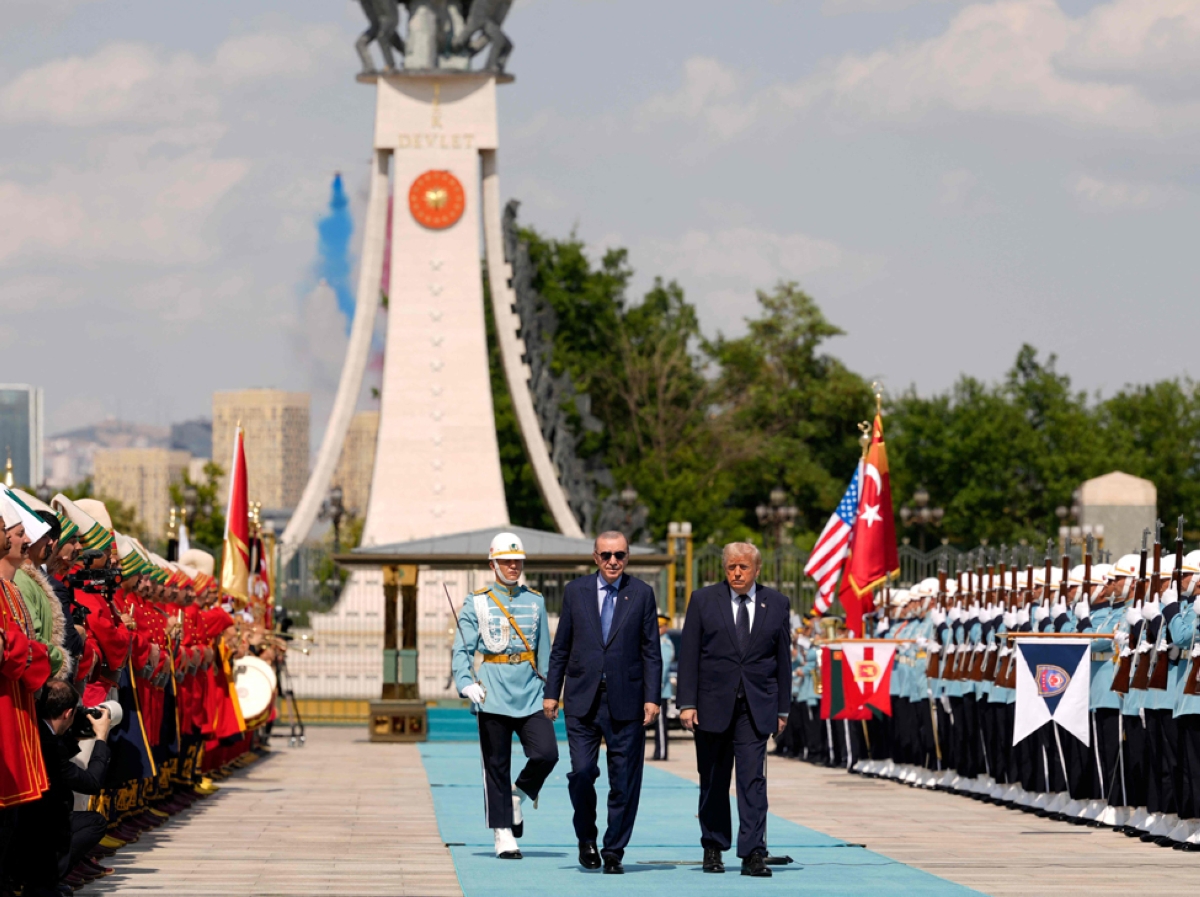
On the sidelines of the NATO summit in Ankara, and in the presence of Foreign Minister Sheikh Jara Al-Jaber, the foreign ministers of NATO member states held a meeting with their counterparts from the Gulf Cooperation Co
Translated by Qiyas from الجريدة — Original source
On the sidelines of the NATO summit in Ankara, and in the presence of Foreign Minister Sheikh Jara Al-Jaber, the foreign ministers of NATO member states held a meeting with their counterparts from the Gulf Cooperation Council (GCC) countries that are members of the Alliance’s Istanbul Cooperation Initiative: Kuwait, the United Arab Emirates, Qatar, and Bahrain.
The meeting centered on the Strait of Hormuz crisis and the Franco-British proposal to form a multinational naval force in the strait, which Iran has rejected.
Before the meeting, Belgian Foreign Minister Maxime Prevost noted that Gulf states have been subjected to Iranian attacks, emphasizing that “their stability and ours are closely linked. This goes beyond the Strait of Hormuz, however important it is for Europe’s energy security.”
In a development that threatens to undermine a memorandum of understanding signed three weeks ago between the United States and Iran, under which Tehran agreed to halt attacks in the strategic shipping corridor of Hormuz, Axios reported, citing a U.S. official, that the Islamic Revolutionary Guard Corps (IRGC) launched two missiles at commercial vessels transiting the strait on Monday, causing significant damage to two ships but no casualties.
The UK Trade and Investment agency stated that a fire broke out on a Qatari gas tanker, which is at risk of explosion after being hit by a projectile while sailing through the temporary southern route off the coast of the Sultanate of Oman, where the IRGC had previously threatened to target ships using that passage.
The British agency said the incident occurred eight nautical miles east of the Omani area of Lima, adding that another oil tanker reported being hit by an unidentified projectile on its port side while exiting the Gulf toward the Arabian Sea.
While the Financial Times noted that one of the tankers, named Al-Rakiyat, flies the flag of the Marshall Islands and is owned and commercially managed by Qatari entities, Reuters reported that the second vessel is a large oil tanker flying the Saudi flag, named Wadiyan, which sustained damage near the coast of Oman.
Although no official entity in Tehran, which is experiencing intense conflict among various political factions, has claimed responsibility for the new attacks, despite state television citing sources that the ships were shelled after ignoring IRGC warnings to use the Iranian maritime route, Qatari Foreign Ministry spokesperson Majid Al-Ansari stated that Iran bears full responsibility for the condemned and rejected attack, calling on it to halt any measures that threaten regional security or the safety of international navigation and endanger energy supplies “to serve narrow interests.”
Al-Ansari affirmed that Qatar holds Iran “fully legally responsible for this attack and any resulting damages and repercussions.”
Amid estimates that the U.S. Central Command (CENTCOM) navy will respond to the new attacks targeting ships that were transiting under its protection, U.S. President Donald Trump reiterated that his armed forces have destroyed Iran’s military capabilities, stressing that Iran will not acquire a nuclear weapon.
Amid uncertainty regarding the outcomes of an indirect technical meeting hosted in Doha on Tuesday between Americans and Iranians, which resulted in an understanding to halt mutual attacks for a week and allow Tehran to use $3 billion of its frozen funds to purchase essential goods under certain conditions, Iranian Air Force University President Major General Ismail Ahmadi Moghaddam threatened to launch strikes on similar targets in the region for every target bombed by the enemy, emphasizing that Iranian forces are prepared for various military scenarios.
The Iranian official claimed that his country is considering a response mechanism to any violation of the memorandum of understanding, warning that if the violations continue, including Israeli threats against Tehran’s leaders and its refusal to withdraw from Lebanon, Tehran will be ready to carry out the “final strike.”
Nevertheless, Madani noted that it is likely that Iranian and American technical committees will hold a meeting next week, adding that the progress of the talks depends on the extent to which the other party adheres to the provisions of the “memorandum of understanding.”
This came as Foreign Minister Abbas Araghchi hinted that negotiations aimed at reaching a final agreement would not begin if threats from the United States against his country continued.
The developments coincided with the conclusion of the fifth day of mourning for the former Supreme Leader in Qom, marked by a massive turnout, while the new Supreme Leader, Mojtaba Khamenei, remained absent from the ceremonies, which are set to move today to the Iraqi cities of Najaf and Karbala before concluding with burial at the Imam Reza Shrine in Mashhad tomorrow.
Khamenei’s coffin, who was killed alongside several family members in the initial US-Israeli strikes at the start of the war, was placed at the Jamkaran Mosque in Qom, home to the most prominent Shia seminaries, as crowds chanted in unison, “Death to America,” following the funeral prayers that Tehran seeks to exploit to send regional and international messages. Ismail Qaani, commander of the Quds Force, who was reported by leaks from Baghdad to have been designated a persona non grata by Iraqi authorities, stated that Khamenei’s funeral in Iraq would strengthen the stance of both countries against “American sedition” and make the red line demanding revenge clearer.
