Al-Shaybani from Beirut: Open to meeting with Hezbollah
In a notable move, Syrian Foreign Minister Asaad al-Shaibani expressed Damascus’s readiness to hold a meeting with the Iran-backed Lebanese group Hezbollah “if it serves the interests,” a statement that sheds light on US
Translated by Qiyas from الجريدة — Original source
In a notable move, Syrian Foreign Minister Asaad al-Shaibani expressed Damascus’s readiness to hold a meeting with the Iran-backed Lebanese group Hezbollah “if it serves the interests,” a statement that sheds light on US President Donald Trump’s threats encouraging Syria to intervene in Lebanon to dismantle the party.
Al-Shaibani met with Lebanese leaders, including President Joseph Aoun, Prime Minister Nawaf Salam, and Speaker of the Parliament Nabih Berri, a close ally of Hezbollah. He extended invitations to Aoun and Berri to visit Damascus, noting that Salam had visited the Syrian capital months earlier. The Lebanese presidency stated that al-Shaibani assured Aoun that Syria would not side with any party in Lebanon’s internal affairs.
Speaking at a joint press conference with Salam in Beirut, al-Shaibani said, “My visit to Lebanon translates the supportive stance toward Lebanon, both government and people.” He added that Lebanon and Syria had signed an agreement to form a joint committee to enhance bilateral cooperation. He clarified, “We have signed the establishment of the Supreme Committee for Cooperation and Partnership with Lebanon, and this framework will serve as a platform for all ministries to develop partnerships and security understandings. All we bring to Lebanon is love and a commitment to overcoming the negative legacy in relations between the two countries.” He reiterated that “Syria holds love for Lebanon and is keen to establish relations that transcend the negative legacy suffered by the peoples of both countries, opening a new page of thriving relations that serve future generations, enhance the prosperity of both nations, and contribute to halting instability and conflicts in the region.”
When asked about the framework agreement between Lebanon and Israel, al-Shaibani said, “The framework agreement is a Lebanese matter, and we want there to be a calm dialogue about it. We support any political path that serves Lebanon’s interests and stability.”
Observers noted that the formation of the Supreme Committee for Cooperation and Partnership aims to institutionalize relations between the two countries and place them in the proper framework, thereby reinforcing the logic of Lebanese-Syrian interdependence, which would benefit Lebanon in areas such as economy, trade, and transit, while providing a strong boost to the role that Qlayaa Airport could play, from which Syria would also benefit. Sources indicated that al-Shaibani offered Lebanon Syria’s assistance in facing the pressures it faces regarding the Hezbollah weapons file, but on the condition that Lebanon undertakes serious efforts to restrict weapons to state control and implement the Taif Agreement based on dialogue and understanding among Lebanese.
Meanwhile, as Damascus continues to grapple with internal crises, circles close to the Syrian government spoke of a Syrian initiative aimed at reassuring Hezbollah or the Shia community that there is no threat from the new Syria, on the basis that Hezbollah poses no threat to Syria and refrains from interfering in its internal affairs. It is worth noting that President al-Shaibani previously stated in a private meeting that at one stage, all armed factions in the region were victims of international and regional projects and conflicts, referring to “Jabhat al-Nusra,” the al-Qaeda affiliate he once led, and Hezbollah, considering both sides to have been victims of such conflicts. However, he later decided to exit that vortex, a message that may be conveyed to Hezbollah.
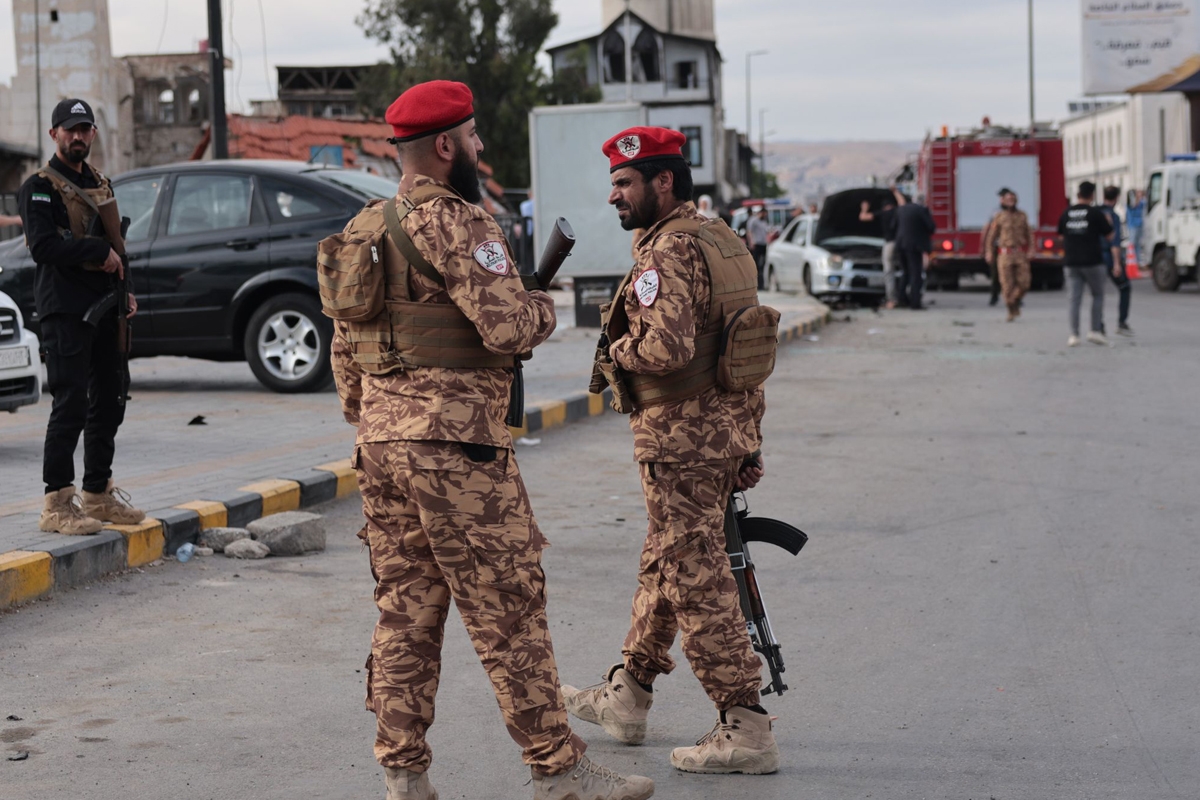
Separately, at least five people were killed in an explosion caused by a bomb planted inside a café near the Justice Palace in central Damascus, according to Syrian authorities. It remains unclear whether there is any link between the bombing and al-Shaibani’s visit to Lebanon.
This explosion is the deadliest in Damascus since the suicide bombing inside a church in the Douyala neighborhood of Damascus in June 2025, which killed 25 people in an attack claimed by an extremist Sunni group, while authorities attributed it to ISIS.
