Lebanon Insists on Disarming Hezbollah... Europe Proposes Sending Troops for 3 Years
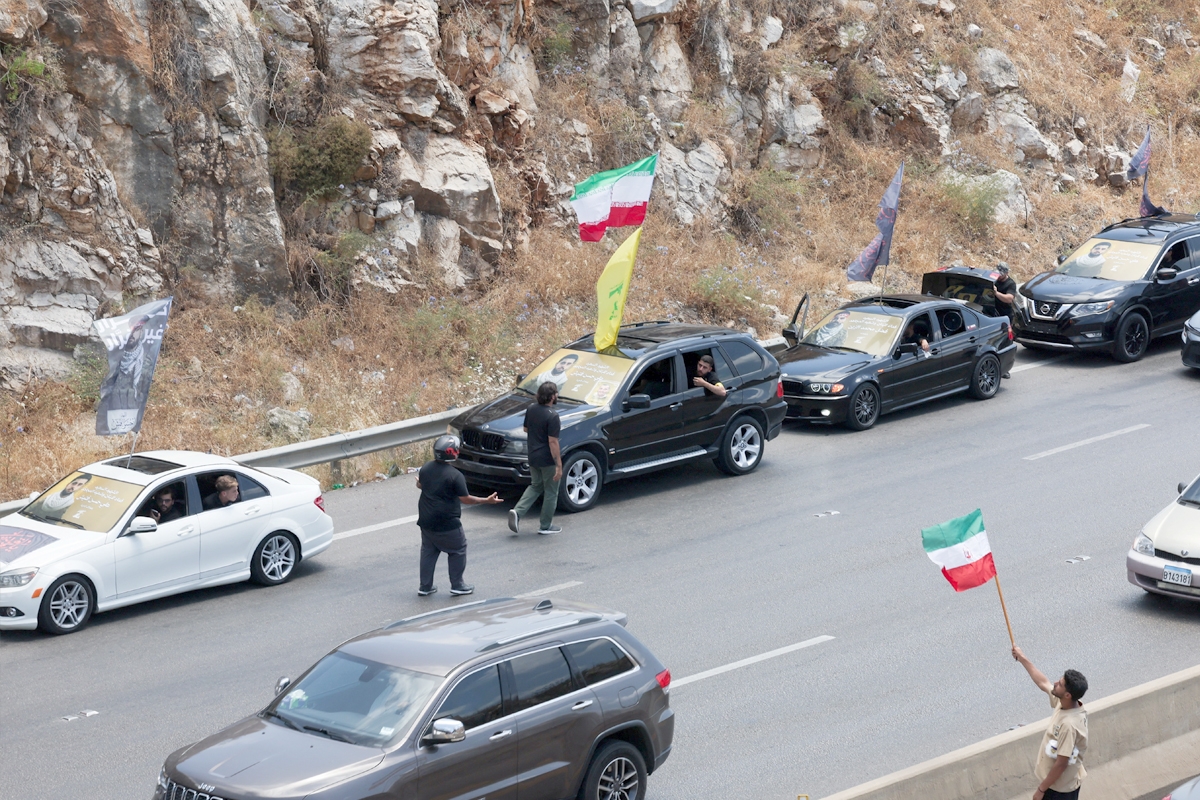
Lebanese Prime Minister Nawaf Salam emphasized the necessity for Hezbollah to restrict its arms, while the European Union's diplomatic service proposed sending a military mission for three years to support the Lebanese army after the withdrawal of UNIFIL. In Washington, negotiations continue.
Translated by Alqyas from Al-Jarida — Original source
Following American assurances provided to the Lebanese state regarding the understandings reached between Washington and Tehran in Switzerland, particularly the proposal to form a ceasefire monitoring committee that would include Iran alongside Washington and Beirut—thereby signifying US recognition of an Iranian security role in Lebanon—Lebanese Prime Minister Nawaf Salam affirmed today the necessity for Hezbollah to adhere to its commitments to restrict arms to the state.
Salam, during a meeting with a delegation from the Lebanese Journalists’ Syndicate, stated that “the party committed, through the 2006 government of which it was a part, to implementing Resolution 1701, and reaffirmed its commitment in 2024 through the ceasefire agreement to the exclusivity of arms.” He added, “We are not restricting arms to appease Israel; this is an independent and agreed-upon Lebanese matter, and we have been delayed in implementing it for a long time since the Taif Agreement was adopted.”
Meanwhile, Lebanese President Joseph Aoun, during a meeting with a British parliamentary delegation yesterday, confirmed that Lebanese-American-Israeli negotiations in Washington are ongoing and separate from what emerged from the meetings in Switzerland.
President Aoun called for continued British support for Lebanon in all fields, particularly support for the army, completing aid to it, constructing surveillance towers at the borders, and training. He also urged “support for Lebanon in its efforts to maintain an international presence in the south after the withdrawal of the United Nations Interim Force in Lebanon (UNIFIL) at the beginning of 2027, especially given the desire of several European countries to keep their forces in the south by establishing a legal framework for this presence.”
Aoun had discussed with French President Emmanuel Macron yesterday the deployment of European forces to the south after the departure of UNIFIL. The French president pledged to discuss the idea with several European countries. A document reviewed by Reuters today revealed that the European Union’s diplomatic circle proposed a three-year military and civilian mission to provide advice and training to Lebanese forces.
EU diplomats are discussing the possibility of sending a mission to support the Lebanese Armed Forces and internal security forces. Any such mission requires the approval of the 27 EU member states. The document, dated June 17 and distributed to EU member states, stated that the European External Action Service noted that a potential mission would have an “initial mandate of three years.”
The document added: “It will support Lebanese authorities in strengthening territorial control and border security by enhancing the capabilities of the Lebanese Army and internal security forces.” It continued: “To achieve this objective, the mission will focus on strengthening the land border guard battalions, mobile force units, and gendarmerie forces in the governorates, improving intelligence, surveillance, and reconnaissance capabilities, and enhancing maritime security capabilities, including border and port security management.”
Meanwhile, a senior Lebanese security official said that the second day of negotiations between Lebanon and Israel in Washington, as part of the fifth round of talks, would witness security discussions between the two armies, addressing experimental zones among other issues. Experimental zones are Lebanese areas occupied by the Israeli army, from which it will withdraw and hand over to the Lebanese Army, to be free of any Hezbollah military presence and weapons. The official added that discussions would focus on a withdrawal timeline.
In the meantime, the Israeli army announced attacking two Hezbollah militants in southern Lebanon, stating they posed a threat to its forces, marking the second such incident within two days.
The military spokesperson said in a post on social media that the army “targeted two Hezbollah militants who posed a threat to our forces in the area of Tell Ali Al-Taher” near Nabatieh, affirming that it “will continue operations to eliminate immediate threats.”
Two people were killed Tuesday in the same area, as the Israeli army announced it had targeted “a cell of saboteurs,” marking the first such strike since a ceasefire took effect on the Lebanese front between Israel and Hezbollah, following the US-Iranian understanding to end the Iran war.
