Preliminary US-Iran Agreement Lowers Oil Prices
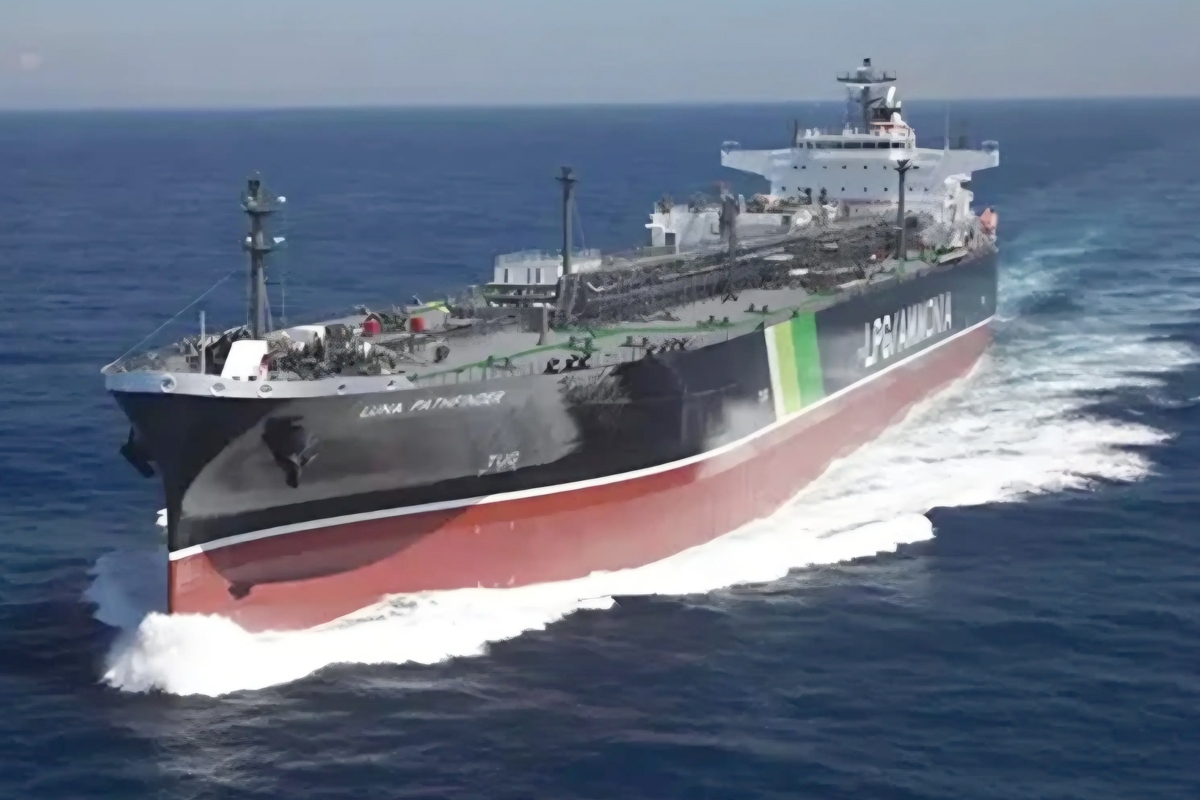
Iran and the United States reached a preliminary agreement to end the war and lift the siege, leading to a drop in oil prices despite ongoing nuclear negotiations.
Translated by Alqyas from Al-Jarida — Original source
US and Iranian officials said they have reached a framework to end the war between the two countries and reopen the Strait of Hormuz, in a preliminary deal that led to a drop in oil prices but left the fate of Iran’s nuclear program contingent on subsequent negotiations.
Although it remains only a framework, the agreement represents the biggest breakthrough so far toward resolving the conflict that has claimed thousands of lives and shaken energy markets since it erupted with joint US-Israeli strikes on Iran in February.
US President Donald Trump wrote on his Truth Social platform in Washington on Sunday, “The agreement with Iran is now complete.” The post came shortly after Pakistani Prime Minister Shehbaz Sharif, whose country is playing a mediating role, announced that an agreement had also been reached.
The memorandum of understanding is scheduled to be officially signed on Friday in Switzerland. The terms of the agreement have not yet been disclosed in detail.
Sharif posted on the X platform that the agreement stipulates “the immediate and permanent end of military operations on all fronts, including Lebanon.”
Iran’s Deputy Foreign Minister, Kazem Gharibabadi, stated that a more comprehensive agreement would be negotiated during a 60-day ceasefire period, including the lifting of sanctions on Iran.
Sources told Reuters earlier that the fate of Iran’s nuclear program, another point of contention, would be discussed in those subsequent talks. Trump said that on Friday the Strait of Hormuz, a vital shipping lane for global energy supplies that Iran has effectively blocked for months, would be reopened, and that he had ordered an end to the US blockade on Iranian ports. Trump wrote, “Ships of the world, start your engines. Let the oil flow!”
Iran’s war has become a domestic political burden for Trump and Republican lawmakers in Congress, as polls show Americans are deeply frustrated by rising gas prices ahead of the November midterm elections. However, Trump also faces pressure from members of the Republican Party who insist that Iran’s nuclear program must be completely eliminated.
Trump withdrew from the 2015 multilateral nuclear deal with Iran during his first term, which was negotiated by the administration of former Democratic President Barack Obama and lifted sanctions on Tehran in exchange for restrictions on its nuclear program, including international inspections.
In response to Trump’s withdrawal, Iran accelerated its uranium enrichment, producing more than 400 kilograms of uranium enriched to a purity level close to that required for making a nuclear weapon.
The agreement was reached despite an Israeli attack on Lebanon two days ago that drew criticism from both Iran and Trump.
Prime Minister Benjamin Netanyahu clashed with Trump over US demands that Israel curb its military operations in Lebanon to pave the way for an agreement with Tehran.
Israel said it would retain freedom of operation in Lebanon, while Tehran made a complete ceasefire there a key condition of its demands.
In a joint statement, Britain, Germany, France, and Italy said they were ready to lift sanctions on Iran in exchange for Tehran taking “clear and verifiable steps” to restrict its nuclear program, while China welcomed the agreement.
Before the announcement of the deal, a senior Iranian official told Reuters that, under the draft terms, the United States would agree to release $25 billion in frozen Iranian assets. The Trump administration had previously stated that the release of frozen Iranian funds would occur only after Iran meets certain conditions under a peace agreement.
Shipping companies said that restoring confidence in the resumption of traffic through the Strait of Hormuz could take weeks, and that navigation would not resume until safety is guaranteed, following the announcement by U.S. and Iranian officials of a preliminary agreement to reopen the waterway. The United States and Iran are expected to sign a memorandum of understanding on Friday to end the war between them, lift the U.S. sanctions on Iran, and reopen the strait.
Shipping companies welcomed the news of the agreement but are still awaiting further details, including those related to mine clearance in the strait. Analysts at Centaurus Shipbrokers said in a note, “It is clear that the market is factoring in a return to normality, but after months of disruptions, shipowners and charterers alike are likely to remain cautious until shipping traffic through the Strait of Hormuz returns to free and regular flow.”
The U.S.-Israeli war against Iran, which began on February 28, has largely disrupted navigation through the strait, through which about 20 percent of the world’s oil and liquefied natural gas (LNG) supplies pass, along with vital commodities such as aluminum and urea. Amid weak shipping activity, data from Kpler and the London Metal Exchange showed that the Indian PetroNet LNG’s tanker “Disha” crossed the Strait of Hormuz on Monday, making it the only vessel to do so.
Data indicated that the tanker was loaded with its cargo at Qatar’s Ras Laffan port on March 1 and 2, and has remained west of the strait since then, bound for India’s Dabhol terminal. PetroNet did not respond to Reuters’ request for comment.
Kpler data showed that about 155 oil and chemical tankers were present in the Gulf region as of June 15, down from 201 tankers at the end of May. OilX estimated the number at around 215 tankers.
Anup Singh, head of global shipping research at OilX, said, “We expect freedom of navigation to increase over the coming weeks before the shipping sector fully regains confidence... Until then, actual shipping costs are likely to remain high, and trade activity is likely to remain sluggish.”
A spokesperson for the Japanese Shipowners’ Association said on Monday that, while welcoming the agreement, the group prefers to “wait a little longer for clearer information” when the U.S.-Iran agreement is signed on June 19.
The spokesperson added that media reports had mentioned the laying of mines in the area, clarifying that “under these circumstances, we cannot simply say, okay, let’s go, based solely on news of the agreement.” Nippon Yusen, Japan’s largest shipping company, said it hopes for a return to normal operations as soon as possible, but a spokesperson added that it is too early to comment on the schedules of Japan-bound ships stranded in the Gulf. The spokesperson declined to disclose the number of the company’s vessels still in the Gulf region.
