Gold Rises Amid Decline in Regional Risks
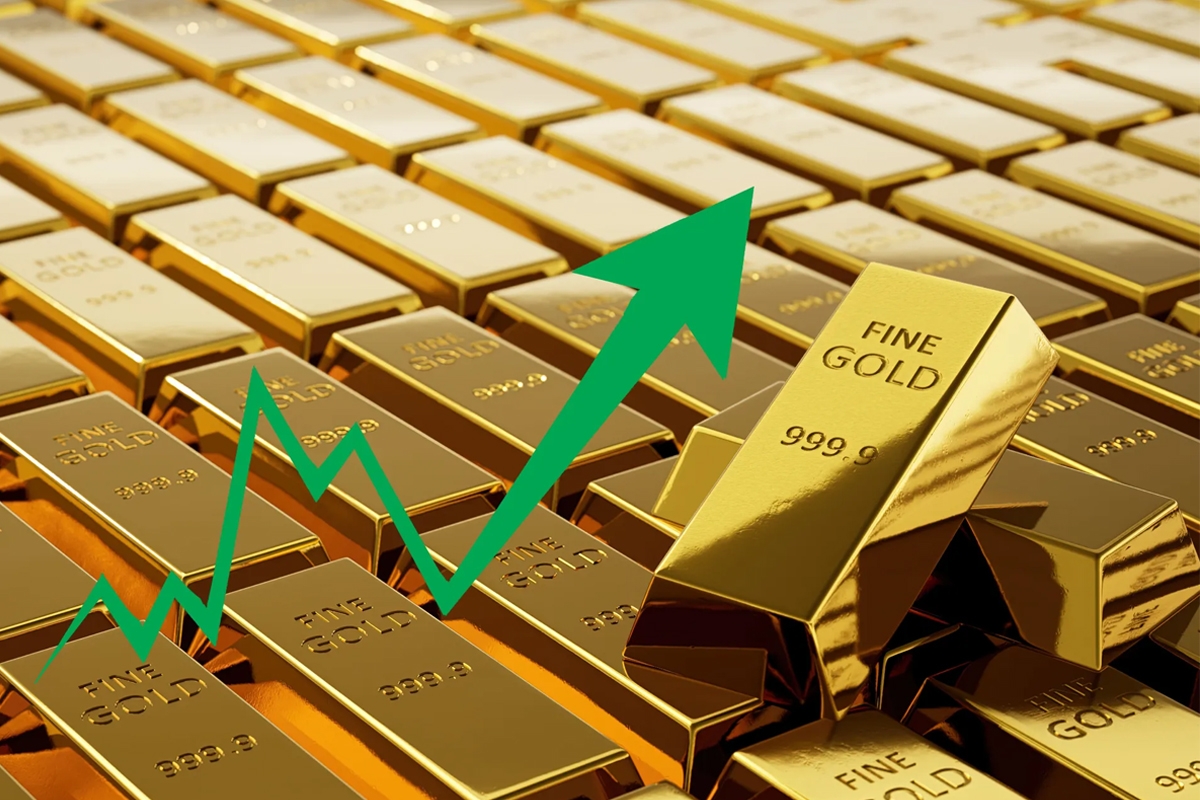
Gold prices rose by approximately 3%, supported by reduced fears of conflict between the United States and Iran, amid expectations that interest rates will remain high.
Translated by Alqyas from Al-Jarida — Original source
Gold prices ended last week’s trading at $4,219 per ounce, following a week marked by sharp volatility driven by geopolitical developments in the Middle East and shifting global monetary policy expectations among central banks.
According to a report issued today by Kuwait Mint Company, gold rose approximately 3 percent in Friday’s session, supported by declining fears of an escalation in the conflict between the United States and Iran, amid growing signs of progress in ongoing talks between the two sides and the possibility of reaching an agreement in the near future.
The report added that despite this strong rise, the precious metal recorded its second consecutive weekly loss, as markets continued to anticipate that interest rates would remain at elevated levels for longer, particularly after U.S. data showed persistent inflationary pressures.
It noted that the producer price index rising by 6.5 percent year-on-year in May contributed to strengthening investors’ expectations of a potential interest rate hike before the end of the year, although these expectations have recently receded as prospects for a U.S.-Iranian agreement have grown.
The report highlighted that markets are closely following developments in negotiations regarding the reopening of the Strait of Hormuz, given its direct impact on global oil prices. It stated that any final agreement would ease pressure on energy markets and curb inflationary concerns that have prompted many central banks to adopt tighter monetary policies in recent months.
Furthermore, markets are awaiting monetary policy decisions from several major central banks, including the Bank of England, the Bank of Japan, the Swiss National Bank, and the Central Bank of Norway, alongside key economic data releases from the United States, China, Germany, and the United Kingdom.
The Kuwait Mint Company report forecast continued volatility in gold prices in the coming period, as investors remain on edge awaiting the outcomes of U.S.-Iranian negotiations and central bank decisions on interest rates.
Technically, it stated that the $4,250 per ounce level represents the first major resistance point, followed by $4,300, while $4,200 serves as significant support, followed by $4,150. It added that gold’s movements in the near term remain primarily linked to the trajectory of global inflation, decisions by the U.S. Federal Reserve, and evolving geopolitical developments in the Middle East, which continue to be the most influential factor in global market trends.
On the local front, the report noted that prices of precious metals in Kuwait were affected by global developments. The price of 24-karat gold reached approximately 0.42625 Kuwaiti dinars per gram (about $138.73), while 22-karat gold stood at around 0.39 dinars per gram (approximately $127). Silver prices rose to 0.797 dinars per kilogram (about $2,593), as investors monitored the repercussions of global economic and geopolitical developments on precious metal markets.
