Washington Proposes Activating 'Experimental Zones' in Southern Lebanon
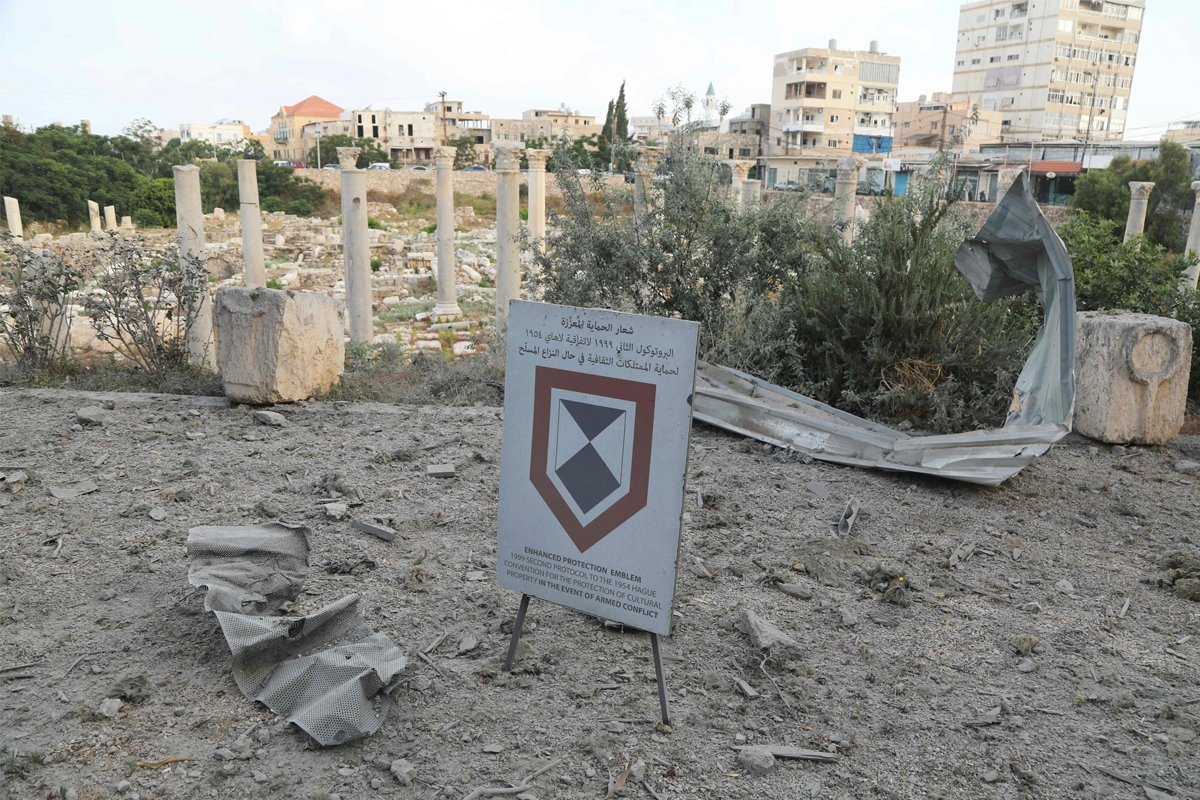
The US ambassador met with Lebanese leaders to discuss negotiations, a ceasefire, and the activation of experimental zones in southern Lebanon amid Israeli airstrikes.
Translated by Alqyas from Al-Jarida — Original source
As Iran worked to establish objective and military links between its front and the Lebanese front, U.S. Ambassador to Lebanon Michael Weiss visited President Joseph Aoun, Speaker of the Parliament Nabih Berri, and Prime Minister Nawaf Salam, as part of efforts to consolidate the negotiation track and prepare for the upcoming round of talks on the 22nd, amid attempts to reach a comprehensive ceasefire and initiate work on the experimental zones proposal, from which Israel would withdraw and which would be taken over by the Lebanese Army.
During his meeting with Aoun, Weiss praised the Lebanese negotiating team in Washington, stressing that the negotiation process helps end the suffering of Lebanese people. He added, “We have reached an irreversible stage; the ice has broken, and we are continuing to help Lebanon emerge from its crisis.”
For his part, Prime Minister Nawaf Salam emphasized during his meeting with the U.S. ambassador that no one negotiates on behalf of Lebanon except the Lebanese state. The discussion covered the dangers of escalation in the region and its repercussions on Lebanon, as well as preparations for the next round of negotiations in Washington, according to a statement issued by the Prime Minister’s Office.
According to information, Berri insisted during his meeting with the U.S. ambassador on demanding a complete and comprehensive ceasefire. Weiss promised to work toward achieving this in the coming days, adding that the trilateral statement issued following Lebanese-Israeli negotiations in Washington stipulated a comprehensive ceasefire.
Weiss, in a statement from Berri’s headquarters in Ain al-Tineh, said, “If Hezbollah stops its attacks on Israel, Israel will not target the southern suburbs.” He revealed that he had received a response from Berri regarding Hezbollah’s position on a ceasefire.
He pointed to the possibility of activating the experimental zones proposal in southern Lebanon, as stipulated in the trilateral statement. These are areas from which the Israeli army would withdraw, allowing the Lebanese army to enter and clear them of weapons, after which residents would be permitted to return. This came in response to Berri’s demand to halt the bombing of homes and allow residents to return to their villages.
This formula requires further elaboration among Lebanese, Israeli, and American parties, particularly given previous Israeli attempts to push for coordination with the Lebanese Army regarding the administration of these zones, which Lebanon completely rejected.
Although the U.S. President stressed the necessity of separating the Lebanon file from the Iran file, Weiss, in response to a question about whether the two files are linked, said that anything serving Lebanon’s interests would be acceptable, denying any communication between Washington and Hezbollah.
Earlier, Mahmoud Qammati, deputy head of Hezbollah’s Political Council, confirmed in a written statement that “no direct communication has taken place between the U.S. President and Hezbollah officials,” in response to previous remarks by the U.S. President about communicating with the group.
On the ground, the Israeli Air Force launched intensive airstrikes on southern Lebanon, targeting areas near Sidon and dozens of villages and sites, killing four Lebanese in a series of raids on the town of Zifta. Meanwhile, the Israeli military announced that it had intercepted three rockets launched from Lebanon before they entered its airspace.
Early in the morning, explosions were heard in the Lebanese capital, Beirut, without their causes or locations being clarified, coinciding with Israeli airstrikes on Iran.
This came as Lebanese Defense Minister Michel Mousa said yesterday that Israel had carried out nearly 3,500 airstrikes on Lebanon and hundreds of targeted bombings since the United States announced a ceasefire on April 16.
