Rosneft: Closing the Strait of Hormuz aims to change energy market rules in favor of the US
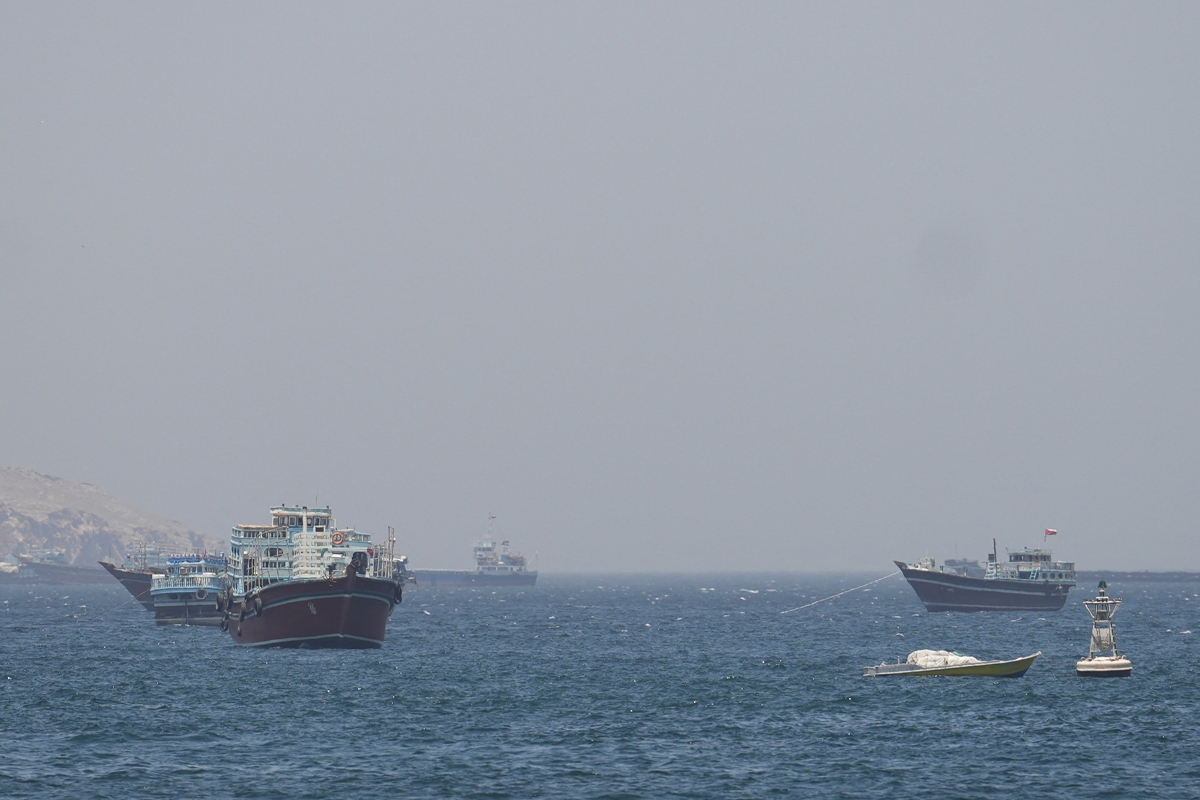
The CEO of Rosneft warned that continued closure of the Strait of Hormuz would harm global oil demand and benefit US companies, while Russia raises tax revenues due to higher prices.
Translated by Alqyas from Al-Jarida — Original source
Igor Sechin, CEO of Rosneft, Russia’s largest oil producer, said on Saturday that U.S. energy companies are the main beneficiaries of the closure of the Strait of Hormuz, while warning that prolonged tensions in the waterway, through which about 20 percent of global oil supplies once flowed, would undermine long-term oil demand.
Iran effectively closed the strait following the U.S.-Israeli attack on the country in February that killed Supreme Leader Ayatollah Ali Khamenei. The United States has imposed a blockade on Iranian ports. Speaking at the St. Petersburg International Economic Forum, Sechin described U.S. moves as an attempt to reshape global energy markets to serve American interests, but added that the strategic risks of such actions have not been fully assessed. Sechin, a longtime ally of Russian President Vladimir Putin and one of the most influential figures in the Russian energy sector, said, “The closure of the Strait of Hormuz is an attempt to reshape the rules of the global energy market to serve U.S. interests. The measures taken to close the strait targeted Iran, but they have negatively affected the entire world. There was no proper assessment of the strategic risks.”
He continued, “The main beneficiaries are, of course, U.S. companies that have gained non-competitive advantages and the ability to secure supplies at high prices. Prolonged tension in the Strait of Hormuz undermines long-term oil demand and could also trigger a new wave of interest in alternative energy.” The United States is the world’s largest oil producer, followed by Saudi Arabia and Russia.
Data from the Russian Ministry of Finance showed that tax revenues from oil and gas, which account for about one-fifth of total budget revenues, rose 32.4 percent year-on-year in May to 678.9 billion rubles ($9.3 billion), supported by higher global oil prices driven by the war in the Middle East.
The United States has extended a sanctions exemption allowing the purchase of Russian seaborne oil to help countries most affected by energy sector problems and harmed by the war with Iran. Sechin said China was best prepared for the crisis thanks to well-considered government policies, but warned that other major global chokepoints, such as the Straits of Malacca, Bab el-Mandeb, and Gibraltar, could also be at risk of disruption. He added that if the strait were reopened in the near future, oil prices could reach $95–$96 per barrel by the end of the year, then fall to $80–$85 within a year, before returning to market fundamentals by the second half of 2027.
In a speech titled “The Beginning of the End or the End of the Beginning: What Remains at the Bottom of Pandora’s Box?”, Sechin said problems in the world are “escalating rapidly,” amid the militarization of major powers, the largest financial market bubble since the 19th century, and looming shortages of electricity, food, and water. He added, “At the bottom of the box, we will inevitably find a global shortage of electricity, food, copper, and other metals, as well as water scarcity.”
Sechin, known for his skepticism regarding Russia’s cooperation with the Organization of the Petroleum Exporting Countries (OPEC), said the OPEC+ alliance has lost some of its potential following the UAE’s withdrawal from the alliance, as well as the earlier exits of Qatar and other countries.
He added, “As a result, the alliance’s production has fallen from 58 million to 37 million barrels per day over the past ten years.”
Sichin also noted that most of the key member countries of OPEC+ have increased their production since the agreement was signed in 2016. In Russia, oil production has fallen by 1.5 million barrels per day. He said, “This represents a 15 percent decline, and compensating for it will require implementing necessary investments of no less than 10 trillion rubles. We also expect investment cooperation between the alliance’s member states and our country to expand.”
